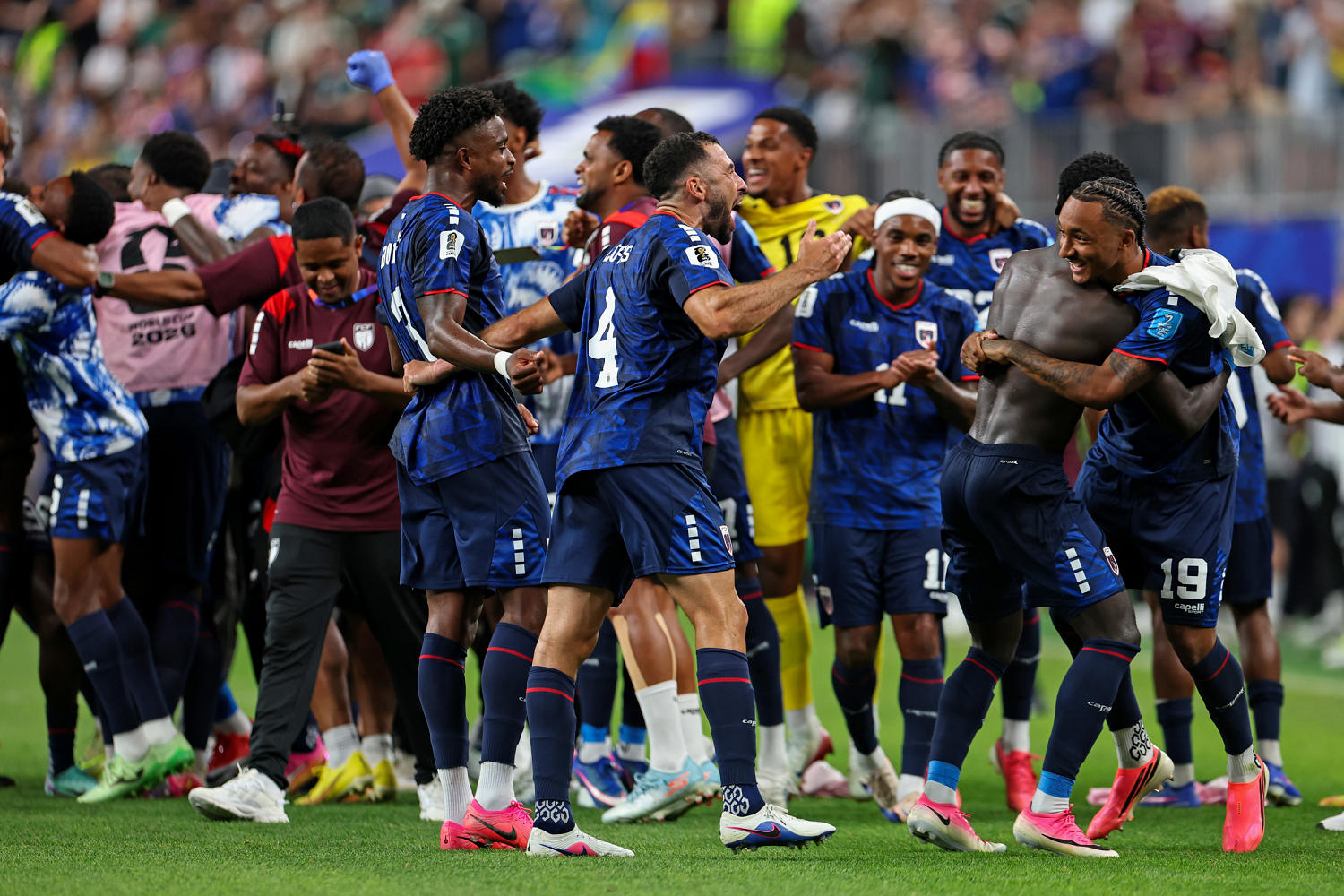
The romantic narrative surrounding Cape Verde’s historic run to the World Cup knockout stages treats their success as a sudden, inexplicable miracle. It is a classic sports trope. A tiny island nation of barely 600,000 people enters the biggest tournament on earth as a debutant, upsets the established football hierarchy, and captures the global imagination through sheer passion and luck.
This narrative is entirely wrong.
Cape Verde’s ascension to the knockout rounds is not a fairy-tale fluke. It is the result of a cold, calculated, and highly sophisticated talent-aggregation strategy that larger nations have spent years failing to execute. The Blue Sharks did not stumble into the elite tiers of international football. They engineered their way there by rewriting the rules of national eligibility and leveraging the complex realities of post-colonial migration.
The Diaspora Dividend
To understand how a nation with a domestic population smaller than most European cities can field a world-class football team, you have to look outside its borders. The census data reveals the real engine behind Cape Verdean football. More Cape Verdeans live abroad than on the islands themselves, with massive enclaves in Portugal, the Netherlands, France, and New England.
For decades, this diaspora was viewed through a purely economic lens, a source of vital remittances sent back to families in Praia or Mindelo. The Federação Caboverdiana de Futebol (FCF) looked at those exact same migration patterns and saw a golden generation of footballing talent hidden in plain sight.
The traditional model of building a national team relies on domestic academies, local infrastructure, and grassroots development. Cape Verde simply lacked the capital to compete on that front. Instead of trying to build a multi-million-dollar academy system from scratch on volcanic islands, the FCF outsourced their player development to the best academies in Western Europe.
Subverting the European Academy System
The mechanism is brilliant in its simplicity. A child of Cape Verdean immigrants grows up in Rotterdam or Lisbon. They enter the youth ranks of Sparta Rotterdam or Benfica, receiving elite tactical coaching, world-class sports science, and competitive match play from the age of eight. They are products of the European football machine, financed entirely by European clubs.
When these players reach maturity, they face a bottleneck. The competition to break into the senior national teams of Portugal or the Netherlands is brutal. Only a fraction of elite prospects make the cut.
This is where Cape Verde pounces.
The FCF does not wait for players to fail out of European systems. They scout them early, pitching a compelling vision of international football, cultural reclamation, and guaranteed playtime on the continental stage. By the time Cape Verde arrived at the World Cup, their squad was a mosaic of European-trained professionals who possessed a tactical maturity that matched or exceeded their tournament opponents. They traded the traditional disadvantage of a small domestic population for the immense advantage of a globalized talent pool.
Technical Precision Over Emotional Narrative
When a debutant team faces a traditional powerhouse, the media predictably expects a parking-the-bus strategy. The underdog is supposed to sit deep, defend with eleven men behind the ball, and pray for a lucky counter-attack or a penalty shootout.
Cape Verde rejected this script completely.
Standard Underdog Strategy:
[Low Block] -> [Boot Long Ball] -> [Hope for Error]

The Cape Verde Model:
[High Press] -> [Positional Overloads] -> [Fluid Transition]
The Blue Sharks' tactical identity throughout the group stage was defined by an aggressive, proactive philosophy. They did not survive their group; they dictated it.
The Mechanics of the High Press
The team operated in a highly flexible structural system that shifted effortlessly based on the phase of play. Out of possession, they did not retreat into a low block. They pressed high up the pitch, systematically cutting off passing lanes and forcing opposing center-backs into rushed, low-percentage long balls.
This required an extraordinary level of physical conditioning and positional awareness. The midfield trio acted as a coordinated unit, shifting laterally to create overloads on the flanks and trapping opponents against the touchline. It was a suffocating approach that completely disrupted the rhythm of established football giants who expected an easy afternoon of possession dominance.
Direct Transition and Verticality
Once possession was won, the transition was lethal. Cape Verde’s wingers did not merely hold the width; they operated as inside forwards, exploiting the spaces vacated by opposing full-backs who had pushed too far up the pitch.
The attacking sequences were characterized by a refreshing lack of lateral, low-tempo passing. Every sequence had a vertical intent. They looked to break lines with sharp, grounded passes rather than speculative crosses into the box. This tactical maturity frustrated opponents, forcing them to commit numbers forward and leaving them vulnerable to the counter-punch that ultimately sealed Cape Verde's place in the knockouts.
The Economic Asymmetry of International Football
The achievement of the Blue Sharks looks even more impressive when viewed through the lens of financial reality. The modern World Cup is an environment where money usually dictates outcomes. The correlation between a nation's footballing budget and its tournament progression is historically strong.
| Country | Estimated Annual Football Budget | Domestic League Status | World Cup Stage Reached |
|---|---|---|---|
| Traditional European Power | $100M+ | Fully Professional / Elite | Knockouts / Semi-Finals |
| Established African Giant | $20M - $40M | Professional / Continental | Knockouts |
| Cape Verde | Fractional | Semi-Professional / Domestic | Knockouts |
Cape Verde operates on a fraction of the budget of the teams they bypassed to reach the knockout rounds. The domestic league in Cape Verde remains largely semi-professional, played across islands separated by rough seas, making consistent national competition logistically and financially punishing.
Navigating the Logistics of Isolation
The FCF faces logistical hurdles that would paralyze most European federations. Booking travel for players scattered across a dozen different European leagues, coordinating training camps with minimal turn-around time, and dealing with the immense travel distances to African qualifying matches requires a masterclass in operations management.
They solved this by establishing operational hubs in Europe. Instead of forcing European-based players to constantly fly back to the islands for short international breaks, the federation frequently organized camps in Portugal or Spain. This minimized travel fatigue, maximized training time, and kept their limited budget focused on performance rather than aviation fuel.
The Perils of Institutional Complacency
The success of Cape Verde is a direct indictment of the institutional complacency found in larger, wealthier football federations. For decades, the dominant football nations have assumed that money, infrastructure, and historical prestige would permanently guarantee their status at the top of the food chain.
Cape Verde proved that structural agility beats institutional weight.
While larger federations are often bogged down by bureaucratic infighting, rigid developmental philosophies, and political maneuvering, the FCF operated like a lean tech startup. They recognized their weaknesses, identified a market inefficiency (the overlooked diaspora), and executed a strategy with absolute clarity.
The Lesson for Mid-Tier Nations
The Blue Sharks have provided a blueprint for every mid-tier and developing football nation on earth. The excuse of having a small population or limited domestic infrastructure is no longer valid. The world is too interconnected, and the distribution of talent is too global for any federation to claim they cannot compete.
However, replicating the Cape Verde model requires more than just looking for players with dual nationality. It requires building a culture of genuine inclusion. Many federations treat diaspora players as secondary options, call-ups of convenience when domestic options fail. Cape Verde treated them as foundational pillars, creating an environment where players felt an authentic connection to the shirt, regardless of where they were born.
The Structural Threat to European Dominance
The long-term implications of Cape Verde's success extend far beyond the borders of the archipelago. European football federations are watching this development with a growing sense of unease.
For years, European nations have benefited from immigration, absorbing talent from various backgrounds into their own national setups. Now, the tide is beginning to turn. As smaller nations become more sophisticated in their scouting and recruitment of diaspora youth, Europe is facing a talent drain.
A player who might have spent their career sitting on the bench for France or Portugal now sees a viable alternative: become a national hero, play guaranteed minutes in major tournaments, and test yourself against the best in the world with a nation that truly values your presence.
This shift threatens to democratize international football in a way the governing bodies never anticipated. The monopoly on elite talent is cracking.
The Road Ahead and the Sustainability Question
The immediate future looks bright for the Blue Sharks, but the sustainability of this model faces a critical test. Relying on European academies to produce your national team players is an excellent short-term strategy, but it leaves you vulnerable to external systemic shifts.
What happens if European leagues tighten their homegrown player rules, reducing the number of spots available for minority and immigrant youth? What happens if larger nations become more aggressive in cap-tying dual-national prospects at an earlier age?
Building the Internal Foundation
To survive long-term, Cape Verde must use the financial windfall and global prestige of this World Cup run to invest heavily back into the islands. The next phase of their football evolution must focus on upgrading domestic facilities, training local coaches to UEFA standards, and creating a genuine pathway from the streets of Praia to the professional leagues of Europe.
The current squad has bought the federation time. The prize money earned from their knockout run cannot be absorbed into administrative overhead. It must be locked into concrete, pitches, and youth development programs that ensure the next generation of Blue Sharks doesn't just come from Rotterdam, but from the volcanic soil of Fogo and Santo Antão.
The fairy-tale narrative is dead, replaced by the reality of a footballing operation that out-scouted, out-tacticked, and out-managed the establishment. Cape Verde did not just enter the world stage. They showed everyone else how to conquer it.