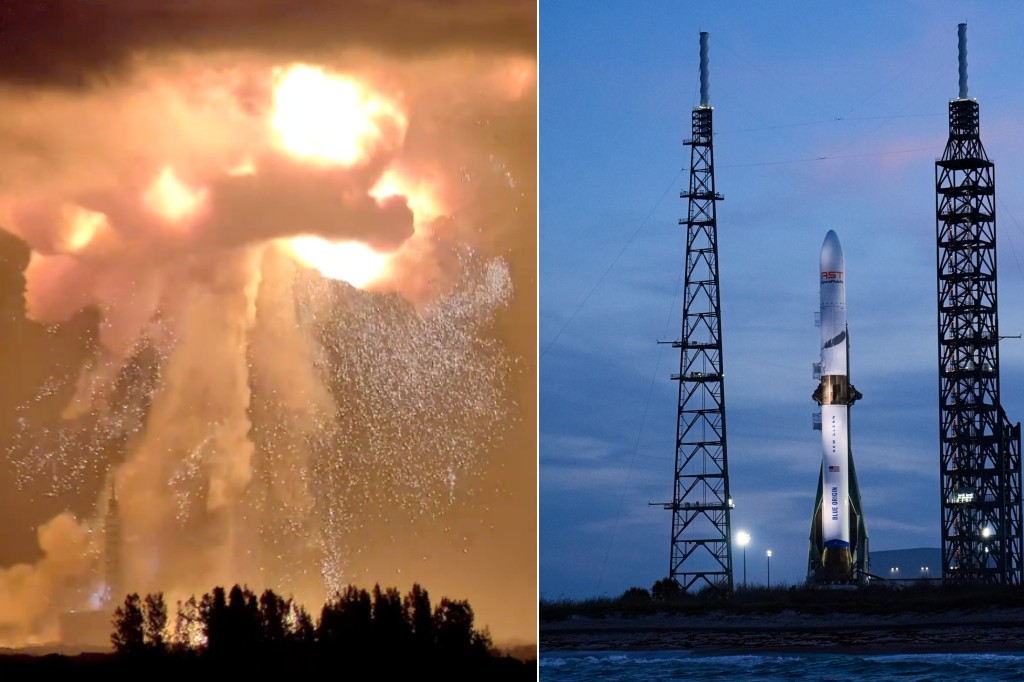
Rockets blow up. It is the brutal, unyielding reality of aerospace engineering. If you push hardware to its absolute limit, sometimes it pushes back. That is exactly what happened at Cape Canaveral when a Blue Origin rocket experienced a catastrophic failure on the launch pad during a static fire test.
The fireball was spectacular. The social media panic was instant. But if you talk to anyone who actually builds hardware for a living, they will tell you the same thing. This is not a disaster. It is exactly how you avoid one when humans are on board.
Spaceflight is hard. We forget that because companies like SpaceX make routine launches look like clockwork. This recent anomaly reminds us that fire, pressure, and liquid oxygen are a volatile mix. Let's look at what actually happened on the pad, why these tests are designed to find these breaking points, and what this means for the future of commercial space travel.
The Cape Canaveral Anomaly Under the Microscope
The incident occurred during a routine, non-flight test sequence. Blue Origin was conducting a static fire of its propulsion system. This test anchors the rocket to the ground while firing the engines at full thrust. It simulates the exact stresses of a real launch without letting the vehicle leave the pad.
Something went wrong deep inside the plumbing. Data indicates a sudden pressure spike in the engine compartment, followed immediately by a structural breach. Liquid natural gas and liquid oxygen met outside the combustion chamber. The result was instantaneous.
Eyewitnesses reported a loud boom that shook windows miles away. A massive plume of black and grey smoke billowed over the pad. Automated safety systems kicked in within milliseconds. Deluge systems flooded the area with thousands of gallons of water to suppress the flames and protect the surrounding infrastructure.
Nobody was hurt. The pad was cleared of all personnel hours before the tanks detoured into cryogenic territory. That is the silver lining. The hardware is gone, or at least severely damaged, but the safety protocols worked flawlessly.
The Myth of the Perfect Test Flight
The public sees a rocket explosion and assumes a project is doomed. The media runs headlines dripping with drama. Investors get nervous. It is a predictable cycle, and it is totally wrong.
Testing to failure is a legitimate engineering strategy. You can run all the computer simulations you want. You can model fluid dynamics until your servers melt. But code cannot perfectly replicate the violent, chaotic environment of a roaring rocket engine.
- Simulations miss manufacturing flaws.
- Models struggle with harmonic vibrations.
- Real-world metallurgy behaves weirdly under extreme thermal shock.
Jeff Bezos famously uses the phrase "Gradatim Ferociter"—step by step, ferociously. This failure is a step. A painful, expensive step, but a step nonetheless. By pushing the plumbing until it ruptured on the ground, engineers now have hard telemetry. They know the exact boundary conditions of their hardware. They found the weak link in a controlled environment instead of losing a mission mid-flight.
Consider the alternative. Imagine skipping rigorous ground testing to hit a marketing deadline. The rocket launches. It carries a multi-million dollar satellite payload, or worse, a crew of astronauts. The same plumbing failure occurs at 50,000 feet. That is a true catastrophe. A pad explosion during a test is just an aggressive data collection event.
Engineering Realities vs Space Race Narratives
The internet loves a rivalry. It is easy to frame this as Blue Origin losing ground to competitors. But mapping a sports narrative onto aerospace engineering misses the point.
The engines powering these vehicles are beasts of engineering. We are talking about chamber pressures that would crush a submarine and temperatures hotter than lava. Controlling that energy requires perfection. A single microscopic crack in a weld, a tiny piece of debris in a valve, or a fractional delay in a computer command can destroy the vehicle.
The specific engine variant involved uses a staged combustion cycle. It is highly efficient but notoriously difficult to master. It routes hot, oxygen-rich or fuel-rich exhaust gases back into the main combustion chamber. This creates massive power, but it also creates an angry plumbing nightmare of extreme pressures. If the balance shifts even slightly, the engine eats itself.
Engineers will now spend weeks poured over thousands of data channels. They will look at valve timings, vibrational frequencies, and temperature sensors. They will rebuild the sequence millisecond by millisecond. They will find the root cause. They always do.
How the Industry Absorbs Pad Failures
This is not the first pad explosion, and it will not be the last. The history of space exploration is written in twisted metal.
Look at the early days of the Apollo program or the recent development cycles of modern heavy-lift vehicles. Every major aerospace entity has suffered catastrophic ground failures. The companies that survive are the ones that do not get defensive. They take the data, redesign the component, and build a better bird.
The immediate impact will be felt in schedule slips. You cannot blow up a rocket on a pad and launch again next month. The Federal Aviation Administration will likely oversee the investigation. The launch site needs inspection. The ground support equipment—the pipes, electrical lines, and structural mounts that hold the rocket—took a beating and will need repairs.
This pause ripples through the industry. Satellites waiting for rides will stay in cleanrooms a bit longer. Contracts will face scrutiny. But a delayed launch is always preferable to a repeated failure.
Your Framework for Tracking the Recovery
If you want to watch how Blue Origin bounces back from this without getting bogged down in the hype, watch for specific milestones. Do not listen to vague corporate press releases. Watch the hardware.
First, look for the official mishap investigation board announcement. This gives you the timeline and shows who is leading the technical autopsy.
Second, watch the test stands. Before a rocket ever returns to the Cape, you will see individual engine testing ramp up at remote development facilities. If those engines run long and clean on the test stands, the engineering fix is working.
Third, monitor pad repair activity. The speed of the infrastructure rebuild tells you how much energy the company is pumping into the recovery effort.
Space is unforgiving. It demands absolute humility from anyone who tries to conquer it. Blue Origin just got a harsh reminder of that truth. Now, the real work begins in the labs and machine shops, away from the cameras, where the next rocket will be built stronger than the last.