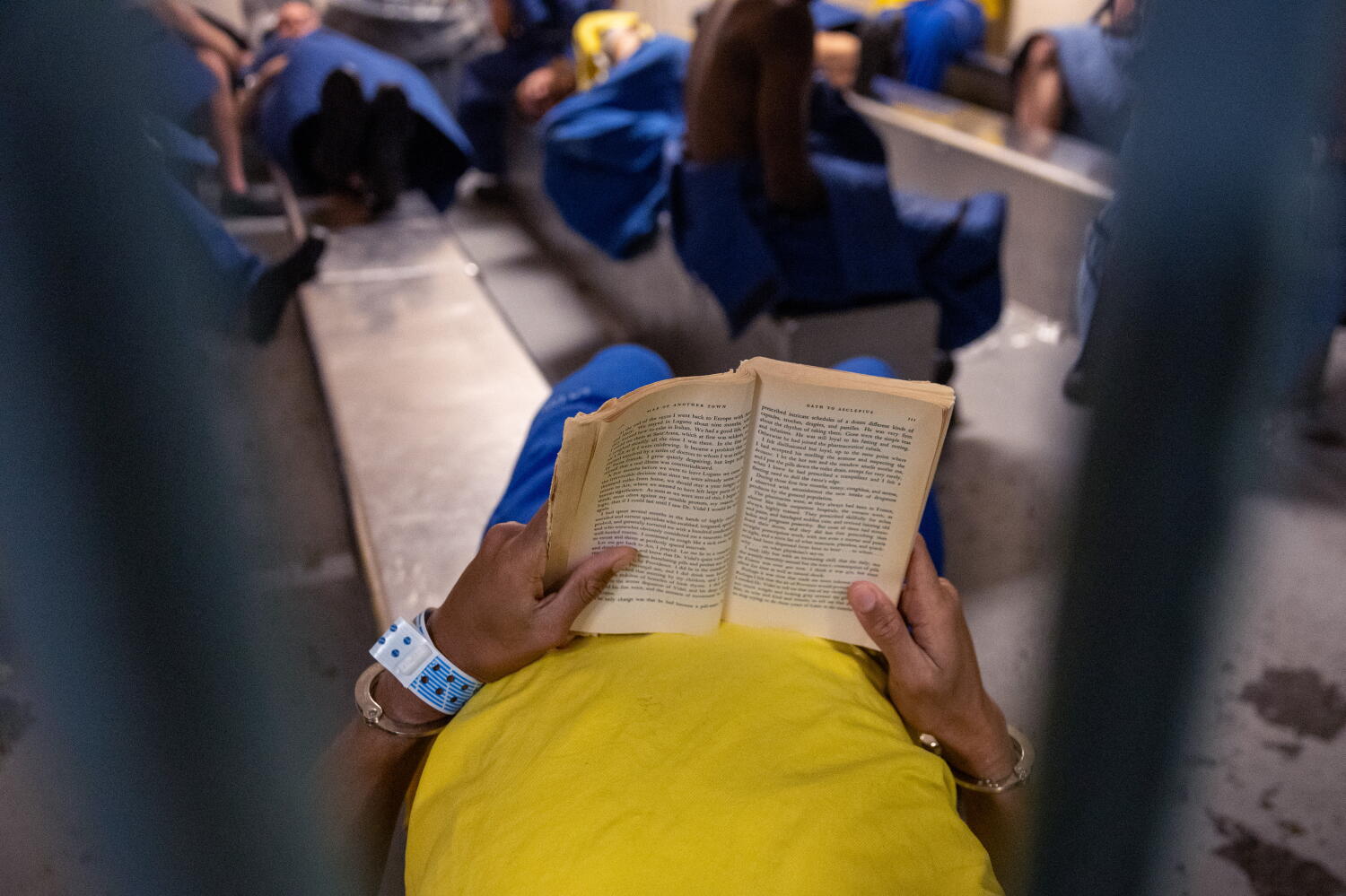
Every time federal regulators flash their badges at the Men's Central Jail in Los Angeles, the predictable script rolls out. Civil rights attorneys rush to courthouse microphones. Editorial boards clutch their pearls over the state of corrections. Politicians issue sternly worded press releases demanding immediate reform, more oversight committees, and another round of multi-million-dollar consulting contracts.
Everyone agrees the system is broken. Everyone points fingers at the Department of Justice investigation as the ultimate accountability mechanism.
They are all looking in the exact wrong direction.
I have spent years watching institutional reform efforts burn through public funds while the underlying structural rot deepens. When you pin your hopes on a federal consent decree to rescue a failing urban jail system, you are treating a systemic cancer with an aspirin. The Justice Department investigation into L.A. County jail conditions is not a rescue mission. It is a bureaucratic distraction that prevents anyone from asking the one question that actually matters: why are we treating a mental health crisis as a real estate and plumbing problem?
The Comfort of the Oversight Illusion
Let us dismantle the lazy consensus. The standard narrative claims that if we just monitor guards closer, upgrade facility infrastructure, and hire more independent monitors, the violence and squalor inside downtown Los Angeles detention facilities will vanish.
This is a comforting fiction. It allows politicians to pretend that cruelty is simply a byproduct of bad management rather than the inevitable result of an over-incarcerated population struggling with severe psychiatric disorders.
Men's Central Jail is not primarily a holding facility for hardened syndicate bosses or violent cartel enforcers. By default, it has become the largest psychiatric hospital in the United States. When you pack thousands of men suffering from schizophrenia, bipolar disorder, and acute substance withdrawal into concrete cages designed in the mid-twentieth century, no amount of federal oversight will turn it into a wellness retreat.
The DOJ investigation focuses heavily on use-of-force policies, crowding, and sanitary conditions. These are symptoms, not the disease. Fix the plumbing, paint the walls, and issue body cameras to every custody assistant, and you will still have a massive warehouse of human misery run by deputies who are trained for tactical combat, not psychiatric triage.
The Anatomy of Institutional Failure
To understand why federal intervention routinely misses the mark, look at the economics of modern penal administration. L.A. County spends billions annually trying to maintain an aging, sprawling detention footprint.
When a federal oversight entity steps in, the immediate response is always administrative expansion. You get compliance officers, audit teams, legal defense funds, and specialized response units. None of these expenditures put a single additional psychiatric bed on the street. None of them reform the broken downstream mental health safety net that feeds the jail population in the first place.
I have watched local agencies burn fortunes trying to satisfy federal monitors while core operational functions decay. The mandate becomes about paper compliance rather than human outcomes. Deputies learn how to check the right boxes on incident reports to satisfy court-appointed inspectors, while the day-to-day reality for the incarcerated population remains punishingly bleak.
The honest truth that no civil rights lawyer wants to admit is that oversight committees create an entire industry whose survival depends on the persistence of the crisis. If the jail ever ran efficiently, half the oversight apparatus would lose its funding.
The Counter-Intuitive Escape Hatch
If the DOJ investigation is a dead end, what is the actual solution? Stop trying to fix the jail. Dismantle it.
We need to embrace the radical proposition that Men's Central Jail should be shuttered entirely, not remodeled, not monitored, and not reformed. For years, county supervisors have debated closing the facility without offering a credible alternative. The fear of empty beds paralyzes them. They worry about where to put violent offenders, ignoring the reality that the majority of men sitting in that facility are awaiting trial because they cannot afford nominal bail or because their psychiatric episodes manifest as low-level public disorder.
The solution requires a cold-blooded reallocation of capital. Take the billions earmarked for jail maintenance and legal defense against federal lawsuits and redirect every single dime toward decentralized, secure mental health treatment facilities and community-based diversion programs.
This approach has a massive downside, and I will not pretend otherwise: it requires political courage that local leaders historically lack. Closing a major detention center without an immediate, matching surge in community treatment beds will trigger short-term public panic. Crime rates in specific urban pockets might fluctuate as the criminal justice system recalibrates. Critics will scream that the streets are becoming lawless.
Yet, maintaining the status quo guarantees a slow-motion catastrophe that destroys the lives of both inmates and the deputies forced to guard them.
The Wrong Questions
When people ask how long the DOJ investigation will take or whether the county will sign a consent decree, they are trapped in a flawed paradigm. The correct question is why we expect armed law enforcement agencies to act as psychiatric care providers of last resort.
Federal investigators can write reports until their printers run out of ink. They can mandate new training modules, require more documentation, and threaten contempt of court citations. None of that alters the fundamental mismatch between the human beings trapped inside those cells and the concrete box built to hold them.
Stop waiting for Washington to save Los Angeles from itself. The rescue will not come from a federal courtroom. It will only begin the day local officials summon the backbone to admit that you cannot reform a warehouse designed for punishment into a hospital for healing.
Tear down the walls, scatter the population into specialized treatment environments, and let the federal monitors look for work elsewhere.