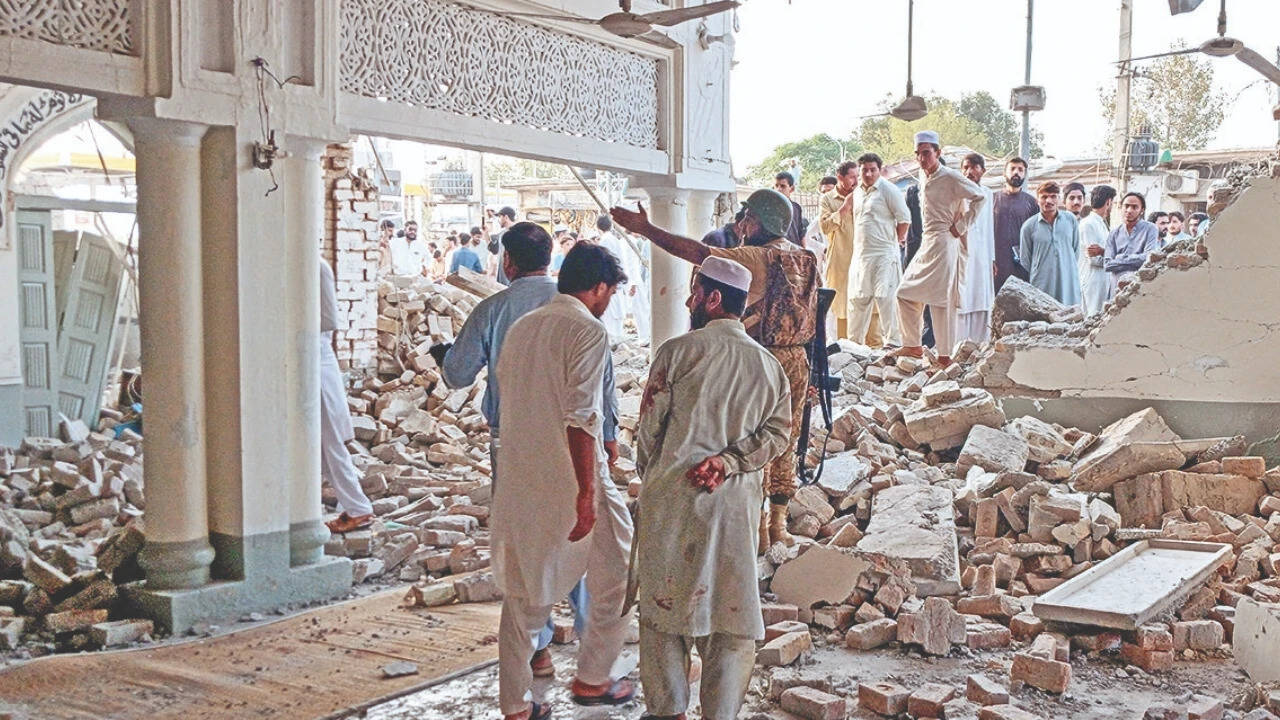
Every single time a suicide bomber detonates an explosive vest in Khyber Pakhtunkhwa, the state machinery instantly reaches for a comforting, well-worn script. Officials step before microphones, point across the Durand Line, and announce that the perpetrator was an Afghan national. The media dutifully transcribes the press release. The public nods in grim validation. The narrative locks into place. It is neat. It is nationalist. And it is a catastrophic analytical failure that guarantees the violence will continue.
Let us be entirely clear about what is happening here. When headlines blare that Pakistan has identified an Afghan among the attackers in a fresh borderland strike, the lazy consensus treats this nationality label as a root cause rather than a symptom. It treats the individual passport holder as the prime mover of an insurgency while ignoring the multi-layered domestic architecture that manufactures, harbors, and weaponizes these fighters. Focusing on the passport of a triggerman while blind to the structural mechanics of militant recruitment is the geopolitical equivalent of blaming the bullet for the trajectory of the sniper's rifle.
The Geography of Convenience
To understand why the foreign national narrative is so aggressively pushed, you have to look at the utility of distraction. Decades of counter-terrorism policy in South Asia have relied on externalizing internal friction. Whenever governance collapses in the tribal districts, whenever local policing fails, and whenever state-backed strategic depth doctrines implode, pointing an accusing finger toward Kabul serves as an immediate pressure valve.
Think of it as a structural shell game. If an attack in Peshawar or Bajaur is framed purely as an external cross-border infiltration by foreign elements, the implication is that tightening the fence will solve the crisis. It suggests a perimeter defense problem. But anyone who has spent time embedded in these districts, tracking the micro-economies of militant networks, knows that a border wall is porous to cash, ideology, and local complicity.
The reality on the ground is far more localized and far more uncomfortable. The foot soldiers crossing the border or emerging from local villages do not operate in a vacuum. They plug into an indigenous logistics chain consisting of local extortion rings, corrupt transit networks, sympathetic sanctuaries, and ideological incubators that have deep roots inside Pakistani territory. An Afghan identity card in the pocket of a deceased bomber tells you where he was born, but it tells you nothing about who paid him, who trained him, and who provided the safe house three miles from the target.
Dismantling the Good and Bad Militant Fallacy
For years, regional analysts have pointed out the fundamental contradiction of selective counter-terrorism. You cannot nurture specific militant factions as geopolitical leverage while simultaneously trying to eradicate others through kinetic sweeps. The spillover from this historical hedging is coming home to roost in Khyber Pakhtunkhwa with devastating regularity.
When state actors categorize insurgent groups into those who threaten the domestic writ and those ostensibly meant for external projection, they create a gray zone. In that gray zone, recruitment pipelines remain active. Money flows. Safe havens morph and adapt. By the time a group like Tehreek-e-Taliban Pakistan coordinates with or borrows operatives from external pools, the distinction between local grievance and foreign invasion has dissolved completely.
The official narrative desperately wants us to believe that the insurgency is an external invasion repelled by a vigilant state. The data tells a different story. It is a homegrown implosion fueled by decades of policy miscalculations, compounded by economic desperation in the borderlands, and sustained by a war economy that pays better than any legitimate livelihood available to a young man in the tribal agencies.
The Economy of Despair
Let us talk about the actual human raw material of these attacks. Why does a young man strap explosives to his chest in Khyber Pakhtunkhwa? Is it purely theological fervor? Is it deep-seated ethnic animosity?
Spend time looking at the socioeconomic indicators of the merged tribal districts. Youth unemployment is astronomical. Infrastructure is a relic of the colonial era. Education systems are non-existent or radically ideological. When the state fails to provide a social contract, security, or economic mobility, violent non-state actors step in as the primary employers.
In this environment, nationality is secondary to economics. A militant recruiter does not care whether a recruit holds a Pakistani computerized national identity card or an Afghan Tazkira. They care about vulnerability. They care about who can be bought, coerced, or brainwashed when options have been systematically reduced to zero.
When the media focuses on the nationality of the bomber, it flattens a complex socioeconomic crisis into a simple xenophobic talking point. It implies that if we simply deport or exclude every Afghan, the terrorism will evaporate. This is a dangerous delusion. It ignores the thousands of domestic fighters who populate the exact same command structures, use the exact same tactics, and share the exact same ideological lineage.
What Real Counter-Terrorism Looks Like
If Pakistan is serious about stopping the bleeding in Khyber Pakhtunkhwa, it has to abandon the comfort of external scapegoating.
First, the intelligence apparatus must pivot from reactive attribution to proactive governance. Identifying a dead man's nationality after the bomb goes off is forensic archaeology, not counter-terrorism. Intelligence success is measured by the attacks that never happen because the financial networks, local enablers, and radicalization nodes inside urban centers were dismantled.
Second, the state must reclaim the narrative from securitized paranoia. Border management is necessary, but it is a crude tool. Real security is built on the integration of the borderlands into the legal, economic, and judicial mainstream. As long as the tribal districts remain treated as a security buffer zone rather than full citizens with constitutional rights, they will remain fertile ground for insurgency.
Finally, policy makers need to confront the hard truth about regional diplomacy. You cannot bomb your way out of a crisis that is sustained by political and economic failure at home. Pointing fingers across the frontier might score temporary domestic political points, but it is a strategy of terminal decline.
The next time an official stands at a podium to announce the nationality of a fallen attacker, do not look at the passport. Look at the policy failures that allowed him to walk into the room in the first place.