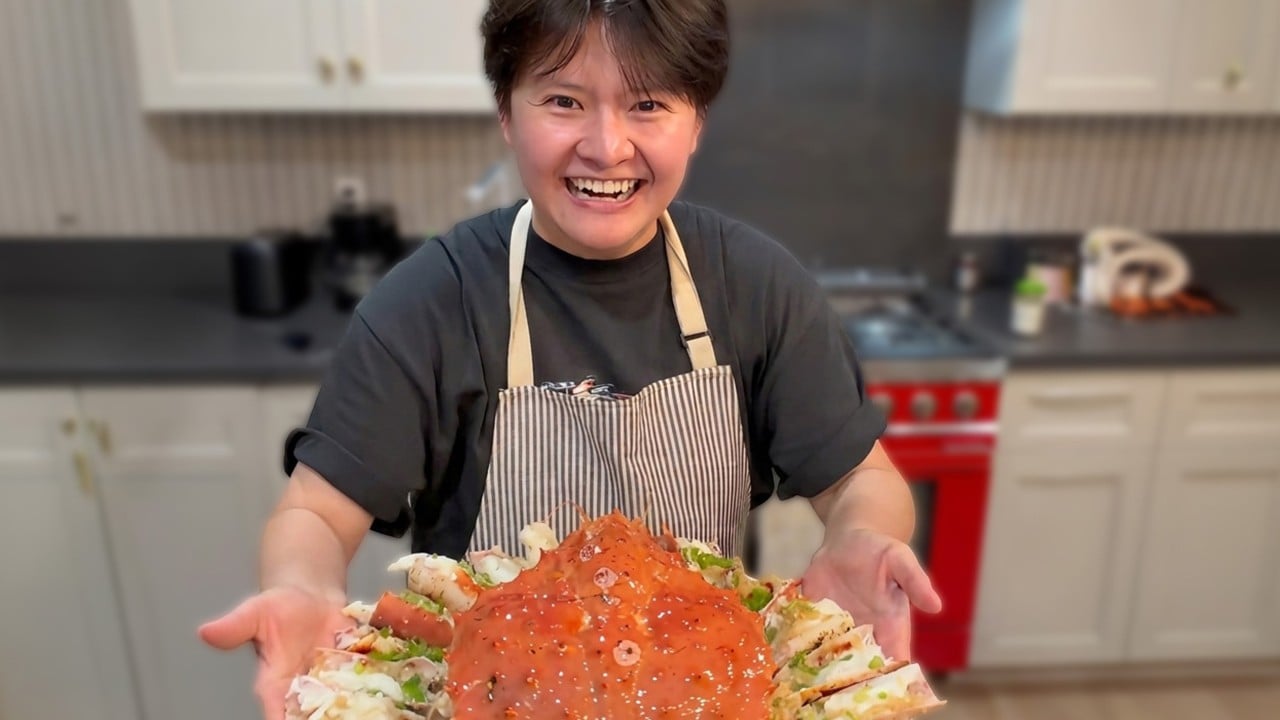
The envelope arrived on a Tuesday.
It did not carry the weight of a tragedy, not at first. It was just heavy bond paper, embossed with a legal seal from a bank in Shanghai, stating in cold, unyielding Mandarin that the ledger had finally broken. Everything was gone. The factories, the real estate, the college fund, the cushion against the world.
Across an ocean, in a sterile apartment kitchen in Chicago, a young man held the letter. He had spent four years parsing complex financial derivatives, drafting corporate governance models, and learning how capital flows through the veins of modern empires. He had an American degree with a shiny gold seal. He had a career track that promised glass towers and corner offices.
And suddenly, he had zero dollars.
The Weight of a Foreign Degree
We treat education like a transaction. You deposit four years of your life and a small fortune, and out pops a ticket to stability.
For international students, the stakes are magnified by a factor of ten. The tuition is triple. The visa status is fragile, tethered entirely to employment or academic standing. Every single day is a delicate negotiation with immigration lawyers, currency exchange rates, and the silent, crushing expectation of an entire extended family who pooled their savings to buy you a future.
When that safety net vanishes overnight, the illusion shatters.
Consider what happens next. The tuition check for the final semester bounces. The phone calls from home stop coming because the family is busy dismantling their household, selling the car, packing decades of life into cardboard boxes. You are sitting thousands of miles away, eating instant noodles, realizing that your expensive American education has prepared you to analyze balance sheets, but not to survive a total economic wipeout.
Fear is a precise sculptor. It carves away your pride first. Then it strips away your hesitation.
He did not call friends for money. Pride forbids it, but panic makes it impossible anyway; everyone he knew was a student living on a razor's edge. He did not sink into despair, at least not immediately. Survival requires a different kind of math. It requires looking at the assets you actually possess, rather than the ones you lost.
He had a knife. He had hands. And, buried beneath layers of corporate ambition, he had memories.
The Classroom of the Line
If you have never worked a kitchen line during a Friday night rush, you do not know what chaos looks like.
An office crisis is abstract. It happens in spreadsheets, in delayed emails, in quarterly reports where losses are cushioned by corporate jargon. A kitchen crisis is immediate, physical, and deafening. It smells like scorched garlic, rendered duck fat, and boiling stock. It sounds like a printer slamming out ticket after ticket while the expo yells for salt.
He walked into a basement kitchen in Chinatown not as an acclaimed chef, but as a dishwasher willing to work double shifts for cash under the table.
The head chef didn't care about his US degree. He didn't care about his GPA or his ability to construct a DCF model. He cared if the stainless steel pots were scrubbed raw enough to pass inspection. He cared if the onions could be diced uniformly before the station opened.
For the first month, the pain was localized in his lower back and the palms of his hands, which blistered and popped and hardened into calluses.
(Note: This transition from white-collar aspiration to blue-collar survival is a well-documented psychological phenomenon among immigrant families facing sudden insolvency, where intellectual capital is rapidly converted into manual labor out of sheer necessity.)
Yet, in the rhythm of the prep station, something unexpected happened. He found a strange, brutal peace.
In finance, you manipulate symbols of value. In a kitchen, you create actual value. You take a bruised tomato, a handful of scallions, and a flank of beef, and through heat and timing, you turn them into sustenance. The feedback loop is instant. If the dish is bad, the customer sends it back. If the dish is brilliant, the plate comes back wiped clean.
The Alchemy of Loss
Most people spend their lives running away from their worst moments. They try to bury bankruptcy, failure, and humiliation under new titles and fresh starts.
He did something different. He weaponized it.
He began bringing his financial analytical mind into the kitchen. While other line cooks memorized recipes by rote, he analyzed flavor profiles like supply chains. Why did Sichuan peppercorn interact with fermented broad bean paste in a way that tricked the human palate into craving more? What was the exact thermal threshold where a piece of pork belly yields its fat without losing its structural integrity?
He wasn't just cooking. He was reverse-engineering comfort.
When you lose everything, you develop an acute sensitivity to what people are actually hungry for. They aren't hungry for prestige. They aren't buying the brand. They want warmth. They want authenticity. They want a meal that tastes like someone actually cared whether they lived or starved through the winter.
He started small. A pop-up supper club in a cramped apartment shared with three other roommates. Then a food truck with a rusted chassis and a stubborn engine. Then, finally, a tiny brick-and-mortar space with six tables and a neon sign that flickered when the wind blew off the lake.
The Architecture of Recognition
Acclaim does not arrive with a fanfare. It arrives quietly, usually in the middle of a Tuesday lunch rush when a local food critic wanders in out of the rain, orders the braised brisket, and stays for three hours.
When the review dropped six months later, it didn't mention his degree. It didn't mention the bankruptcy, the sleepless nights in the Chicago winter, or the months he spent washing dishes until his fingers bled.
It talked about the soul of the food. It talked about a young chef who cooked with the precision of a scientist and the desperate, fierce tenderness of someone who knew what it meant to have the ground drop out from under his feet.
Today, his restaurant fills up weeks in advance. The tables are crowded with the same kind of corporate professionals he used to study alongside—consultants, analysts, bankers—ordering plates of food that tell a story they are too busy to understand yet.
He moves through the kitchen with quiet authority, his chef's coat stark white against the grease and steam.
Sometimes, late at night, after the last burner has been clicked off and the floors have been hosed down, he opens the drawer beneath the prep table. The letter from the bank is still there, folded into a small, tight square, tucked behind a well-worn whetstone.
It is the most valuable credential he owns.