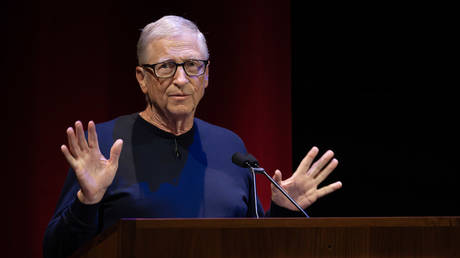
Panic sells. Bill Gates understands this market dynamic better than almost anyone who survived the early personal computer wars. When the billionaire philanthropist and Microsoft co-founder suggested that advanced artificial intelligence could theoretically cause a billion deaths through engineered biological agents or runaway autonomous weapon systems, global headlines erupted. The warning tapped into our deepest civilizational anxieties. We love our apocalyptic narratives. We consume them with a mixture of terror and dark satisfaction.
Yet, looking at the claim through the lens of a reporter who has watched technological panics repeat for thirty years, the billion-death hypothesis serves as an effective distraction. It focuses our collective gaze on low-probability, science-fiction cataclysms while immediate, structural damage unfolds in broad daylight. The real danger of artificial intelligence is not a sentient superweapon wiping out humanity in a cinematic sweep. The danger is the slow, grinding erosion of economic stability, democratic truth, and human agency driven by corporate actors chasing efficiency at any cost.
To understand why the existential risk debate misses the mark, we have to look at who controls the narrative. The loudest voices warning about artificial intelligence wiping out the human race often belong to the very corporations building these systems. Framing machine learning as a godlike force capable of total annihilation grants the technology an aura of inevitability and omnipotence. It elevates commercial software products into mythological entities. If your startup is building tools that might destroy civilization tomorrow, venture capitalists assume you must be engineering something immensely powerful today.
History shows us this playbook. During the atomic age, defense contractors benefited immensely from the public focusing on total thermonuclear annihilation rather than the mundane, corrupting economics of the military-industrial complex. Today, the existential risk narrative shields major tech monopolies from immediate regulatory accountability. Why regulate algorithm bias, labor displacement, or copyright theft when laboratories are supposedly racing against an extinction-level demon in a box?
The biological threat scenario popularized by Gates assumes that malicious actors will find it significantly easier to synthesize pathogens using large language models than through traditional scientific literature or state-sponsored laboratories. Epidemiologists and biosecurity experts point out a glaring flaw in this logic. The primary bottleneck in biological weapon development has never been information access. Pathogen creation requires physical infrastructure, specialized equipment, proprietary supply chains, and tacit laboratory skills that text-based models cannot magically manifest in a basement.
Nature and state actors already possess the capacity for mass biological harm. Publicly available academic papers contain far more actionable protocols for dangerous synthesis than any consumer chatbot. By pretending that artificial intelligence lowers the barrier to entry for amateur bioterrorists, analysts misunderstand how biological threats actually materialize. They emerge from state laboratories and poorly regulated industrial supply chains, not from teenagers prompting an algorithm for recipes.
Autonomous warfare presents a more plausible vector for large-scale tragedy, but even here, the focus on runaway artificial intelligence obscures human responsibility. When a military drone strikes a civilian target because of faulty training data or flawed target recognition, the failure is fundamentally human. Delegating lethal force to algorithms is a policy choice made by procurement officers and defense contractors. Machines do not decide to go to war. They do not calculate strategic value.
When we attribute lethal outcomes to autonomous artificial intelligence, we launder human accountability through code. We turn war crimes into software bugs. This abstraction is dangerous because it encourages military establishments to view automated casualties as systemic friction rather than moral failures. The body count does not require a sentient terminator uprising. It requires bureaucratic indifference, compressed deployment timelines, and software shipped before validation is complete.
While pundits debate science fiction scenarios, the acute economic restructuring of the global workforce accelerates. This is where the real casualty counts will register, measured not in sudden mass graves, but in the slow degradation of human livelihoods, mental health, and social cohesion.
Generative models and automation agents are not replacing factory workers with mechanical arms this time. They are targeting white-collar knowledge work. Legal assistants, junior software developers, copywriters, graphic designers, and administrative analysts find themselves competing against systems trained on their own aggregated labor. Companies are restructuring operations to reduce headcount, justifying lower wages and reduced benefits by pointing to productivity gains achieved through software.
The wealth generated by this transition does not distribute evenly. It pools upward into the balance sheets of a handful of cloud infrastructure providers and data monopolists. When entire professional strata experience sudden wage stagnation or structural unemployment, the downstream effects ripple through housing markets, healthcare access, and regional economies. Financial precarity kills. Chronic stress, despair, and the collapse of community infrastructure shorten lives across generations. This is the quiet catastrophe of automation. It lacks the cinematic flair of a bio-weapon attack, but its statistical footprint will dwarf almost any historical technological disruption.
Beyond economics lies an epistemological crisis that strikes at the heart of democratic governance. We are witnessing the industrialization of synthetic falsehood. For centuries, photographic evidence, recorded audio, and written documentation served as foundational anchors for shared reality and legal proof. That anchor has snapped.
When anyone can generate hyper-realistic video, audio mimicking specific individuals, and millions of persuasive text comments tailored for targeted psychological profiles, the concept of objective truth dissolves into tribal preference. Democratic systems rely on a baseline of shared facts to function. If citizens can no longer trust the media they consume, public discourse fractures into isolated echo chambers where manipulation thrives unchecked.
Authoritarian regimes already utilize these capabilities to suppress dissent, flood information ecosystems with noise, and manufacture artificial consensus. In open societies, the weaponization of synthetic media erodes trust in electoral integrity, judicial proceedings, and public health institutions. A society that cannot agree on what is happening ceases to be a functional collective. The resulting political instability and civil friction create conditions where violence and societal collapse become genuinely possible. The threat is not that the algorithm wakes up and decides to kill us. The threat is that the algorithm makes us incapable of governing ourselves.
The fixation on science fiction apocalypses serves the interests of those who wish to avoid reckoning with these immediate harms. When technology executives testify before lawmakers about existential risks, they successfully guide the conversation away from antitrust enforcement, data privacy laws, liability for algorithmic harm, and copyright protection. They invite legislators to debate sci-fi philosophy instead of passing binding regulations on existing business models.
If we want to address the real dangers of artificial intelligence, we must abandon the language of theology and mythology. We must stop treating code as magic and treat it as a product of human design, deployed for commercial or strategic interests within specific legal frameworks.
This requires concrete actions that technology companies resist at every turn. It demands strict liability for software deployment, forcing developers to bear the costs of security flaws, bias, and economic displacement rather than externalizing them onto the public. It requires transparent training data audits and robust protections for creative labor. It requires international treaties limiting autonomous lethal decision-making systems, anchored by criminal penalties for commanders and executives who deploy them.
The billion-death warning is a distraction designed to paralyze regulation through awe. The real crisis is already here, quiet, profitable, and systemic, transforming human culture and labor into raw material for automated optimization. We do not need to fear the machine taking over the world. We need to examine the humans who are using the machine to dismantle the world we already share.