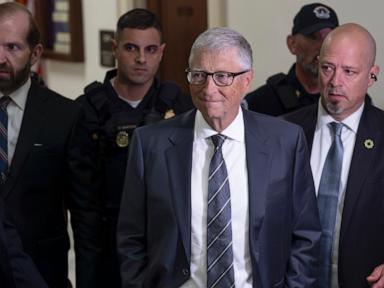
The headlines are screaming about Bill Gates testifying before the House Oversight Committee. It's easy to dismiss this as just another Washington media circus. Another powerful man answering awkward questions behind closed doors. But if you look past the standard political theater, this specific moment matters immensely. It matters for the future of global philanthropy, for accountability, and for understanding how deep access can be bought, even after a felony conviction.
Gates isn't facing criminal charges. Nobody is accusing him of participating in Jeffrey Epstein’s horrific sex trafficking ring. Yet, his scheduled appearance on Wednesday, June 10, 2026, represents a massive reckoning.
People want to know why a tech genius worth over $100 billion, with access to the best intelligence and vetting teams on earth, kept hanging out with a convicted child sex offender. The public wants the truth, and the House panel is finally forcing the conversation into the open.
The Toxic Timeline They Can't Erase
To understand why Congress called Gates in, you have to look at the math of the timeline. This wasn't a one-time meeting at a crowded charity gala. It was a multi-year relationship that kicked off in 2011.
That year is vital. It was three full years after Epstein pleaded guilty in Florida to soliciting prostitution from a minor. The red flags weren't just flapping in the wind; they were plastered all over the news.
Yet, documents released by the Justice Department show a calendar packed with interactions. We are talking about email chains regarding complex philanthropic projects, flights shared on private jets, and meetings spanning New York, France, Germany, and Washington.
The relationship lasted until at least late 2014. For three years, the world’s most famous philanthropist stayed in contact with a social pariah.
Why? Gates has repeatedly said he thought Epstein could mobilize billions for global health initiatives like polio eradication. He claims he regret every single minute of it. But Congress wants to know how that justification survived years of internal warnings.
What Congress Actually Wants to Know
The House Oversight Committee, led by Representative James Comer, isn't just looking for gossip. They are reviewing how the federal government managed the Epstein investigation and how Epstein used his massive wealth to buy protection and influence.
Gates is a critical piece of that puzzle. Investigators want to know exactly what Epstein was pitching and what he wanted in return.
The Fundraising Myth
Epstein claimed he could bring massive pools of money to the Bill & Melinda Gates Foundation. He even pushed hard for a donor-advised fund, a specialized charitable vehicle that he wanted to run. It never actually happened. The Gates Foundation didn't pay him, and they didn't partner with him. But the fact that Epstein got close enough to sit down with top foundation executives is exactly what investigators are digging into.
The Russian Connection and Extortion Angles
The questioning won't just stay on charitable giving. The committee has access to a mountain of internal documents and emails. Some of those files include highly bizarre, unverified emails that Epstein sent to himself in 2013, detailing wild claims about Gates’s personal life.
While Gates's team has slammed those specific emails as completely false and absurd, Gates did admit to foundation staff during a tense town hall meeting that he had past extramarital affairs with a Russian bridge player and a Russian nuclear physicist. Investigators want to see if Epstein was actively attempting to use that information as leverage or extortion to force his way into Gates's inner circle.
The Real Damage is to the Billions Left Behind
While the political world watches the drama in Washington, the real fallout is happening inside the walls of the $89 billion Gates Foundation. This isn't just about one man's reputation. It's about the credibility of global health funding.
When your boss is answering questions about a sex offender, the everyday work of fighting disease gets incredibly complicated. Foundation staff have openly expressed their frustration. During internal meetings, employees admitted they are struggling to reconcile their pride in saving lives with the toxic headlines surrounding the organization's chair.
The foundation has launched an independent external review to figure out how Epstein managed to get his hooks into their staff and headquarters back in 2011. They are trying to build a firewall between Gates's personal mistakes and the foundation's global mission. Whether that firewall holds depends entirely on what comes out in the transcribed interview transcripts.
What Happens Next
Don't expect a public blowout immediately. This interview is happening behind closed doors, a standard procedure the committee has used for other high-profile figures who have testified recently, including Leon Black and Kathryn Ruemmler.
However, these transcripts don't stay secret forever. The committee routinely releases them to the public after review.
If you want to track where this investigation goes, keep your eyes on two things. First, watch for the release of the official House Oversight Committee interview transcript, which will lay out Gates's exact words under oath. Second, look out for the summary of the Gates Foundation's internal audit, expected later this summer. That report will show whether the organization is actually ready to change its vetting processes, or if they are just trying to ride out the storm.
Bill Gates to testify in front of U.S. House panel on Jeffrey Epstein
This video provides a concise television news summary detailing the announcement and scheduling of Bill Gates's upcoming testimony before the congressional panel.