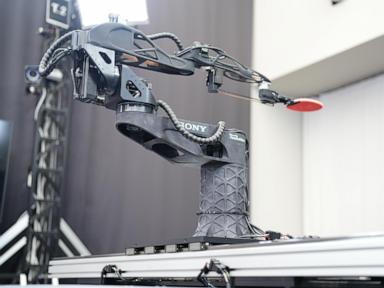
The headlines were predictable. They told a story of a machine that had finally conquered a human sport, reducing a game of reflexes, sweat, and split-second decisions to a series of winning statistics. Behind the marketing gloss of Google DeepMind and their table tennis project lies something far more significant than a robot beating an amateur player. We are looking at a fundamental shift in how machines interact with a dynamic, unpredictable environment. For years, robotics has been confined to the factory floor, performing repetitive tasks with the precision of a metronome. This new development marks the departure from that rigid existence.
It is easy to watch a video of a robotic arm swatting a plastic ball and dismiss it as a toy. After all, machines have beaten grandmasters at chess for decades. But chess is a closed system with a finite set of moves. Table tennis is an open system. It requires physical dexterity, the ability to read spin, and the capacity to adjust to a ball that does not follow a predictable arc. When a human serves, the friction of the rubber on the ball imparts forces that a machine must calculate in milliseconds. The robot is not just reacting; it is anticipating.
The core of this achievement lies in the concept of sensor fusion and low-latency motor control. In the past, industrial robots functioned by following pre-programmed paths. If the object was slightly out of place, the robot would fail. The current iteration uses an architecture that combines real-time camera data with a reinforcement learning agent. This agent has spent thousands of hours in a simulator, failing millions of times, to learn how to handle the physics of the bounce. It understands that a spin to the left requires a specific angle of the paddle, regardless of the speed. This is not intelligence in the human sense, but it is a highly evolved form of pattern recognition applied to physical space.
Critics will point to the limitations. The robot cannot handle a professional player at the top of their game. It struggles with extreme spin and the psychological gamesmanship that defines high-level athletics. That is the correct observation. Yet, to focus on the skill gap is to miss the point of the experiment. The engineers behind this project are not trying to create a world champion. They are attempting to solve the problem of real-world interaction.
Think about a delivery robot trying to navigate a crowded sidewalk or a robotic arm in a warehouse sorting irregular packages. These tasks require the same fundamental skills being tested on the ping pong table. The ability to observe, predict, and manipulate an object in motion is the missing link in robotics. When the machine misses a ball, it is not just a lost point. It is a data point. It is a failure to map the physical reality of the spin against the expected trajectory. Every missed shot informs the next iteration of the software.
This creates a clear distinction between the machines of yesterday and the machines of tomorrow. Traditional automation was about speed and consistency. The new wave is about adaptability. If a system can learn to hit a ball spinning at thirty miles per hour, it can learn to manage the delicate tension required to pick up a fragile piece of medical equipment or manipulate a tool in an unpredictable construction environment. We are moving away from the era where robots needed a controlled environment to function.
There is a cost to this progress that rarely makes the front page. As these systems become more capable, the role of human input changes. We are currently in a phase where engineers act as the primary guides, setting the parameters and evaluating the success metrics. Eventually, the machines will start to identify their own shortcomings. They will generate their own training data through self-play. At that point, the human becomes a supervisor rather than a programmer.
The implications for sports are worth considering. If a machine can be trained to replicate the playing style of any world-class athlete, it changes how human players train. A human professional could practice against a robotic sparring partner that perfectly mimics the spin and placement of their next opponent. It is the ultimate diagnostic tool. Coaches will no longer need to rely on their intuition about what an athlete is doing wrong. They will have a machine that can analyze every movement and correct it with granular accuracy.
However, we must guard against the tendency to overstate the capability of these systems. The robot on the table is still limited by the mechanics of its hardware. It is mounted, tethered, and powered by external computing clusters. It does not possess the agility of a human athlete. Its reach is fixed. Its joints are subject to wear and tear that the software cannot repair. It is a solution built for a specific problem. It does not generalize to every situation.
When we look at the progress made in the last five years, it is clear that the barrier is no longer computational power. It is data efficiency. The challenge is getting a machine to learn with fewer examples, just as a human does. You do not need to hit ten million balls to understand the physics of a bounce. You need to understand the underlying principles of force and trajectory. Current research is focusing on how to instill this physical intuition into the agents.
Some might argue that this reduces the beauty of the game to mere math. There is a human element to sports, a spark of creativity that machines lack. But science has never been about replicating the human soul. It is about understanding the mechanics of the world. By teaching a machine to play table tennis, we are gaining a better understanding of how the human brain processes the visual world. We are peeling back the layers of our own reflex systems to see if they can be codified.
The leap from the simulation to the table was the hardest part. Many projects fail at this step because the real world is messy. The lighting, the surface texture of the table, the air resistance—all these factors introduce noise that the simulation often ignores. The teams that succeed are the ones that can bridge this gap. They do not force the world to fit the model. They build models that can handle the variability of the world.
As we look at the next stage of this technology, the focus will shift from table tennis to more complex tasks. We are already seeing research into robots that can fold laundry, prepare food, and assemble furniture. These tasks require a similar level of manual dexterity. They also require the same ability to deal with uncertainty. If the ping pong robot is the proof of concept, then the industrial application is the inevitable conclusion.
This is not a future that will arrive all at once. It will be a slow integration of these systems into our lives. We will see them in specialized roles first, perhaps in manufacturing or logistics. They will remain invisible for a long time, tucked away in warehouses and laboratories, until the day we realize that they have become part of the background of our lives. They will be the machines that handle the physical tasks we find too tedious or dangerous.
We are forced to confront the reality that the physical world is becoming a data-rich environment for machines. They are no longer blind to the nuances of touch and movement. The table tennis project is a signal that the barrier between the digital intelligence and the physical world has been breached. Whether that results in a more efficient society or a displacement of labor is a debate for another day. Right now, the focus is on the ball. It is moving across the table, and the machine is ready to return it.
The real test is not whether the machine can win, but whether it can sustain its performance when the environment changes. If you change the ball, the table, or the lighting, the robot must adapt in real-time. If it fails, it is back to the drawing board. That is the cycle of development. It is iterative, often frustrating, and entirely necessary. It is how we learn, and it is how they learn.
We are watching the mechanics of intelligence being built one serve at a time. The machine doesn't care about the glory of the win or the frustration of the loss. It only cares about the trajectory. It is an observer of physics, a student of the bounce, and a precursor to a future where the distinction between machine and physical actor fades entirely. We are no longer waiting for the future. We are watching it play out in sets of twenty-one. The rally continues.