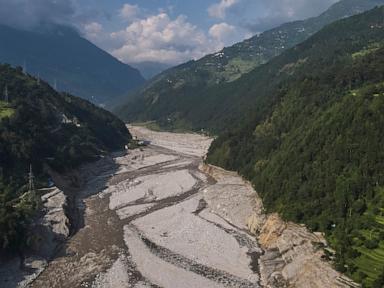
Twenty million dollars sounds tiny. It is tiny. When catastrophic monsoon floods tear through Nepal, washing out highways, burying farmland in silt, and flattening riverside settlements, a twenty-million-dollar pledge looks like spare change tossed from a skyscraper.
The lazy consensus writes the same predictable story every time this happens. Rich nations pledge a sliver of money through a multilateral climate fund. Headlines scream about stinginess and betrayal. Activists demand billions in climate reparations. Policymakers treat the entire disaster as a math problem where the missing variable is a bigger check from Geneva, New York, or Brussels.
That framing feels righteous. It is also intellectually lazy.
I have spent years watching disaster relief budgets evaporate in post-event chaos across South Asia and other flood-prone regions. I have seen governments and international agencies blow millions on emergency debris clearance and temporary patches, only for the next monsoon to rip up the exact same alignment three years later. Pouring more slow, conditional multilateral money into a broken recovery architecture does not fix Nepal's flood vulnerability. Sometimes it locks the country into a cycle of performative aid and recurring loss.
The real question is not why the check is small. The real question is whether external climate funds are designed to solve Nepal's physical and institutional exposure in the first place.
The Check Size Is a Distraction From How Climate Finance Actually Moves
When people read that a UN climate fund promised twenty million dollars for Nepal flood recovery, they picture a giant vault opening up and cash flowing straight to washed-out villages. That is not how multilateral climate finance works.
Multilateral climate funds operate through accredited implementing entities, multi-stage project approvals, fiduciary safeguards, environmental and social assessments, and co-financing rules. Those guardrails exist for a reason—preventing graft and ecological harm matters—but they turn urgent disaster recovery into a multi-year bureaucratic marathon. By the time a complex grant or concessional facility clears every committee, the immediate emergency has shifted, construction costs have inflated, and local communities have already improvised their own survival.
Worse, headline pledges often blur distinct financial instruments. A "promise" or allocation might involve technical assistance, readiness support, blended finance, or channeled project funds rather than instant, unencumbered budget support. Treating an early-stage allocation as a direct measure of recovery capacity misreads the plumbing of international aid.
Loss and Damage Versus Physical Engineering
Public commentary loves to collapse every flood story into a morality play about climate justice. Nepal contributes a minuscule fraction of global greenhouse gas emissions while bearing severe mountain and river hazards. On moral grounds, critics have every right to point out the asymmetry between emissions and exposure.
Moral symmetry, however, does not pour reinforced concrete or stabilize a Himalayan slope.
Floods in Nepal are not caused by carbon molecules alone. They happen at the collision of steep topography, intense monsoon rainfall, glacial lake outburst risks, seismic legacy fractures, and human land-use choices. Building roads along unstable riverbanks, encroaching on floodplains, ignoring drainage maintenance, and leaving critical infrastructure without redundancy turns heavy rain into a systemic collapse.
Calling a disaster "climate-driven" is accurate in part, yet convenient as an excuse. If every washed-out bridge or flooded market is blamed solely on external emissions, domestic land-use enforcement and engineering standards get let off the hook.
Why "More Aid" Often Rewards Fragility
Imagine a scenario where a district municipality rebuilds a low-lying market and access road in the exact same floodplain after every major flood because international grants eventually arrive to patch things up. Over ten years, external money subsidizes the risk of staying in harm's way. Nobody has a strong political incentive to enforce setback rules or relocate critical assets when disaster aid acts as a recurring bailout.
That is the uncomfortable side effect of reactive recovery money. It restores what was there before, often without upgrading resilience to match current hazard realities. You get back to square one just in time for square one to flood again.
Dismantling the Questions Everyone Keeps Asking
Most coverage around flood recovery stops at surface-level questions that lead to dead-end answers. Stripping away the noise reveals why the standard debate misses the mark.
"Why is twenty million dollars so little compared to the damage?"
Because multilateral climate funds were never built to underwrite the full capital cost of sovereign climate disasters across dozens of vulnerable countries at once. Demand from climate-vulnerable nations dwarfs available concessional resources by orders of magnitude. Comparing a single fund allocation to total economic and infrastructure losses proves that multilateral grants are a drop in the bucket—which is precisely why relying on them as a primary recovery engine is a strategic mistake.
"How can Nepal force wealthier nations to pay what they owe?"
Political pressure and diplomatic negotiations at global climate summits have a role in pushing finance commitments forward, especially around loss and damage mechanisms. Yet counting on geopolitical generosity as a dependable cash flow is a fragile plan. Budgets in donor capitals shift with elections, inflation, and domestic crises. A country cannot schedule bridge repairs or early-warning upgrades around diplomatic goodwill.
"What if climate funds simply speed up their payouts?"
Faster disbursement helps. Nobody argues against cutting red tape when families have lost homes and livelihoods. Still, speed without better project selection just funds bad designs faster. If money moves quickly into poorly sited embankments or unmaintained drainage channels, you have simply accelerated waste.
What Actually Works When the Waters Recede
If waiting on larger multilateral checks is a losing strategy, what does effective flood resilience look like in practice? It starts with shifting focus from post-disaster charity to pre-disaster discipline and local execution.
- Audit lifelines before the monsoon, not after: Rank roads, bridges, power substations, telecom nodes, and hospitals by how many communities lose access when a single crossing fails. Target limited capital at chokepoints rather than spreading thin patches everywhere.
- Enforce floodplain discipline where it hurts most: Stop approving new high-value structures and unengineered road cuts in active river corridors. Politically unpopular today; vastly cheaper than repeated reconstruction.
- Pair hard engineering with early warning and community drills: Structural defenses can be overwhelmed by extreme cloudbursts. Timely hydrological alerts, clear evacuation routes, and pre-positioned local supplies save lives even when infrastructure takes a hit.
- Use parametric or pre-arranged finance for rapid liquidity: Traditional post-disaster grants take too long. Pre-arranged risk transfer and contingency triggers release liquidity based on objective hazard thresholds, buying crucial days for immediate response without waiting for lengthy damage assessments.
- Demand maintenance budgets upfront: A flood defense or drainage system without dedicated operations and maintenance funding is just a future failure waiting for heavy rain. Every capital project should carry a funded upkeep plan before groundbreaking.
The Uncomfortable Trade-Offs of My Own Argument
Pushing back against the "just send more climate money" script comes with real risks, and pretending otherwise would be dishonest.
First, downplaying international climate finance can sound like letting high-emitting economies off the hook. It should not. Historical responsibility and climate finance commitments matter in global negotiations, and vulnerable countries deserve fair access to support. Pointing out the operational limits of multilateral funds is a critique of delivery and strategy, not an endorsement of stinginess.
Second, focusing on domestic governance, zoning, and engineering standards can put an unfair burden on a country with tight fiscal space and tough terrain. Nepal faces real geological and economic constraints that richer, flatter countries never deal with. Telling cash-strapped local governments to "just plan better" without acknowledging severe budget and technical bottlenecks misses half the struggle.
Third, restricting construction in floodplains or relocating vulnerable settlements creates immediate social and economic friction. People live near rivers and roads for access to livelihoods, trade, and flat land. Heavy-handed enforcement without fair alternatives triggers pushback and can harm already marginalized households.
Stop Treating Disaster Aid as a Development Plan
Multilateral climate funds are side shows, not salvation. Twenty million dollars—or two hundred million—will never substitute for disciplined land use, resilient engineering, rapid-response liquidity, and local institutional competence.
Fix the rules on the ground, protect the lifelines, and stop measuring sovereignty by the size of the next international pledge.