The mass acquisition of 1,500 beagles from a Wisconsin breeding facility marks a rare, large-scale disruption in the opaque supply chain that feeds American laboratories. While animal rights groups celebrate the move as a victory for welfare, the transaction highlights a uncomfortable reality in the biomedical industry. These dogs were not "liberated" in a midnight raid. They were purchased. By paying to remove these animals from the production line, rescue organizations have inadvertently exposed the cold, ledger-based mechanics of an industry that treats high-quality canine genetics as a commodity with a fluctuating market price.
This specific transaction involves a facility in Wisconsin that has faced mounting pressure from local activists and federal inspectors. By offloading 1,500 dogs at once, the breeding operation effectively cleared its "inventory" while silencing the immediate PR firestorm caused by protesters. For the rescue group, the cost is staggering, involving not just the purchase price but the logistical nightmare of veterinary care, transport, and long-term placement. For the facility, it is a strategic divestment.
The Economics of the Canine Research Pipeline
To understand why a facility would part with 1,500 dogs, you have to look at the overhead. Research beagles are not standard pets. They are "purpose-bred," meaning they are raised in sterile environments to ensure they lack exposure to common pathogens that could skew scientific data. Maintaining this level of biosecurity is expensive. When a facility falls under the microscope of the USDA or faces constant protests, the cost of "brand protection" and legal compliance often begins to outweigh the per-unit profit of the dogs.
The beagle is the preferred breed for toxicology and pharmaceutical testing for reasons that are both practical and heartbreaking. They are small, easy to house, and—most importantly—possess a docile, forgiving temperament. They do not fight back. This docility makes them the perfect industrial tool. When a rescue group steps in to buy out a facility’s stock, they are essentially participating in a market liquidation.
Why Wisconsin Became a Flashpoint
Wisconsin has long been a hub for both agricultural and biomedical research. The state’s infrastructure supports large-scale animal husbandry, but that same infrastructure makes it a prime target for transparency advocates. In recent years, the gap between public sentiment and industrial practice has widened. The average person no longer accepts "standard industry practice" as a valid excuse for the conditions found in mass-breeding sheds.
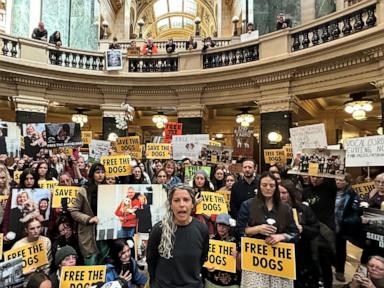
Protesters near the Wisconsin site documented noise complaints, waste management issues, and alleged violations of the Animal Welfare Act. These aren't just ethical concerns; they are business liabilities. A facility under constant protest struggles to retain staff and maintain the "quiet" environment required for sensitive breeding cycles. Selling the dogs to a rescue group allows the company to exit the situation with a cash infusion rather than a total loss through government-ordered seizure.
The Regulatory Gap and the USDA Shell Game
The federal oversight of these facilities is often criticized as being toothless. The USDA’s Animal and Plant Health Inspection Service (APHIS) is responsible for enforcing the Animal Welfare Act, but the agency has a history of prioritizing "education" over enforcement. In many cases, inspectors find violations, issue a warning, and return months later only to find the same issues.
For the Wisconsin facility, the pressure didn't just come from the law. It came from the court of public opinion. When 1,500 beagles are moved, it creates a massive spike in public awareness. However, this creates a vacuum. If the demand for research dogs remains constant, other facilities in states with even looser oversight will simply ramp up production to fill the gap.
The Cost of Redemption
The rescue group now faces a challenge that dwarfs the initial purchase. Moving 1,500 dogs requires a coordinated fleet of vehicles, a network of foster homes, and thousands of gallons of specialized cleaning supplies. Most of these dogs have never touched grass. They have never seen a toy. They have lived their entire lives on stainless steel or plastic flooring.
- Medical Screening: Each dog requires testing for heartworm, parasites, and genetic abnormalities.
- Behavioral Rehabilitation: Beagles from these environments often suffer from "kennelosis," a state of shutdown where they are terrified of open spaces and human touch.
- Socialization: Teaching a three-year-old dog how to walk on a leash when it has only ever moved in a five-by-five cage.
This is the hidden tax on animal rescue. The breeding facility gets a check and walks away from the problem. The non-profit sector and the donating public pick up the tab for the animal’s lifetime of care. It is a transfer of debt from a for-profit entity to the charitable sector.
The Myth of Necessary Testing
Industry lobbyists argue that canine testing is a "necessary evil" for drug development. They point to FDA requirements that often mandate testing on one rodent and one non-rodent species before human clinical trials can begin. Yet, the science is shifting. New technologies, such as organ-on-a-chip and advanced computer modeling, are proving to be more predictive of human reactions than a dog's physiology.
The "1,500 beagles" story is a symptom of an industry in transition. As the public becomes more aware of what happens behind the windowless walls of research facilities, the "Wisconsin model" of mass divestment may become more common. Companies are realizing that the old way of doing business—hiding behind proprietary secrets and high fences—is no longer sustainable in an age of drone footage and social media mobilization.
Behind the Kennel Doors
What the protesters saw in Wisconsin was not an anomaly. It was the standard. In these facilities, "efficiency" is the only metric that matters. Female beagles are used as "production units" until their litter sizes drop, at which point they are culled or, in rare cases, sold off. The pups are weaned early to speed up the next breeding cycle.
When you buy 1,500 dogs, you are buying the evidence of this system. You are buying the scarred ears, the muscle atrophy, and the vacant stares. The rescuers aren't just saving lives; they are collecting 1,500 witnesses to a system that most people would rather ignore. This isn't just about animal welfare in one state. This is about the end-to-end ethics of how we develop everything from heart medication to laundry detergent.
The Logistics of a Mass Exit
Managing a group this size is a feat of industrial-scale compassion. The rescue group has to vet every single home. They have to ensure these dogs don't end up back in the hands of brokers who might flip them back into the research trade. It requires a level of data management and security that most small-town shelters simply cannot handle.
The facility in Wisconsin likely saw this as a "clean slate" move. By clearing the kennels, they can potentially pivot to different types of animal production or attempt to rebrand under a different corporate name. It is a common tactic in the breeding industry: when the heat gets too high, liquidate and relocate.
The Industry Response
The broader research community views these mass rescues with a mix of frustration and fear. They worry about the precedent. If activists can successfully pressure a facility into selling its entire stock, what happens to the next pharmaceutical contract? What happens to the "stability" of the supply chain?
To the industry, these beagles are "biological models." To the public, they are pets. This fundamental disconnect is why the Wisconsin situation escalated to the point of a mass buyout. You cannot bridge the gap between a "model" and a "member of the family."
Beyond the Rescue
The 1,500 beagles will eventually find homes. They will learn that hands can provide scratches, not just injections. They will learn the scent of a backyard and the sound of a television. But the facility in Wisconsin still stands. The laws that allowed those conditions still exist.
Real change doesn't happen when a check is written to buy dogs out of a bad situation. It happens when the demand for those dogs is replaced by superior, non-animal methodologies. Until the "two-species" testing mandate is modernized at the federal level, these facilities will continue to operate, regardless of how many protesters gather at the gates.
The victory in Wisconsin is individual, not systemic. Every one of those 1,500 dogs will have a better life, but the machine that produced them remains oiled and ready. To stop the cycle, the focus must shift from the rescue of the product to the dismantling of the requirement.
Stop looking at the dogs as a tragedy to be solved and start looking at them as a commodity that only exists because we allow a regulatory loophole to persist. Every time a rescue group buys a dog from a breeder, the breeder wins twice: once on the sale, and once on the relief of their overhead. We are subsidizing the exit strategy of the very people we oppose.
Demand that the FDA and lawmakers prioritize the transition to human-relevant testing methods immediately.