The humidity in Manila doesn’t just sit in the air; it wraps around you like a heavy, warm blanket the second you step off the plane. For decades, this thick tropical embrace was followed by something even warmer: the genuine, unforced smile of a local. It is a specific kind of hospitality that Filipinos call bayanihan and hospitality blended into an unspoken cultural reflex.
But smiles don’t automatically pave highways. They don't build state-of-the-art airport terminals, either.
As the Philippines prepares to take the center stage for the ASEAN Summit, the nation finds itself at a strange, quiet crossroads. The government is betting big on a new marketing pivot: "authenticity." The bureaucratic theory is that by leaning into raw, unfiltered cultural identity, the country can finally close the gap with tourism titans like Thailand, Vietnam, and Malaysia.
It sounds beautiful on paper. In reality, it exposes a friction between a country’s soul and its infrastructure.
Can a nation rewrite its economic destiny simply by being itself? Or is the tourism department asking a beautifully warm people to carry the weight of a cold, broken system?
The Concrete Ceiling
Consider a hypothetical traveler named Elena. She is a 32-year-old software designer from Frankfurt, loaded with disposable income and a desire for pristine beaches. She has seen the glossy digital campaigns. She wants the "authentic" Philippines.
Elena lands at Ninoy Aquino International Airport.
The warmth she encounters isn’t the storied hospitality; it’s the lack of air conditioning in a crowded baggage claim. Next comes the labyrinth of Manila’s infamous traffic, a gridlock that turns a ten-kilometer drive into a grueling two-hour psychological test. When she finally reaches her domestic connection to paradise—say, El Nido or Siargao—she faces delayed flights, spotty Wi-Fi, and rolling power outages.
Elena wanted authenticity. She got logistics.
This is the invisible wall that the Philippine tourism sector hits year after year. The regional numbers paint a sobering picture. While Thailand regularly welcomes nearly forty million international visitors in peak years, and Malaysia and Vietnam comfortably cross the double-digit millions, the Philippines has historically hovered much lower, struggling to consistently break past the eight-million mark.
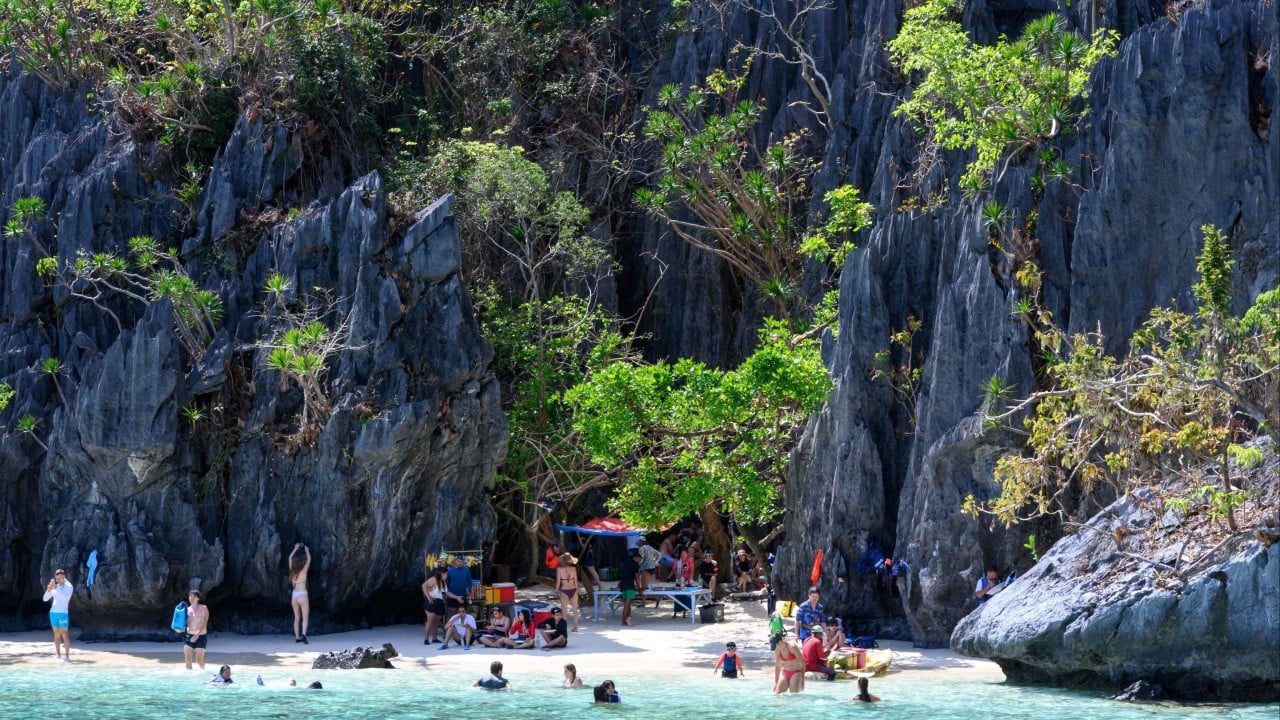
It is not a deficit of beauty. The islands boast some of the finest white sand and clearest waters on the planet. The problem is the friction of getting there.
When the ASEAN chairmanship passes to Manila, the spotlight will intensify. The summit isn't just a gathering of regional leaders in barongs discussing trade tariffs; it is a massive, multi-million-dollar showcase. It is an audition. The country will be filled with diplomats, international journalists, and business travelers. The stakes are immediate. If the country cannot move a delegation from a hotel to a convention center without a logistical meltdown, the "authenticity" campaign loses its teeth.
The Mirage of the Glossy Campaign
Every few years, a new administration enters the grand offices of the Department of Tourism. Each brings a new slogan. We have seen the evolution from "Wow Philippines" to "It’s More Fun in the Philippines," and more recently, the shift toward a rebranding focused on the country's emotional core.
These campaigns are expensive. They feature sweeping drone shots of rolling hills in Batanes, slow-motion footage of indigenous weavers in Mindanao, and close-ups of sizzling pork sisig. They are designed to make you feel.
But marketing can be a dangerous narcotic for a developing economy. It creates an expectation that reality cannot always fulfill.
Step back into the shoes of someone living the reality. Think of a real-life driver named Jun, who navigates a jeepney through the chaotic arteries of Cebu. To a tourist, Jun’s colorful jeepney is a whimsical piece of living folk art, a perfect backdrop for an Instagram story. To Jun, it is a grueling, ten-hour-a-day livelihood in the choking smog, fighting rising fuel prices and shifting government modernization mandates that threaten to price him out of his own life.
When we commodify "authenticity," we risk turning poverty and systemic stagnation into a tourist attraction.
True authenticity cannot be manufactured by an advertising agency in Makati. It exists in the daily survival, grit, and joy of the population. If the state leans too hard on the emotional labor of its citizens to draw in crowds, it abdicates its primary responsibility: building a functional nation. A smile is a wonderful welcome, but a functioning train line from the airport to the city center is a form of respect.
The ASEAN Lever
The upcoming ASEAN chairmanship offers a unique, fleeting lever to crack this concrete ceiling. Historically, major geopolitical events force a government's hand. Roads get paved. Airport lines suddenly move faster. Beautification projects that were stalled in bureaucratic limbo for half a decade miraculously finish in three weeks.
This temporary efficiency matters. It offers a glimpse of what the country could look like if infrastructure kept pace with natural beauty.
The real challenge for the Philippines' tourism strategy isn't convincing the world that its people are nice. The world already knows that. The challenge is converting the fleeting political will of the ASEAN summit into a permanent blueprint for national development.
If the infrastructure improves, the nature of the tourism shifts. It moves from budget backpackers willing to endure eighteen-hour ferry rides to high-value travelers who pump serious capital into local communities. It allows small, eco-friendly boutiques in Bohol or surf camps in Catanduanes to thrive because visitors can reach them without losing two days of their vacation to transit mishaps.
What Authenticity Actually Demands
We often get the concept of tourism backward. We treat it as an isolation ward—a pristine resort walled off from the realities of the local village outside the gates.
But the modern traveler is changing. People are increasingly allergic to the sterile, hyper-curated resort experience. They want something real. They want the very thing the Philippines is trying to market.
But to sell a real experience, you must protect the people who create it.
If a cultural community in the Cordillera mountains is displaced by corporate land grabs or environmental degradation, no amount of tourism branding can bring that heritage back. If local fishermen in Palawan are crowded out by massive, foreign-owned cruise terminals, the very flavor of the island dies. Authenticity isn’t a mask you put on for visitors; it is the health of the culture when no one is looking.
The Philippines doesn't need to reinvent its identity to win the regional tourism game. It doesn't need to copy the glittering skyscrapers of Singapore or the hyper-efficient train networks of Tokyo, though a few more trains would certainly help.
The country's competitive advantage has always been its human element—the effortless, genuine connection that happens over a shared meal or a guitar on a beach at dusk. It is an intangible asset that money cannot buy and other destinations spend billions trying to fake.
As the dignitaries arrive for the ASEAN summit and the cameras begin to roll, the true test will not be found in the speeches or the marketing videos. It will be found in whether the country can finally build a stage worthy of its actors.
A tired traveler sits at a small roadside eatery in Siargao, waiting out a sudden, violent tropical downpour. The power has just gone out, plunging the village into darkness. Without a word, the elderly woman running the kitchen lights a kerosene lamp, places it on the traveler's table, and hands him a fresh, warm bowl of ginger broth. She doesn't do it because it's a key performance indicator in a tourism master plan. She does it because the rain is heavy, and someone is cold. That is the asset. The only question left is whether the system built around her will ever learn to shine as brightly as that lamp.