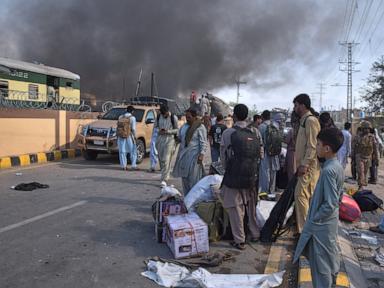
A devastating suicide car bombing struck a military-heavy passenger train near the Chaman Phatak area in Quetta, killing at least 24 people and wounding more than 70 others. The attack, which targeted a train transporting security personnel from the Quetta Cantonment toward Peshawar, saw an explosives-laden vehicle rammed directly into the moving carriages, overturning two bogies and igniting a massive blaze. The Balochistan Liberation Army (BLA) quickly claimed responsibility, identifying the operation as a targeted "fidayee" strike by its elite Majeed Brigade. This latest carnage lays bare a stark reality that state officials in Islamabad continually try to obscure: the decade-long conflict in Balochistan is no longer a low-level, provincial insurgency, but a highly coordinated, asymmetric war targeting Pakistan's critical state infrastructure.
For years, federal authorities have repeated a familiar script, insisting that military operations have successfully broken the back of ethnic secessionist groups. The reality on the ground tells an entirely different story. By shifting their tactics from remote guerrilla skirmishes in the mountains to high-impact, urban suicide operations against highly secured transport hubs, the insurgents have demonstrated a lethal evolution in capability. This isn’t a failure of local policing. It is a fundamental collapse of the state's intelligence and containment strategy in its most resource-rich yet structurally neglected province.
The Strategic Shift to Infrastructure Warfare
The choice of a railway line as the primary target is neither accidental nor merely opportunistic. Railways represent the literal arteries of federal connectivity, linking the isolated, mineral-rich expanse of Balochistan to the political and military nerve centers of Punjab and Khyber Pakhtunkhwa. By severing these tracks, the BLA achieves a dual objective: halting the mobility of reinforcing troops and projecting an image of a state incapable of securing its own sovereign territory.
The Evolution of BLA Tactics
Historically, Baloch insurgents relied on hit-and-run tactics, utilizing small-arms fire or remote-controlled improvised explosive devices (IEDs) against isolated frontier posts. The modern conflict is defined by an entirely different doctrine. The Majeed Brigade, the suicide wing of the BLA, now employs heavily trained operatives willing to execute complex, vehicle-borne suicide attacks in densely populated urban centers.
The logistical footprint required to acquire commercial explosives, weaponize a vehicle, and navigate it through the heavily militarized checkpoints of Quetta points to a sophisticated underground network that the state has failed to dismantle. This is the second catastrophic breach of the railway network in recent memory, following a massive suicide bombing at the Quetta railway station ticket platform that claimed dozens of lives. The state’s defensive posture remains reactive, scrambling to declare medical emergencies and cordoning off blast sites only after the smoke has begun to clear.
The Geopolitical Pressure Cooker
To view the violence in Quetta solely through the lens of internal law and order is to miss the broader global struggle playing out across the region. Balochistan sits at a critical geographic crossroads, acting as the foundation for billions of dollars in foreign infrastructure investments, most notably the China-Pakistan Economic Corridor (CPEC). The port of Gwadar, located at the southern tip of the province, is designed to give Beijing direct access to the Arabian Sea.
- The Chinese Factor: Secessionist groups view these international investments as a form of resource exploitation by Islamabad in collusion with Beijing. Consequently, Chinese engineers, construction sites, and energy projects have become frequent targets, forcing Pakistan to dedicate entire army divisions exclusively to protecting foreign workers.
- The Regional Blame Game: Following the blast, provincial officials like Chief Minister Sarfraz Bugti quickly invoked the phrase Fitna al-Hindustan, accusing external intelligence agencies—specifically India—of financing and sheltering the BLA. While Islamabad frequently points to cross-border sanctuaries in a bid to externalize the blame, New Delhi consistently denies the allegations. This focus on external actors often serves as a convenient shield, allowing the federal government to bypass the deeply rooted, domestic grievances fueling the rebellion.
The Deep Rooted Grievances Fueling the Fire
No amount of military force can fully suppress an insurgency that derives its strength from generational economic alienation. Balochistan produces a vast share of Pakistan’s natural gas and holds multi-billion-dollar reserves of copper and gold, yet it consistently ranks at the bottom of the country’s human development index. Local communities watch wealth extracted from their soil piped directly to the industrial centers of Punjab, while they face acute shortages of clean drinking water, schools, and basic healthcare.
Compounding this economic neglect is the heavy-handed security apparatus deployed to guard the province. The issue of forced disappearances—where young Baloch activists, students, and suspected sympathizers are allegedly detained by state intelligence agencies without trial—has deeply radicalized a new generation. Instead of isolating the militants, heavy-handed state crackdowns have created an environment where the BLA’s message of absolute separation finds a steady stream of recruits willing to drive explosives-laden cars into military targets.
Why the Current Strategy is Broken
The state's response to the crisis has settled into a predictable, ineffective cycle. A major attack occurs, politicians issue stern statements on social media condemning the "cowardly acts," hospitals go on high alert, and the military launches a localized sweeping operation that yields few high-value targets. This approach treats the insurgency as a military problem to be suppressed rather than a complex political crisis requiring deep structural reform.
+-------------------------------------------------------------+
|               The Failure of Containment                    |
+-------------------------------------------------------------+
| 1. Excessive reliance on kinetic military operations         |
| 2. Complete absence of meaningful political dialogue        |
| 3. Failure to address local ownership of natural resources   |
| 4. Inability to secure critical urban transit corridors      |
+-------------------------------------------------------------+
Hardline counter-terrorism measures alone cannot secure a railway line that stretches across hundreds of miles of inhospitable terrain. Until the federal government addresses the core issues of political disenfranchisement and revenue sharing, the tracks leading out of Quetta will remain a dangerous frontline. The smoking ruins of the passenger train at Chaman Phatak stand as a grim warning that the state is losing the battle for stability in its most critical borderland.