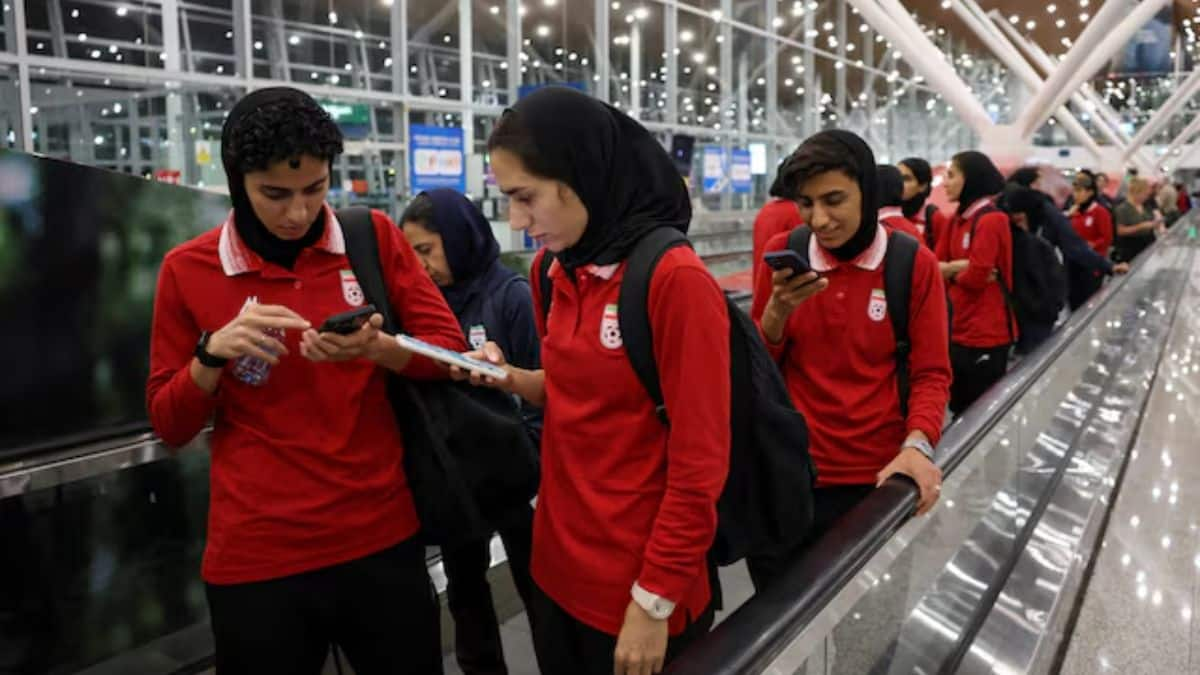
The Western media loves a predictable tragedy. When Shaghayegh Bavi, a talented defender for the Iranian women’s national team, initially sought asylum in Australia after a qualifying tournament, the headlines practically wrote themselves. It was the "oppressed athlete seeks freedom" trope, polished and ready for a 24-hour news cycle. But then, the script flipped. Bavi withdrew her application and boarded a plane back to Tehran.
Immediately, the narrative shifted from "brave escape" to "coerced return." The assumption? She must have been threatened. Her family must be in danger. It is inconceivable to the comfortable Western observer that a woman would choose a complex, restrictive reality over the bureaucratic purgatory of the Australian immigration system.
Stop looking at this through the lens of a savior complex. Bavi’s return isn’t a defeat; it is a cold, calculated assessment of what "freedom" actually looks like for an elite athlete in 2024.
The Asylum Purgatory No One Talks About
Mainstream outlets paint asylum as a golden ticket. In reality, for a professional athlete, it is often a career death sentence. Australia’s "Protection Visa" (Subclass 866) isn't a red carpet; it’s a cage of uncertainty.
When an athlete applies for asylum, they enter a legal limbo that can last years. During this time, their professional status evaporates. They lose access to national team training, international FIFA-sanctioned matches, and the structured coaching that keeps them at the elite level.
I have seen athletes from the Middle East and Africa arrive in "free" nations only to find themselves working twelve-hour shifts in warehouses because their credentials don't transfer or their visa status prevents professional contracts. They trade being a national hero in a flawed system for being a nameless statistic in a "perfect" one. Bavi looked at the prospect of playing for a third-tier local club in suburban Brisbane while waiting for a court date and decided that her identity as a top-flight international footballer was worth more.
The Myth of the Monolithic Iranian Experience
We are conditioned to view Iran as a black hole of human rights where every woman is a silent victim. This lazy consensus ignores the fierce, internal negotiation Iranian women navigate every day.
Women’s football in Iran isn't just "allowed"—it is a site of massive social investment and quiet rebellion. The Kowsar Women Football League is a professional structure. These women are celebrities. They have massive social media followings, sponsorships, and a level of cultural capital that an immigrant in Sydney could never dream of achieving.
By returning, Bavi retains her platform. In the West, she is a "refugee." In Iran, she is a symbol of resilience. Which one has more power to actually change the status quo?
The "lazy consensus" says she is safer in Australia. Logic says she is more relevant in Iran. For an elite competitor, relevance is the only currency that matters.
The Institutional Failure of Sport Sanctuaries
If the international community actually cared about "saving" these athletes, the infrastructure would exist to support them. It doesn't. FIFA and the Asian Football Confederation (AFC) are notoriously toothless when it comes to protecting players who defect.
When an athlete leaves, they are often banned by their home federation. Because FIFA respects the autonomy of national associations, the player is effectively blacklisted.
"An athlete without a federation is an artist without a stage."
🔗 Read more: The Raw Reality of the Tiger Woods Arrest Video
Imagine a scenario where a player defects to "freedom" only to realize they can never play a professional match again because their home country refuses to release their International Transfer Certificate (ITC). This isn't a theory; it is the administrative reality that crushes the dreams of those who seek asylum without a massive European club already backing them.
Deconstructing the Coercion Narrative
The immediate reaction to Bavi's return was that she was "forced." While the Iranian state’s pressure tactics are well-documented, we must stop infantalizing adult women by assuming they cannot make strategic choices under pressure.
Choosing to return to one's home, family, and career—even under a restrictive regime—is an act of agency. It is a rejection of the Western demand that she become a martyr for our political sensibilities. Bavi isn't a pawn; she’s a player who realized the "grass is greener" rhetoric was a lie sold by people who have never had to rebuild a life from zero.
The Cost of the Australian Dream
Australia is not the egalitarian paradise the media portrays. The country has some of the most draconian immigration policies in the developed world. Offshore detention, years-long processing times, and a rising tide of anti-immigrant sentiment make it a hostile environment for a high-profile defector.
Bavi likely looked at the data. She saw the years of social isolation. She saw the lack of a clear pathway back to the pitch. She chose her life, her family, and her sport.
We need to stop asking why she went back and start asking why the "free world" makes asylum such a miserable, soul-crushing alternative that a professional athlete would rather live under a fundamentalist regime than stay.
The Reality of Professional Suicide
For a footballer, the peak window is roughly ten years.
- Age 18-22: Development.
- Age 23-28: Prime.
- Age 29+: The decline.
At 20-something, Shaghayegh Bavi is in her prime. Spending three of those years in a legal battle with the Australian Department of Home Affairs is professional suicide.
If she stays in Iran, she plays. She competes in the Asian Cup. She stays in the eyes of scouts who might actually get her a legitimate professional contract in Europe or Asia through legal channels later.
Returning home is the only way she keeps her career alive. It is the ultimate contrarian move: choosing the "oppressor" to save the "vocation."
The media wants a story of escape. Bavi gave them a story of pragmatism. She refused to be the "pitiful refugee" and chose to remain the "elite athlete." If you can't handle that, it’s your worldview that needs fixing, not her decision.
Go ahead and mourn her "lost freedom" while she continues to captain her destiny on the pitch. The pitch doesn't care about your politics. It only cares about who shows up to play. She showed up.