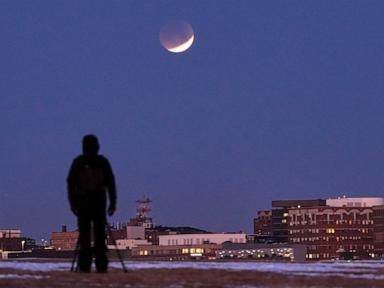
Skywatchers across North and South America are preparing for a deep partial lunar eclipse on the night of August 27 into August 28, 2026. During this event, approximately ninety-three percent of the lunar disk will slip directly into the darkest portion of Earth's shadow, known as the umbra. Unlike solar events that require frantic travel to narrow pathways of totality, this celestial alignment offers a wide geographic viewing window. Millions across the Western Hemisphere will witness the moon take on a rusty, copper-toned hue without ever leaving their backyards.
Yet, public fascination often masks the intricate orbital mechanics governing these alignments. Planetary geometry dictates every phase of the spectacle.
The Physics of Earth's Shadow
A lunar eclipse occurs only during a full moon, when the sun, Earth, and our natural satellite lock into an approximate straight line. Because the moon's orbital plane tilts roughly five degrees relative to the ecliptic plane of Earth's orbit around the sun, alignment does not happen every month. Most months, the moon passes safely above or below Earth's shadow cones.
When nodes intersect correctly, two distinct shadow zones emerge. The penumbra acts as a pale, outer fringe where Earth blocks only a fraction of solar radiation. The umbra represents the core cone of absolute darkness where direct sunlight is entirely cut off.
Why the Moon Turns Red
If Earth completely blocks direct sunlight during an alignment, basic intuition suggests the moon should vanish into total blackness. Instead, it glows with a dim, ominous crimson. This phenomenon roots itself in Earth's atmosphere.
As sunlight streams past the rim of our planet, the atmospheric gases scatter shorter wavelengths of light, such as blue and violet, through Rayleigh scattering. Longer wavelengths, including red and orange, pierce through the troposphere largely unhindered. Earth's atmosphere bends this filtered light inward, casting a faint red cone across deep space. Every sunrise and sunset occurring simultaneously across the globe projects onto the lunar surface.
Observing the Western Hemisphere Advantage
Geography dictates visibility strictly by night-side orientation. Because the event unfolds overnight on August 27-28, North and South America find themselves positioned on the dark side of Earth while the alignment reaches its peak.
Local time zones determine the exact window of observation. For eastern regions of North America, the partial phase commences late in the evening of August 27, hitting maximum shadow coverage shortly after midnight. Observers further west experience the early stages during evening twilight or shortly after moonrise.
Equipment and Practical Realities
Stargazers require zero specialized safety gear. Unlike solar phenomena that threaten permanent retinal damage, watching a lunar progression poses no hazard to human eyes. Naked-eye viewing reveals the slow creep of the umbral edge across craters and maria.
Binoculars or a small spotting scope enhance the experience significantly. Optical aid allows observers to trace the subtle color gradients along the shadow boundary. High-contrast terminator lines reveal copper tones blending into slate gray where sunlight fails to reach.
Historic Context of Saros Cycles
Ancient astronomers tracked these alignments using patterns known as Saros cycles. A Saros period lasts roughly eighteen years, eleven days, and eight hours. After this exact duration, the relative geometry of the sun, Earth, and moon repeats closely enough to replicate similar shadow dynamics.
Modern tracking replaces superstition with precision telemetry. Space agencies calculate ephemeris data down to the millisecond. The upcoming alignment represents a specific member of an ongoing series, contributing decades of comparative data for orbital mechanics researchers.
The Limits of Partiality
Observers must manage expectations regarding the visual spectacle. Because the event stops short of a full hundred percent totality, a thin sliver of the moon remains outside the core shadow cone. This bright edge prevents the deep, uniform crimson characteristic of total eclipses.
The contrast between the darkened, coppery expanse and the unblemished sliver creates a striking visual asymmetry. Photographers targeting the event must adjust dynamic range settings carefully. Overexposing the bright limb washes out the delicate ruddy details hidden within the umbral zone.
Clear atmospheric conditions remain the ultimate variable for casual viewers. Urban light pollution degrades faint contrast shifts, making dark-sky rural escapes ideal for capturing the true depth of the shadow. Weather patterns across the Americas will ultimately dictate individual success rates as the clock ticks toward the late-August alignment.