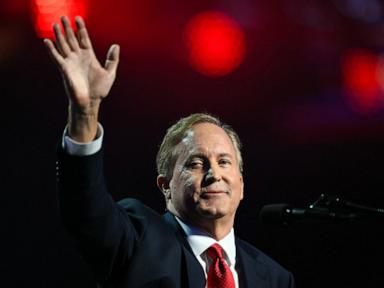
Modern political campaigns operate on strict message discipline until a hidden microphone captures the unvarnished truth. For Texas Attorney General Ken Paxton, that reality arrived in the form of a leaked audio recording from a private gathering in South Texas. In the recording, Paxton candidly admitted to donors and lobbyists that the Republican midterm convention hosted in Dallas damaged polling numbers across the board. When asked if the high-profile gathering acted as a political drag, Paxton offered a blunt assessment. The numbers dropped immediately following the event, affecting candidates well beyond the top of the ticket.
This revelation punctured the carefully cultivated aura of absolute invincibility that usually surrounds major party rallies. It offered a rare glimpse into the private anxieties of seasoned operatives who understand that high-volume national spectacles often alienate the exact suburban and independent voters required to secure statewide victories. As Paxton faces a fierce and unexpectedly competitive challenge from Democratic state lawmaker James Talarico for the United States Senate seat, every misstep carries exponential weight. The fallout from the Dallas convention highlights a persistent tension within conservative politics. Nationalizing local and state races through polarizing figures can energize a core base while simultaneously triggering a powerful counter-mobilization among moderate and undecided constituencies.
The Anatomy of a Leaked Confession
To understand how a gathering intended to project strength instead created political drag requires examining the mechanics of the event itself. Held at the American Airlines Center in Dallas, the midterm convention brought together thousands of activists, donors, and party leaders alongside Donald Trump. The program featured high-energy speeches, bold policy promises, and aggressive positioning against federal policies. Yet beneath the arena lights, local campaign managers faced a starkly different reality on the ground. Rallies designed to dominate national headlines frequently prioritize red-meat rhetoric that resonates deeply with primary voters but repels the broader electorate necessary in a general election.
Conventions of this magnitude impose a heavy logistical and psychological tax on campaigns. When national figures dominate local news cycles with polarizing commentary, independent voters take notice. In Texas, where demographic shifts and suburban migration have steadily eroded traditional Republican margins over the past decade, alienating moderate voters carries severe consequences. Paxton's private admission reflected an acute awareness of this electoral math. While public campaign spokespersons quickly dismissed the leaked audio as manipulated nonsense and pointed to internal tracking polls showing a narrow lead, the private concession laid bare the underlying vulnerability of the Republican ticket.
Primary Wounds and Fractured Alliances
The path that brought Paxton to this bruising general election fight was forged through bitter intra-party combat. Earlier in the cycle, Paxton launched an insurgent primary challenge against four-term incumbent Senator John Cornyn. Backed by an endorsement from Trump, Paxton weaponized his record as attorney general and capitalized on deep-seated grass-roots frustration with the party establishment. The primary battle was vicious, leaving deep scars across the state party apparatus. Veteran donors who had funded Cornyn for decades suddenly found themselves locked out or hesitant to fully finance Paxton's general election machinery.
This internal fracture created a unique vulnerability. Winning a primary against a longtime incumbent requires a sharp, combative posture that energizes ideological purists. Transitioning from that combative stance to a broad-tent general election message demands discipline and institutional backing. By the time the Dallas convention arrived, the Texas Republican party was still stitching together its fractured coalitions. Instead of functioning as a healing mechanism, the convention served as a loud reminder of the party's internal divisions. When national speakers took the stage to rehash old grievances and target establishment figures, they reinforced the narrative that the party was more focused on internal retribution than addressing bread-and-butter economic concerns.
The Democratic Surge and Suburban Shifts
The timing could not have been worse. Across the state, voters were grappling with persistent economic anxieties, cost-of-living pressures, and debates over public education and healthcare. Into this void stepped James Talarico, a young, articulate Democratic challenger who framed the race as a referendum on character, institutional integrity, and public service. Talarico avoided the traditional traps of state Democratic campaigns by focusing heavily on populist economic messaging and appealing directly to working-class Texans of all political stripes. By casting his campaign around themes of common sense and community welfare, Talarico steadily closed the polling gap, turning a race once considered safe for Republicans into a nail-biting dead heat.
Paxton's record itself became a central battleground. Having survived impeachment proceedings in the state legislature and numerous legal battles, Paxton has long polarized public opinion. For his supporters, his aggressive litigation against federal overreach makes him a hero of the conservative movement. For his critics, those same legal controversies represent an unacceptable ethical burden. Talarico's campaign capitalized on this polarization, blanketing television screens and digital platforms with ads questioning Paxton's fitness for federal office. During a recent appearance before the United States Hispanic Business Council, Paxton addressed some of these criticisms head-on, defending past prosecutorial decisions and pushing back against opposition characterizations. Yet explaining old controversies during a fast-moving national campaign forces a candidate onto the defensive, consuming valuable time and resources that should be spent defining the opponent.
The Mechanics of Modern Political Exposure
The mechanics of leaked audio recordings have transformed modern political journalism. In an era where almost every private fundraiser, donor dinner, and closed-door meeting features dozens of smartphones resting on tables, the concept of off-the-record speech has effectively vanished. Campaigns can no longer maintain a dual messaging strategy where candidates speak candidly in private about polling vulnerabilities while projecting unyielding optimism in public. When the discrepancy is exposed, opponents seize the narrative, forcing rapid-response teams into crisis management mode.
The political fallout from the Dallas convention recording illustrates how quickly an internal grumble can metastasize into a national news story. Media outlets dissected the audio frame by frame, interviewing pollsters, campaign insiders, and political scientists to determine whether the convention genuinely moved needle numbers downward. While some analysts argued that the dip in support was part of a broader national trend reflecting voter dissatisfaction with incumbent administrations, others maintained that high-visibility partisan spectacles disproportionately activated opposition voters. In competitive states like Texas, where every percentage point matters, even a minor downward blip in tracking polls can alter fundraising flows, volunteer enthusiasm, and media coverage.
As the race entered its final weeks, the Republican leadership scrambled to recalibrate. Trump announced aggressive plans for a multi-state campaign tour aimed at shoring up vulnerable Republican seats and energizing conservative turnout. Yet even as national surrogates descended upon the Lone Star State to rally the faithful, local organizers privately echoed Paxton's earlier concerns. The challenge for national conservative figures visiting Texas is calibrating their message to appeal to suburbanites in Collin and Denton counties, where aggressive rhetoric often falls flat among college-educated voters who prioritize fiscal conservatism and institutional stability over cultural confrontation.
The contrast between the two campaigns could not be starker. Talarico's operation ran a disciplined, localized ground game, knocking on doors in fast-growing suburban enclaves and emphasizing local issues like property tax reform and school funding. Meanwhile, Paxton's campaign relied heavily on national polarization, high-profile surrogate visits, and appeals to core anti-establishment sentiment. This strategic divergence turned the Texas Senate race into a referendum on the future identity of the conservative movement. Does winning requiring doubling down on populist confrontation, or must the party broaden its appeal to survive the shifting demographic realities of the twenty-first century?
Historical precedent offers sobering lessons for both sides. For decades, Texas has served as the ultimate firewall for the national Republican party, a reliable anchor ensuring statewide dominance despite shifting winds elsewhere in the country. Losing a Senate seat in Texas would not merely represent a numerical shift in Washington; it would signal a profound structural realignment with national implications. Democratic strategists viewed the Lone Star State as the ultimate prize, pouring unprecedented resources into local organizing, voter registration drives, and digital advertising.
The leaked audio of Ken Paxton served as an inadvertent confession of these underlying structural anxieties. It revealed that behind the public displays of unity and bravado, seasoned political figures recognized the perilous tightrope they were walking. When a candidate admits in private that a party-sponsored convention depressed their own polling numbers, it exposes the friction between national party ambitions and local electoral survival. Conventions are meant to serve as launching pads for general election momentum, inspiring volunteers and unifying disparate factions under a single banner. When they achieve the exact opposite, alienating moderates and deepening internal scars, the damage is difficult to undo before voters cast their ballots.
Analyzing the broader implications of this race requires looking past the daily noise of tracking polls and campaign press releases. The contest between Paxton and Talarico is a stress test for modern political polarization. It examines whether sheer partisan loyalty and nationalized media narratives can override local demographic changes and candidate-specific baggage. Voters in Texas are not voting in a vacuum. They are reacting to national economic conditions, federal policies, and the tone set by political leaders at every level of government.
As election day drew closer, the race remained too close to call, defying historical expectations for a traditionally red state. Whether Paxton's private warning about the Dallas convention proves prophetic or merely a fleeting moment of frustration in a grueling campaign cycle, the incident leaves a permanent mark on the political environment. It demonstrates that in contemporary politics, the most damaging revelations rarely come from opposing research teams; they slip out quietly across dining tables when candidates assume nobody is listening.
For more details on the context surrounding these events, you can watch this GOP Senate candidate Ken Paxton video analysis. This video provides a direct look at the media coverage and public discussions surrounding the leaked audio recording that shaped the Texas Senate race.


