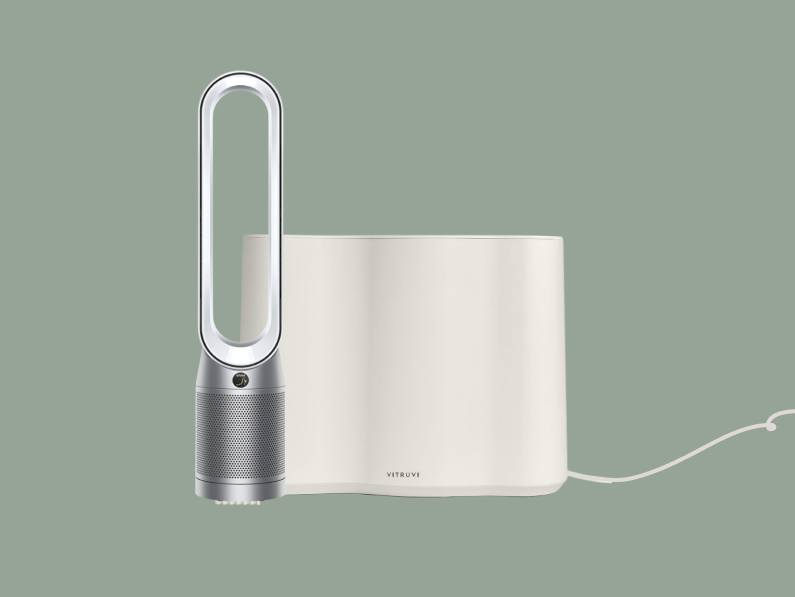
Indoor climate control is frequently reduced to a binary toggle between heating and cooling, yet the mass density of water vapor within a defined volume—absolute humidity—dictates both biological health and structural integrity. Managing this variable requires more than selecting a consumer-grade appliance based on square footage; it necessitates an understanding of the thermal exchange, mineral dispersion, and microbial risks inherent in different moisture-delivery systems. Effective humidity management rests on maintaining a target range of 40% to 60% relative humidity (RH). Dropping below this threshold increases the evaporation rate of the tear film and mucosal linings, while exceeding it provides the vapor pressure necessary for fungal proliferation and dust mite colonization.
The Three Vectors of Moisture Delivery
Selecting a system begins with the physics of how water transition occurs. Every humidifier on the market operates via one of three distinct mechanical pathways, each with specific trade-offs regarding energy consumption, maintenance overhead, and air quality impact.
1. Ultrasonic Oscillation (High Precision, High Mineral Risk)
Ultrasonic units utilize a metal diaphragm vibrating at ultrasonic frequencies to break water into a fine mist. This is a mechanical displacement rather than a phase change. Because the water does not boil, any impurities—minerals, bacteria, or biofilm—present in the reservoir are aerosolized directly into the breathing zone.
The primary byproduct of this method is "white dust," which is essentially calcium and magnesium carbonate. In environments with hard water, these particulates can reach concentrations that trigger respiratory irritation or foul sensitive electronics. Mitigation requires the consistent use of distilled water or demineralization cartridges, which significantly increases the total cost of ownership (TCO) over the life of the device.
2. Evaporative Wicking (Self-Regulating, Low Emission)
Evaporative systems use a fan to pull air through a saturated porous wick. This method relies on the natural process of evaporation, which is endothermic—it absorbs heat from the air, providing a slight cooling effect.
The structural advantage of evaporation is twofold. First, the wick acts as a physical filter, trapping minerals and large microbes within the mesh rather than releasing them into the air. Second, the process is inherently self-limiting. As the room’s RH rises, the evaporation rate naturally slows due to the narrowing gradient between the wick's surface and the ambient air. This prevents the "over-saturation" common with ultrasonic models that lack sophisticated humidistats.
3. Thermal Steam Vaporization (Pathogen Sterilization)
Vaporizers use an internal heating element to bring water to a boil, releasing pure steam. This is the only method that ensures the destruction of most waterborne pathogens before they enter the air.
While thermally efficient for increasing humidity in cold environments, the high power draw (often $300W$ to $500W$ compared to the $20W$ to $40W$ of ultrasonic units) and the risk of burns make them less suitable for high-traffic or pediatric environments. The primary maintenance bottleneck here is scale buildup on the heating element, which requires regular descaling with acetic acid to maintain heat transfer efficiency.
The Volumetric Fallacy: Why Square Footage Metrics Fail
Manufacturers typically rate humidifiers by the square footage they "cover," but this is a flawed metric that ignores the three-dimensional reality of air exchange. A 500-square-foot room with ten-foot ceilings contains 25% more air volume than one with eight-foot ceilings. Furthermore, the efficacy of any humidifier is dictated by the Air Exchange Rate (AER) of the building.
In a drafty, older home or a building with a high-performance HVAC system, the "new" air being introduced is often significantly drier than the air being exhausted. If the AER is high, a portable unit will never reach the target RH because it cannot keep pace with the rate of infiltration.
The Humidity Load Equation
To calculate the actual requirement, one must determine the "moisture load," which is the amount of water needed to be added per hour to maintain the target RH. This is influenced by:
- Initial RH vs. Target RH: The delta between the current state and the 45% ideal.
- Envelope Tightness: The vapor barrier integrity of the walls and windows.
- Internal Buffering: Hygroscopic materials like wood flooring, books, and fabric furniture will absorb moisture until they reach equilibrium, effectively "stealing" humidity from the air for the first 48 to 72 hours of a system's operation.
Room-Specific Optimization Frameworks
The deployment of humidity technology must be tailored to the specific functional requirements of the space. A "one-size-fits-all" approach leads to either localized mold growth or systemic under-performance.
The Bedroom: Noise-to-Moisture Ratios
In sleep environments, the primary constraint is acoustic output. Ultrasonic units are the quietest ($<30$ dB), but they present the highest risk of mineral particulate inhalation during the eight-hour sleep cycle. If using an ultrasonic unit in a bedroom, the placement must be at least three feet away from the head of the bed to allow for mist dissipation.
Evaporative units, while healthier regarding air purity, produce white noise from the fan. For users sensitive to sound, a large-capacity evaporative unit run on its lowest fan setting is often more effective than a small unit run on high, as the lower fan speed shifts the noise frequency to a less intrusive spectrum.
The Home Office: Protecting Sensitive Assets
High-density paper storage, musical instruments, and high-end electronics require a stable RH. Rapid fluctuations cause wood to expand and contract, leading to structural cracks or tuning instability in instruments.
In these spaces, the priority is a system integrated with an external, high-accuracy hygrometer. Most built-in humidistats are located too close to the device's output, leading to "short-cycling" where the machine thinks it has reached the target when the rest of the room is still dry. Placing a remote sensor on the opposite side of the room and using a "smart plug" or integrated software to trigger the humidifier ensures a uniform moisture field.
Large Living Areas: The Multi-Unit Strategy
Attempting to humidify a 1,000-square-foot open-plan living area with a single portable unit is rarely successful. Airflow is restricted by furniture and corners, creating a "tropical zone" near the device and a "desert zone" ten feet away.
The superior strategy is the "Distributed Load" approach:
- Primary Unit: A high-output console (evaporative) placed near a central cold air return to allow the HVAC system to help distribute the moisture.
- Secondary Units: Smaller, localized units in high-occupancy seating areas.
The Hidden Cost of Bio-Growth and Maintenance
A humidifier is fundamentally a warm, wet environment—the ideal incubator for Legionella, Acanthamoeba, and various molds. Failure to maintain the unit doesn't just stop it from working; it turns the device into a biological delivery system.
The Maintenance Lifecycle
- Daily: Empty the reservoir, wipe dry, and refill with fresh water. Standing water develops a biofilm in as little as 24 hours.
- Weekly: A deep soak in a 10% bleach solution or undiluted white vinegar is mandatory.
- Seasonally: Wicks and filters must be replaced. A "clogged" wick reduces output by up to 60% and increases the strain on the fan motor, leading to premature hardware failure.
The secondary risk is "Over-Humidification." If windows begin to show condensation, the RH has hit the dew point. This moisture will collect inside wall cavities and on window sills, leading to hidden mold growth that can cost thousands in remediation. If the home has single-pane windows, the target RH may need to be lowered to 35% in extreme cold to prevent this condensation.
Strategic Implementation Plan
To move from reactive appliance purchasing to proactive climate management, execute the following protocol:
- Baseline Audit: Purchase three calibrated digital hygrometers. Place them in the bedroom, living room, and near the thermostat. Record readings for 48 hours to identify your home’s natural "dry points."
- Water Quality Test: If your tap water has a high mineral content ($>120$ ppm), strike ultrasonic units from your list unless you are prepared to purchase a reverse osmosis system or distilled water in bulk.
- Capacity Oversizing: Purchase a unit rated for 50% more area than your room's actual square footage. Running a large unit on "Medium" is more energy-efficient, quieter, and requires fewer refills than running a small unit on "High" constantly.
- Integrated Sensing: Disregard the onboard humidistat. Use an independent sensor to trigger the unit, ensuring the device responds to the room's actual conditions rather than its own localized output.
Final Strategic Play: Transition to evaporative wicking systems for general living areas to take advantage of the self-regulating physics of evaporation, while reserving steam vaporizers for localized health needs during acute respiratory illness where sterilization is the priority. Control the AER by sealing window leaks first; adding moisture to a leaky house is an expensive battle against physics that you will eventually lose.