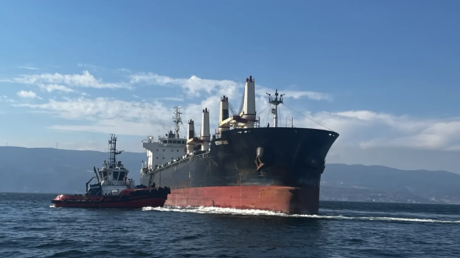
The escalation of kinetic strikes against civilian commercial shipping across Black Sea maritime corridors has exposed critical vulnerabilities in global supply chain security, maritime war risk insurance underwriting, and regional deterrence. Recent kinetic engagements targeting neutral-flagged bulk carriers—including strikes on the Reyhan Sarı transporting coal from Russia and the multi-missile strike on the Golden Leo departing Odesa—demonstrate a fundamental shift in regional maritime strategy. Rather than isolating military assets, belligerents are increasingly targeting commercial tonnage to impose economic attrition, disrupt energy and agricultural export corridors, and raise the marginal cost of transit to unsustainable thresholds.
The Three Pillars of Black Sea Maritime Risk
Commercial operations in the Black Sea basin now function under three distinct vectors of operational disruption. Analyzing these pillars illuminates how tactical weapon deployment translates directly into macroeconomic volatility.
Vector 1: Kinetic Attrition and Structural Vulnerability
Commercial bulk carriers and product tankers are inherently soft targets. Built for fuel efficiency and volumetric capacity rather than structural survivability, standard merchant vessels lack the damage control architecture required to mitigate modern precision-guided munitions.
- Air-Launched Cruise Missiles (ALCMs): Missiles such as the Kh-59/Kh-69 feature specialized guidance suites designed for land and naval targets. When striking the superstructure of a thin-hulled merchant ship, these weapons generate cataclysmic secondary fires, destroy bridge navigation and communication arrays, and eliminate command-and-control capabilities instantaneously.
- Unmanned Aerial Vehicles (UAVs): The deployment of low-cost, long-range attack drones introduces continuous, asynchronous pressure on shipping lanes. Strikes on machinery spaces or deck infrastructure cause severe operational disruption at a fraction of the cost of standard naval air defense interceptors.
- Seaborne Explosive Hazards: Floating sea mines and unexploded ordnance continue to present an unquantifiable drift risk across primary shipping lanes, forcing vessels into narrow, predictable corridors that increase vulnerability to targeted air strikes.
Vector 2: Shadow Fleet Dynamics and Flag Neutrality Degradation
The reliance on flags of convenience—such as Guinea-Bissau, Antigua and Barbuda, or the Marshall Islands—no longer provides functional political or operational immunity.
[Commercial Shipping Operations]
       │
       ├── Foreign Hull / Flag of Convenience (e.g., Guinea-Bissau)
       ├── Multinational Crew Complement (e.g., Syrian, Indian, Ukrainian)
       └── Dual-Use / Sanctioned Corridor Transit
       │
       ▼
[Systemic Operational Bottlenecks]
       ├── Insurance Exclusion Zones & War Risk Premium Spikes
       ├── Seafarer Labor Shortages (Crew Refusal Rate Increase)
       └── Capital Flight / Shipowner Corridor Abandonment
When Turkish-owned assets operate under third-party flags while carrying agricultural or industrial commodities, the ambiguity of ownership degrades deterrence. Belligerents leverage this ambiguity to justify strikes under the pretense of interdicting dual-use cargo or combatting "shadow fleet" logistics. The resulting civilian casualties—spanning crew members from Syria, India, Turkey, and Ukraine—highlight the total breakdown of traditional maritime protection frameworks.
Vector 3: The War Risk Insurance Math
The economic survival of the Black Sea grain and commodity corridors relies on the availability of marine insurance. Insurance pricing operates as a direct mathematical function of kinetic risk probability.
$$\text{War Risk Premium} = f(\text{Strike Frequency}, \text{Hull Replacement Cost}, \text{P&I Liability Limits})$$
As kinetic strikes move from isolated incidents to sustained operational campaigns, underwriter risk models trigger immediate adjustments:
- Breach Premium Spikes: Additional Premium (AP) rates for entering the Black Sea high-risk area increase exponentially following confirmed hull strikes or seafarer fatalities.
- Indemnity Exclusions: Underwriters alter Protection and Indemnity (P&I) terms, excluding coverage for specific ports, flag states, or cargo categories.
- Capital Withdrawal: Highly capitalized, reputable blue-chip shipowners exit the market, leaving the corridor exclusively to high-risk, low-grade operators charging exorbitant freight premiums to compensate for uninsured hull loss risk.
Quantifying the Cost Function of Shipping Escalation
The strategic objective of targeting commercial shipping is rarely the physical destruction of the vessel itself; it is the deliberate inflation of the target nation's export cost function. When a cargo vessel carrying 30,000 metric tons of grain or coal is hit, the primary economic damage radiates through supply chain friction.
Freight Rate Sensitivity and Margin Compression
A sustained increase in kinetic risk alters the economic equilibrium of agricultural and raw material exports.
$$\text{Net Landed Margin} = \text{Global Market Price} - (\text{Production Cost} + \text{Inland Transport} + \text{Ocean Freight} + \text{War Risk Insurance})$$
When ocean freight and war risk insurance surge due to missile and drone threats, the net landed margin compresses. Because global commodity markets determine the price of agricultural products dynamically, domestic producers cannot pass these elevated transport costs to foreign buyers. Instead, the domestic producer must absorb the cost via lower farmgate prices, systematically undermining the economic viability of the exporting nation's agricultural sector.
Seafarer Labor Supply Contraction
Human capital represents the most immediate failure point in war-zone maritime logistics. The international maritime workforce relies heavily on specialized labor pools. High-profile incidents involving fatalities directly trigger clause activations in international maritime labor agreements:
- Right to Refuse Sailing: Seafarers under International Bargaining Forum (IBF) agreements retain the right to refuse assignment on vessels entering designated High-Risk Areas (HRAs).
- Double Basic Pay Obligations: Shipowners operating in active combat corridors must pay double basic wages for crew members during transit windows, significantly increasing daily vessel operating costs (OPEX).
- Labor Deficit Bottlenecks: As casualty reports disseminate through maritime unions, the pool of qualified officers and ratings willing to board vessels bound for high-risk Black Sea terminals contracts rapidly, forcing operators to lay up vessels due to crew understaffing.
Structural Failure of Regional Geopolitical Frameworks
The continued targeting of neutral commercial shipping reveals the operational limitations of bilateral and multilateral maritime safety agreements.
The Collapse of De-escalation Mechanisms
Historical efforts to establish safe passage corridors relied on mutually enforced verification protocols and economic incentives for non-belligerents. However, current operational reality proves that diplomatic agreements fail when belligerents perceive strategic value in economic denial tactics. The absence of a neutral naval peacekeeping force or an active, armed convoy system leaves commercial vessels completely reliant on individual defensive capabilities, which are non-existent on standard civilian bulkers.
The Limits of Coastal Navy Defense
Coastal air defense systems face severe resource allocation trade-offs. Prioritizing the interception of cruise missiles and ballistic threats over major urban centers or critical military infrastructure leaves offshore maritime corridors exposed.
$$\text{Interception Efficiency Ratio} = \frac{\text{Available Interceptor Munitions}}{\text{Simultaneous Incoming Threat Vectors}}$$
When the threat vector count exceeds interceptor magazine depth, merchant vessels transiting offshore corridors operate in defensive vacuums, rendering them sitting targets for low-altitude cruise missiles or swarm UAVs.
Strategic Action Plan for Maritime Operations in High-Risk Zones
For vessel operators, commodity traders, and logistics managers forced to navigate active combat zones, traditional maritime risk management is insufficient. Sustaining operations requires immediate implementation of three operational adjustments.
1. Hardening Tactical Routing and Anchorage Protocols
- Eliminate Fixed Transit Corridors: Discontinue the use of published, static shipping lanes. Implement dynamic, variable routing protocols based on real-time satellite radar and SIGINT feeds to reduce exposure to pre-targeted firing coordinates.
- Minimization of Staging Anchorages: Restrict vessel dwell time in open roadstead anchorages near port entrances. Ships must coordinate precision arrival windows to transit directly from open water to inland berths without idling in strike zones.
- Nighttime Silent Transits: Enforce complete AIS (Automatic Identification System) protocol compliance during high-risk transits while turning off all non-essential deck lighting to mitigate visual and infrared targeting vectors.
2. Restructuring Maritime Insurance and Contractual Terms
- Incorporate Dynamic War Risk Clauses: Update all Charter Party agreements with explicit war risk escalation clauses that automatically reallocate insurance surcharge burdens directly to the charterer or cargo owner.
- Bespoke Parametric Insurance Policies: Transition away from traditional indemnity coverage toward parametric insurance structures that trigger immediate cash payouts based on verified kinetic events within defined geographic coordinates, avoiding prolonged claims adjustments during hull losses.
- Flag Optimization: Evaluate the operational legal protections of national flags versus flag-of-convenience registries. Ships flying flags with active naval presences in adjacent waters retain strategic deterrence options unavailable to flags of convenience.
3. Deploying Active Damage Control and Crew Security Protocols
- Citadel and Structural Hardening: Retrofit vessel superstructures with physical blast shielding over bridge windows, reinforced critical machinery spaces, and hardened internal panic rooms (citadels) equipped with redundant satellite communications and independent life-support systems.
- Offshore Pilot Embarkation: Mandate pilot transfers via helicopter or high-speed interceptor craft well outside missile engagement zones, reducing the exposure time of local harbor pilots and crew members during vulnerable berthing maneuvers.
- Automated Suppression Upgrades: Install remote-operated, deluge fire-suppression systems across the vessel superstructure to fight missile-induced blazes without exposing crew members to secondary strikes or shrapnel.
Executing this operational overhaul requires accepting a permanent increase in logistics overhead. Shipowners and commodity exporters must either build these defensive and financial mechanisms directly into their operational baseline or fully withdraw capital from high-risk Black Sea corridors until formal naval escort frameworks are restored.