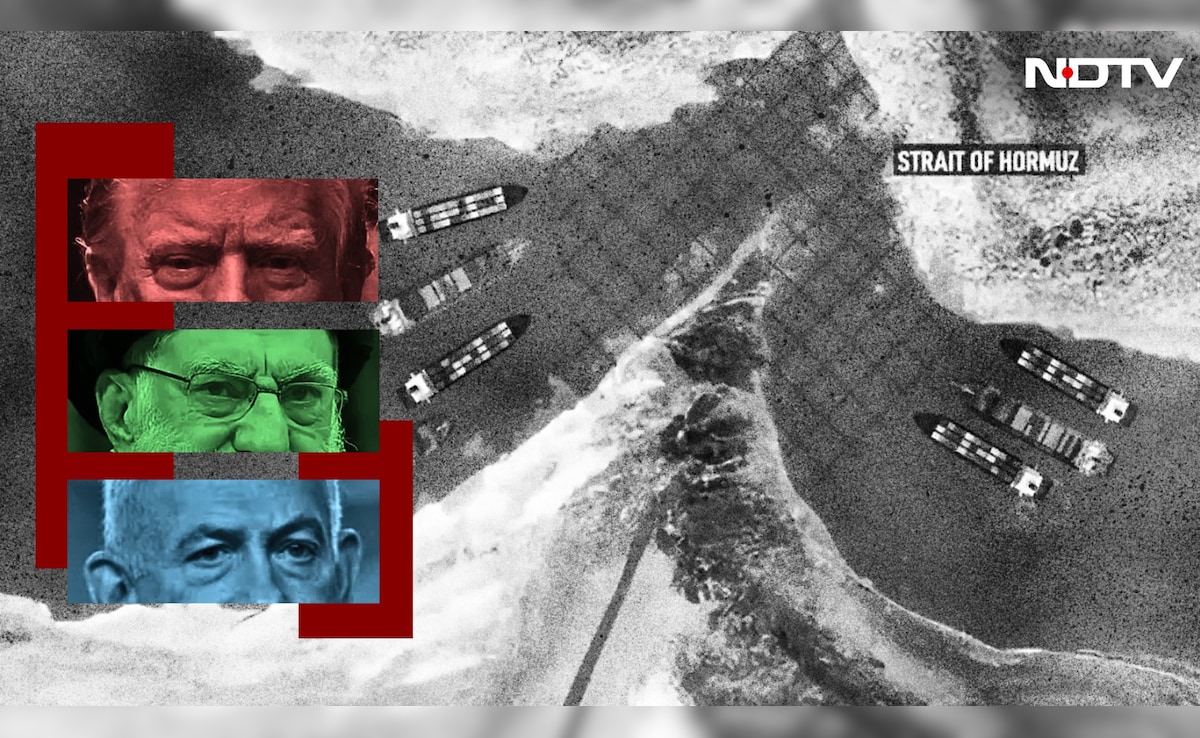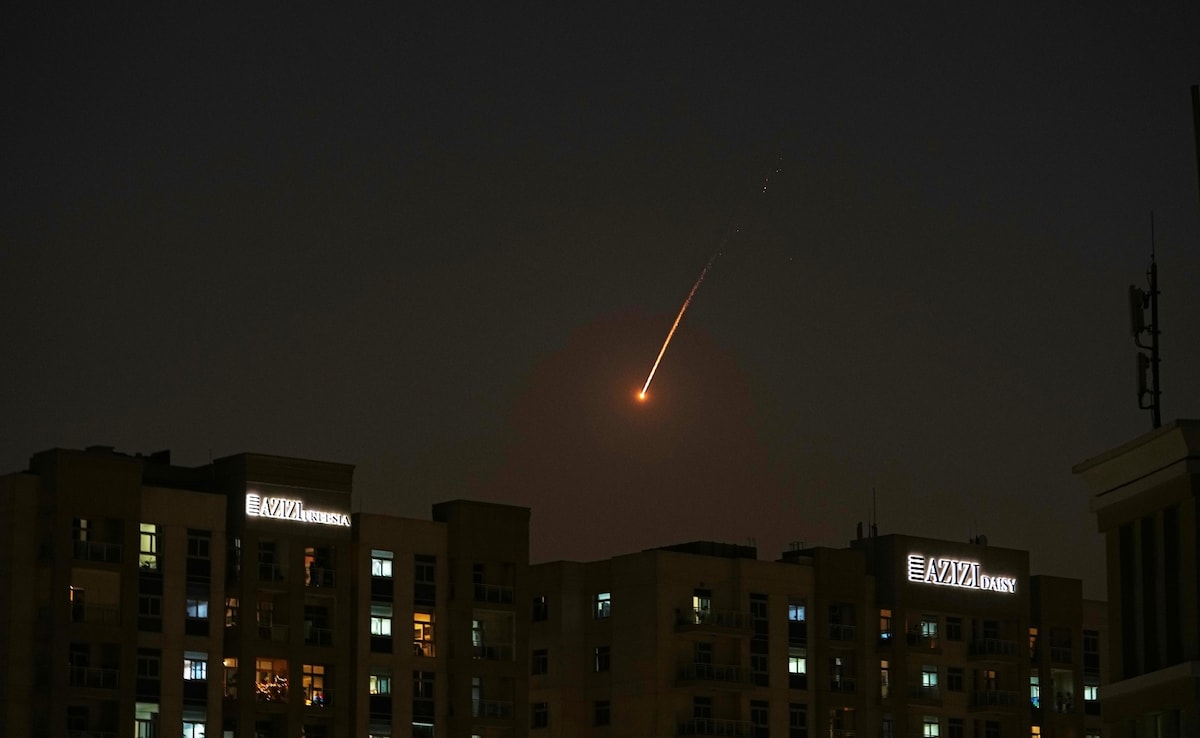
The execution of a high-yield trade immediately preceding a kinetic military strike is rarely a function of superior algorithmic modeling; it is an exercise in exploiting the lag between physical preparation and public awareness. On April 18, 2024, an unidentified market participant executed a series of Nifty put option trades hours before Israel launched a retaliatory strike against Isfahan, Tehran. This position, which turned a reported Rs 4 crore profit, serves as a case study in the intersection of geopolitical friction and financial derivatives. To understand this event is to analyze the mechanics of delta, gamma, and the compression of the volatility risk premium during a high-stakes geopolitical feedback loop.
The Mechanics of the Preemptive Strike Hedge
Market participants operate within a probability distribution of outcomes. When a "mystery trader" enters a concentrated position in out-of-the-money (OTM) put options during a period of relative calm, they are betting on a fat-tail event—a sudden shift in the distribution that the broader market has underpriced.
The trade in question relied on three specific structural catalysts:
- Volatility Expansion (Vega): Before the strike, India’s VIX (Volatility Index) was relatively suppressed. By purchasing options when implied volatility (IV) is low, the trader gains exposure to "Vega." When the missiles hit, the sudden spike in uncertainty causes the price of all options to surge, regardless of the underlying index movement.
- Directional Decay (Delta): As the Nifty index plummeted in response to the strike, the "Delta" of the put options increased. This means the options gained value faster for every point the index dropped.
- The Gamma Acceleration: This is the rate of change of Delta. For OTM options, Gamma is at its peak when the price nears the strike. The trader utilized this convexity to turn a relatively small premium outlay into a massive capital gain as the market "gapped down" at the open.
The Anatomy of Asymmetric Information
The primary question surrounding this trade is whether it was the result of "Technical Analysis" or "Actionable Intelligence." In a globalized market, information flows through three distinct tiers, each with a different latency profile.
- Tier 1: Kinetic Reality. The physical movement of assets, refueling of aircraft, or activation of radar systems. This information is available only to state actors and high-altitude satellite reconnaissance.
- Tier 2: Diplomatic Signaling. Private cables sent between Washington, Tehran, and Jerusalem to "calibrate" the response. This information exists in the "gray zone" where well-connected institutional desks or sovereign wealth funds may operate.
- Tier 3: Public Dissemination. News wires (Reuters, Bloomberg) and social media (X/Twitter). By the time information reaches Tier 3, the "alpha" or excess return potential of the trade has evaporated because the market has already "priced in" the event.
The Rs 4 crore profit was generated because the trader entered the position in the transition between Tier 1 and Tier 2. While the general public was monitoring the headlines for signs of de-escalation, the positioning in the options chain suggested a definitive expectation of a "hard" event.
The Institutional Footprint vs. The Retail Ghost
Analyzing the trade's structure reveals whether this was a sophisticated institutional hedge or a high-conviction "punt" by a private entity.
The Capital Efficiency Ratio
A professional fund rarely takes a directional bet that consumes a significant portion of its margin without a delta-neutral offset. If this trader bought "naked" puts (buying options without a corresponding long position in the underlying index), they were operating with a high-risk profile typically avoided by conservative institutions. However, for a private high-net-worth individual (HNI) or a boutique prop desk, the risk-to-reward ratio of 1:100 makes the trade rational if the probability of a strike is perceived to be greater than 5%.
The Liquidity Constraint
Entering a large position in OTM puts requires a counterparty. In this case, the counterparties were likely automated market makers (AMMs) and retail writers of options who believed the "war premium" had already peaked following Iran's initial drone salvo. The mystery trader exploited a liquidity pocket, where the cost of insurance (puts) was cheaper than the realized risk of the event.
Structural Failures in Market Surveillance
Regulatory bodies like SEBI (Securities and Exchange Board of India) monitor for "insider trading," but geopolitical events present a legal paradox. Insider trading typically involves non-public material information about a corporation. When the information concerns a sovereign military action, the definitions blur.
The bottleneck in surveillance is the Causality Gap. To prove wrongdoing, a regulator must link the trade to a specific leak of information. If a trader argues they simply "read the charts" or "monitored open-source intelligence (OSINT) regarding Israeli Air Force refueling patterns," the trade becomes a legitimate expression of market analysis.
The structural advantage held by such traders is not just the information itself, but the speed of execution. Financial markets are now the first responders to war. The price of a Nifty put option reacts faster than a diplomatic press release.
Geopolitical Alpha and the Future of Risk
The Tehran strike trade highlights a shift in global macro strategy: the "Financialization of Conflict." We are seeing the emergence of a specialized class of participants who treat geopolitical instability as a quantifiable asset class.
To institutionalize this analysis, one must look at the Correlation Matrix of Tensions.
- Energy Flux: The immediate spike in Brent Crude provides the liquidity floor for the trade.
- Currency Devaluation: The flight to the USD as a safe haven provides the secondary confirmation.
- Equity Contraction: The final stage where the domestic index (Nifty) reflects the increased cost of capital and supply chain risk.
The trader in the Tehran strike didn't just "bet on bombs." They identified a mispricing in the Volatility Surface. Most market participants were looking at the "mean"—the hope that things would return to normal. The mystery trader looked at the "tail"—the certainty that a retaliation was a structural necessity for Israeli deterrence.
Strategic Execution for High-Volatility Environments
For a consultant or a high-stakes strategist, the takeaway is not to hunt for "insider" tips, but to build a framework for Antifragility.
- Step 1: Monitor the Skew. When OTM puts become significantly more expensive than OTM calls (the "Volatility Skew"), the "smart money" is already protecting against a crash. If the skew is flat despite rising tensions, the insurance is "cheap."
- Step 2: OSINT Integration. Standard financial news is a lagging indicator. Strategic positioning requires monitoring flight tracking data (ADSB-Exchange), satellite imagery of naval ports, and diplomatic "silence" periods.
- Step 3: Convexity over Certainty. Never bet on the timing of a strike. Bet on the volatility that the strike will produce. Long-volatility positions (Straddles or Strangles) allow a trader to profit whether the situation escalates or de-escalates violently, as long as the move is significant.
The Rs 4 crore gain was not a miracle; it was a clinical extraction of value from a market that was overconfident in a peaceful resolution. As the geopolitical landscape becomes increasingly fragmented, the ability to quantify "friction" between nations will become the most valuable skill in the global macro toolkit.
In the next 24 months, expect to see the rise of Geopolitical Hedge Funds that use machine learning to scan for physical world anomalies—truck convoys, hangar activity, and social media sentiment in localized languages—to trigger derivative trades before the first missile is even fueled. The Tehran trade was a manual precursor to an automated future where the battlefield and the trading floor are functionally inseparable.
Strategic Play: Shift capital allocation from "Growth" assets toward "Convexity" assets. In an era of polycrisis, holding long-dated, out-of-the-money volatility hedges is no longer a cost—it is a strategic requirement for capital preservation and aggressive alpha generation during the inevitable breaks in the global order.