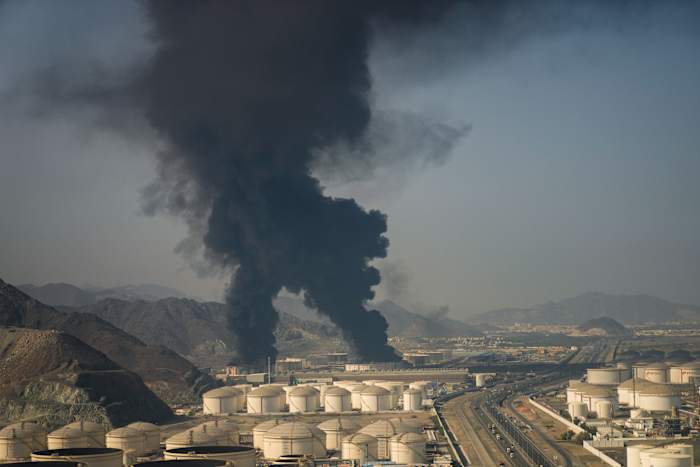
The proliferation of Iranian-designed Loitering Munitions (LMs) within the Russian theater of operations represents more than a logistical patch for a depleted missile inventory; it signifies the formalization of an Asymmetric Exchange Mechanism. This mechanism allows a traditional military power to offset high-precision munition deficits by integrating low-cost, attrition-optimized systems into a conventional command-and-root structure. President Volodymyr Zelenskiy’s reports regarding the supply of Shahed-series drones highlight a strategic pivot where the value is found not in the sophistication of the platform, but in the Cost-to-Interception Ratio.
The Architecture of Attrition: Shahed-136 Functional Logic
To understand the impact of the Shahed-136 (Geran-2 in Russian nomenclature), one must deconstruct its utility through three primary functional pillars: Cost Displacement, Saturation Dynamics, and Sensor Overload.
Cost Displacement: A typical Western interceptor, such as those used in the NASAMS or IRIS-T systems, carries a unit cost ranging from $500,000 to $2,000,000. In contrast, the Shahed-136 is estimated to cost between $20,000 and $50,000. This creates a 10:1 or even 40:1 fiscal disadvantage for the defender. Over a sustained campaign, the defender’s primary constraint shifts from "tactical capability" to "inventory exhaustion."
Saturation Dynamics: By launching "swarms" or waves of these low-slow-small (LSS) platforms, the attacker forces the defender into a binary choice: allow the drone to strike critical infrastructure or expend a high-value interceptor. When twenty drones are launched simultaneously, they test the Track Correlation Capacity of local radar systems, seeking to find the "leakage point" where the number of targets exceeds the number of available Fire Control Channels.
Sensor Overload: The Shahed-136 utilizes a civilian-grade GPS/GNSS guidance system coupled with a basic Inertial Navigation System (INS). While this makes it susceptible to electronic warfare (EW) and spoofing, its small Radar Cross-Section (RCS) and low heat signature make it a difficult target for traditional Heat-Seeking (IR) or Radar-Guided missiles designed to down fast-moving jets.
The Two-Way Tech Corridor: Russian Contribution to Iranian Defense
The relationship is not a simple purchase-order agreement. It is a symbiotic technology transfer. Reports of Russia supplying Iran with Western weapons captured on the battlefield, alongside Russian aerospace expertise, suggest a high-level Strategic Quid Pro Quo.
- Reverse Engineering Channels: Russia provides Iran with access to captured Javelin ATGMs or NLAW systems. Iran’s defense industry, which has spent decades perfecting the art of "cloning" under sanctions, uses these samples to iterate on their own domestic hardware.
- Aerospace Calibration: In exchange for immediate drone supplies, Russia likely provides Iran with advanced Su-35 fighter jets or S-400 missile defense components. This upgrades Iran’s conventional deterrence, which has historically been the weakest link in their military doctrine.
- Production Localization: The establishment of a Shahed production facility within the Alabuga Special Economic Zone in Tatarstan indicates a shift from "imported solution" to "integrated domestic supply chain." This bypasses Iranian export bottlenecks and allows Russia to modify the airframes—replacing Iranian components with Russian-made "Comet" anti-jamming satellite signal receivers.
Structural Vulnerabilities in Drone Defense
Western military doctrine has historically focused on Quality-over-Quantity, assuming air superiority would neutralize threats before they reached the terminal phase. The Shahed-136 exploits a gap in this doctrine known as the Kinetic Deficit.
Current air defense is built on a pyramid. At the top are long-range systems (S-300, Patriot) meant for ballistic missiles and aircraft. The middle layer (NASAMS, Buk) handles cruise missiles. The bottom layer—Short-Range Air Defense (SHORAD)—is where the Shahed operates. The failure to maintain a dense, gun-based SHORAD network (such as the Flakpanzer Gepard) leaves the defender relying on the expensive middle and top layers to fight "bottom-layer" threats.
The effectiveness of the Shahed is maximized when integrated into a Multi-Vector Strike. Russia frequently uses these drones as "pathfinders." They are launched first to force Ukrainian radars to activate, revealing their positions to Russian signals intelligence (SIGINT). Once the radar positions are mapped, Russia follows up with Kh-31P anti-radiation missiles or more sophisticated Kalibr cruise missiles. In this sequence, the Shahed is a sacrificial pawn used to "prohibit" the defender's radar silence.
Quantifying the Strategic Shift
The transition of the Shahed from an "Iranian nuisance" to a "Russian tactical staple" can be measured by the Sortie Volume Metric. Initial deployments involved sporadic launches of 5–10 units. By late 2024 and into 2025, launch volumes increased to 50–100 units per night during peak offensive windows.
This volume creates a secondary effect: Cognitive Attrition. The constant presence of slow-moving, audible threats over civilian centers drains the psychological resilience of the population and the operational focus of the military command. It forces the diversion of mobile fire groups—pickup trucks armed with heavy machine guns—away from the front lines to protect rear-end infrastructure, thereby thinning the defensive density at the Point of Contact.
Logistical Resilience and Sanction Evasion
The "primitive" nature of the Shahed is its greatest strength in a sanctioned environment. Analysis of downed units reveals a heavy reliance on Commercial Off-The-Shelf (COTS) components.
- Engines: Many use the Limbach L550E or its Chinese/Iranian derivatives (MD550), which are essentially high-performance lawnmower or snowmobile engines.
- Electronics: The flight controllers often utilize microchips found in common consumer electronics or industrial automation tools.
- Guidance: While "Comet" receivers are being integrated, the baseline models use standard GNSS modules that are virtually impossible to track via international export controls.
This creates a Supply Chain Immortality. You cannot sanction "everyday" electronics effectively without crippling global consumer markets. Consequently, the production rate of these munitions is decoupled from the success of international trade restrictions.
The Emerging Doctrine of Mass
The Russia-Iran defense nexus proves that in modern high-intensity conflict, the ability to scale "Good Enough" technology is superior to the inability to replace "Exquisite" technology. Russia has accepted a lower P_k (Probability of Kill) per individual unit in exchange for a higher Aggregate System Impact.
If Russia maintains its current production trajectory at Alabuga and Iran continues to receive aerospace upgrades, the regional balance of power in both Eastern Europe and the Middle East shifts. Iran gains a battle-tested blueprint for bypassing advanced Western radars, while Russia gains a sustainable long-range strike capability that survives the depletion of its hypersonic and cruise missile stocks.
The immediate tactical requirement for counter-measures must shift from Missile-Based Interception to Directed Energy Weapons (DEW) and Electronic Warfare (EW). Hard-kill systems (bullets and missiles) are fundamentally limited by physics and logistics (reloading, cost). Soft-kill systems (jamming, high-powered microwaves) offer a "deep magazine" with near-zero marginal cost per shot. Until this transition is complete, the Shahed-series remains the most efficient tool for conducting long-range, large-scale economic and psychological warfare.
Strategic investment must prioritize the deployment of autonomous acoustic sensor networks paired with automated, gun-based SHORAD units. Relying on million-dollar interceptors to down fifty-thousand-dollar drones is a trajectory toward bankruptcy, not victory. The defender must solve the Calculus of Attrition by making the cost of the intercept lower than the cost of the threat.