Silence.
In an NFL facility during the final forty-eight hours before the trade deadline, silence is never peaceful, because it usually means someone upstairs is currently dismantling the locker room you bled to build all summer. The fluorescent lights hum in the hallway outside the defensive line meeting room, the ice machines rattle in the training area, and every player with a locker near the door keeps glancing down at his phone between reps, waiting for a push notification to tell him his closest friend just got shipped to the NFC West for a conditional fourth-round pick.
I have sat on those metal folding chairs in late October, staring at a playbook while an unspoken tension thickened the air until you could practically taste it in your mouthguard. You watch a teammate pack a duffel bag a little too neatly on a Tuesday afternoon. You notice the way an assistant coach avoids eye contact with a veteran during special teams walk-throughs. Football is sold to the public as a brotherhood, a violent and sacred bond forged in August heat, yet every autumn the calendar hits a hard wall where brotherhood collides head-on with asset management.
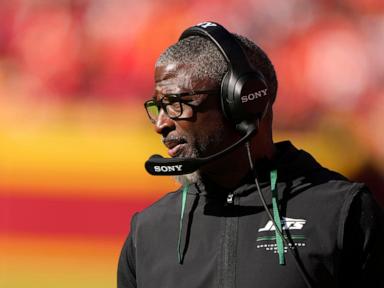
When Aaron Glenn stood before the microphones in Florham Park and made it clear that the New York Jets intend to stand pat at the trade deadline, even with edge rusher Will McDonald IV openly desiring a ticket out of town, most casual observers saw a standard piece of front-office posturing. They read the headline, shrugged, and moved on to the next transaction ticker.
They missed the entire point.
What looks on paper like stubbornness is actually one of the most delicate high-wire acts in modern professional sports. Keeping a disgruntled pass rusher in the building when the phone is ringing off the hook requires a specific kind of nerve, the kind that separates coaches who merely survive the league from leaders who actually reshape a franchise's spine.
The Heavy Cost of an Open Door
To understand why Glenn’s refusal to blink matters, you have to understand the economy of discontent in the National Football League.
Modern sports culture has trained us to believe that a trade request is a binary switch. Once a player whispers to his agent that he wants a fresh start, the conventional wisdom says the relationship is poisoned beyond repair, the asset is depreciating by the hour, and the smart organization cuts its losses before the locker room catches fire. We have seen it play out a dozen times across the league over the past decade. A young, explosive athlete feels underutilized or misaligned with a defensive scheme, his camp leaks his frustration to a national insider, and within seventy-two hours he is holding up a new jersey at an introductory press conference while his former general manager praises the "flexibility" of draft capital.
Draft picks never drop a coverage. Draft picks never jump offsides on third-and-four. Draft picks live in a pristine, imaginary future where every third-round selection turns into an All-Pro starter, which is precisely why front offices fall in love with them whenever the present gets uncomfortable.
Think about a hypothetical scenario that plays out in every building across the league every October. Picture a twenty-five-year-old defensive end who spent his entire college career pinning his ears back and hunting quarterbacks, only to wake up in a system that asks him to set a heavy edge against two-hundred-and-sixty-pound tight ends on early downs while sharing pass-rush snaps in a crowded rotation. Every time he turns on the Sunday night highlights, he sees guys drafted behind him racking up sacks in wide-nine alignments, building the exact statistical resume that turns a rookie contract into eighty million dollars guaranteed.
From his perspective, staying put feels like watching his prime evaporate in slow motion. His frustration is not petulance; it is arithmetic. In a league where the average career lasts barely three seasons and a single knee injury can erase generational wealth overnight, waiting patiently for someone else's timeline feels like an existential threat.
Now step into Aaron Glenn’s shoes across the hallway.
Glenn spent fifteen years playing cornerback in this league before spending another decade coaching in its trenches, which means nobody in that building has to explain to him what a player is thinking when he stares at his snap counts on a Monday morning. He knows the anxiety of contract years. He knows the pride of a first-round pick who believes he can wreck a game if you just turn him loose. Yet Glenn also knows something that a twenty-five-year-old pass rusher cannot afford to care about right now: if you let every frustrated talent dictate your roster construction before November, you do not have a football team. You have a waiting room.
Why Edge Rushers Are Never Just Spare Parts
Let us look closely at the actual football reality beneath the emotional tug-of-war, because sentimentality does not win fourth quarters in the AFC East.
Will McDonald IV is not an aging veteran clinging to a roster spot on reputation alone, nor is he a developmental project struggling to grasp the speed of the pro game. Drafted fifteenth overall in 2023 out of Iowa State, he possesses the kind of rare, bend-around-the-corner athleticism that offensive coordinators spend Tuesday nights drawing up chip blocks to neutralize. You cannot teach a human being to dip his inside shoulder six inches off the turf at full sprint while a three-hundred-and-twenty-pound tackle tries to shove him into the Gatorade coolers. Either God gave you those ankles and hips, or you are watching the game from the couch.
When a player with that specific physical profile becomes available—or even rumored to be available—half the contenders in football pick up the phone. Contending teams do not call at the deadline looking for depth; they call looking for a closer. They want someone who can win a one-on-one matchup with forty seconds left in a divisional playoff game when the blitz is picked up and the secondary is gasping for air.
If the Jets had caved to the noise and moved McDonald simply because he wanted out, consider what they would have actually received in return. Across recent NFL trade deadlines, teams dealing young, unproven, or dissatisfied pass rushers still on rookie deals rarely recoup first-round value unless the player has already logged double-digit sack seasons. More often, the return lands somewhere in the Day Two or early Day Three neighborhood—a second-round pick at the absolute ceiling, more realistically a third-rounder that will not step onto a practice field until next May.
Meanwhile, the Jets would have stripped their own defensive front of its most explosive pure speed threat right in the teeth of the season, signaling to the other fifty-two men in the locker room that the organization is already quietly folding its tent.
That is the hidden tax of a deadline sell-off that never shows up in the transaction wire. Players are not fools. When they see a front office trade away healthy, ascending talent for future draft picks while there are still meaningful games left on the schedule, every veteran in the room immediately adjusts his internal thermostat. The guy playing through a torn labrum starts wondering why he is taking toradol shots on Sunday morning if management is already shopping for next year's roster. The offensive lineman grinding through double-teams asks himself why he is risking his body to protect a lead that the front office just weakened the defense to preserve.
Standing pat is not passive. Standing pat is an active, costly choice to absorb the friction inside the building so that the foundation outside it stays intact.
The Anatomy of a Locker Room Standoff
People on the outside always ask what happens the morning after a coach publicly shuts the door on a trade request. Does the player sulk in the back of the meeting room? Does he loaf through conditioning drills? Does he become a cancer that rots the chemistry from the inside out?
Sometimes, yes. I have watched players check out mentally after being told they are staying put, turning into ghosts who clock in at seven in the morning, say all the right monosyllables to the beat reporters, and play just hard enough on Sundays to avoid getting fined by the league office. It is an ugly, suffocating dynamic that forces coaches to spend half their emotional energy policing body language instead of installing third-down pressures.
Yet more often than fans realize, the opposite happens—provided the man holding the whistle has earned real credibility.
Here is how that dynamic actually works in practice. Think of an analogy from outside the stadium: imagine a ship captain sailing through a squall when his best navigator demands to be put ashore at the nearest port because he dislikes the route. If the captain panics and drops anchor to offload him, the rest of the crew suddenly realizes the route itself is negotiable whenever the waves get rough. If the captain instead looks the navigator in the eye, acknowledges the storm, and says, We need your hands on the wheel until we reach harbor, and we will settle our accounts when we dock, the tension does not magically vanish, but the mission survives.
Aaron Glenn’s entire coaching identity is built on that exact brand of unvarnished, face-to-face accountability. Throughout his rise as a defensive coordinator in Detroit under Dan Campbell—a staff famous for turning a perennial laughingstock into one of the most physically relentless teams in football—Glenn built his reputation on demanding maximum violence and maximum honesty from his players simultaneously. He does not coddle egos, and he does not hide behind corporate speak.
When Glenn says the Jets are standing pat for now, notice the quiet precision in those final two words: for now.
That phrasing is not an accident. In NFL front-office speak, "for now" is an acknowledgment of reality without surrendering leverage. It tells McDonald and his representation that the organization hears him, understands his ambition, and refuses to be bullied into a bad football trade on an arbitrary Tuesday afternoon in the middle of the season. At the same time, it leaves the door open for an offseason reassessment when all thirty-two teams are bidding on equal footing, draft boards are set, and the Jets actually have time to replace the snaps they would be losing.
For McDonald, the immediate path forward becomes crystal clear, even if it is not the one he asked for. In the NFL, tape is the only currency that never inflates. If he wants a massive second contract—whether in New York or in any of the thirty-one other cities—pouting on the sideline or half-stepping through pass-rush lanes destroys his own market faster than any coaching decision ever could. Every general manager considering a trade for him next March will pull up the film from November and December first. They will look past the sack totals and watch how hard he chases a screen pass thirty yards downfield when his team is trailing by ten points in the fourth quarter.
Ironically, the fastest way for Will McDonald to earn the exit he wants—or to make himself too indispensable for New York to ever let go—is to play the best football of his life right where his feet are planted.
What History Tells Us About the Deadline Bluff
We have a terrible memory when it comes to NFL trade deadlines. Every October, social media convulses with rumors, insider tweets, and fan-made mock trades that treat human beings like salary-cap spreadsheets, and every November we forget how rarely blockbuster midseason moves actually deliver championships.
Look back across the last decade of deadline deals involving disgruntled pass rushers and defensive stars. When Chase Young and Montez Sweat were moved out of Washington at the 2023 deadline, the Commanders collected draft capital that helped accelerate their eventual rebuild, while San Francisco and Chicago absorbed massive contract decisions and mixed immediate returns. When Haason Reddick’s contract standoff dragged into the 2024 season in New York—a painful memory still fresh in the floorboards of the Jets' own facility—everybody learned the hard way that prolonged brinkmanship without clear leadership boundaries drains the oxygen out of an entire campaign.
That recent history hovers over Florham Park like a ghost. The Jets know intimately what happens when a pass-rush dispute spirals into a public circus. They lived through the endless press-conference questions, the daily speculation about who was reporting to the building and who was sitting at home, and the subtle erosion of focus that happens when a defense spends more time answering questions about missing teammates than studying opposing protection schemes.
By planting his flag early and stating plainly that the team is holding its ground, Glenn is attempting to cut off that exact spiral before it gains momentum. He is refusing to let a private career frustration become the defining narrative of his locker room.
Is there risk in this posture? Enormous risk.
If the defense struggles to generate consistent pressure over the next month, every third-down conversion will be dissected through the prism of whether the Jets should have cashed in their chips while they had the chance. If McDonald’s snap count fluctuates or his body language looks even slightly off during a nationally televised loss, the back pages of the New York tabloids will turn a routine roster decision into a referendum on Glenn’s authority. And if an injury strikes the position group, the margin for error evaporates completely.
Nobody walking through the doors of that facility pretends this is tidy. Leadership in pro football rarely is. Most days, it consists of choosing between two imperfect options—trading talent for pennies on the dollar to buy temporary peace, or keeping the talent in the room and managing the storm every single morning at seven o'clock—and having the stomach to live with the consequences either way.
The Sound of Sunday Afternoon
Down on the grass at practice, none of the abstract talk about draft capital, leverage, or long-term organizational philosophy survives the first whistle.
You hear the pop of shoulder pads colliding at the snap. You hear the defensive line coach barking at the tackles to keep their hands inside, his voice hoarse before the second period is even finished. You smell the damp autumn turf torn up by cleats and the sharp, metallic tang of sweat cooling in the November wind.
In that environment, grievances have a funny way of shrinking to the size of the block directly in front of you. When a three-hundred-pound guard is firing off the ball trying to cave in your ribs, you do not have half a second to think about your agent's phone calls or what might happen in March. You either win your leverage, dip your shoulder, and bend the corner, or you end up flat on your back watching the quarterback celebrate a first down.
Aaron Glenn is betting his credibility on a truth that only people who have lived inside a locker room fully trust: that competitive pride, once challenged directly, usually outlasts temporary frustration. He is betting that when the stadium lights come on and seventy thousand people start roaring on third-and-long, Will McDonald IV will care infinitely more about beating the man lined up across from him than proving a point to the front office.
The trade deadline clock will tick down to four o'clock, the phones will finally go quiet, and the league will move on to its next obsession. Inside the Jets' building, the doors will stay shut, the tape will keep rolling, and a young pass rusher who wanted out will lace up his cleats beside the exact men he tried to leave behind—because in football, as in life, you rarely get to choose the storm you sail through, only whether you grab an oar when the water rises.


