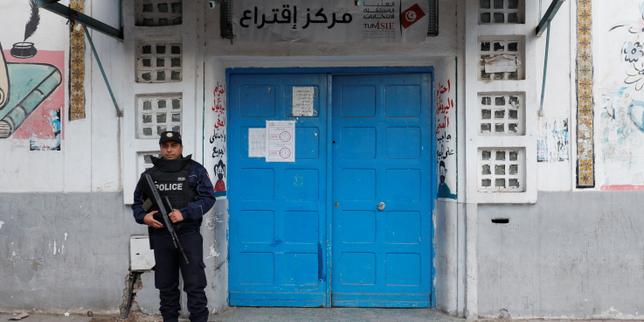
A microphone waits inside a studio. A journalist never makes it through the door.
That is the stark reality of how reporting works in Tunisia today. Mohamed Yousfi, editor-in-chief of the independent investigative site Al-Qatiba and a vocal critic of President Kais Saied, found himself intercepted outside the entrance of Express FM. His crime of the day wasn't a violent act or a classified leak. He planned to sit down for a live broadcast and talk about the severe water crisis plaguing the country. In similar updates, we also covered: The Shadow Over the Pipeline.
Instead of stepping up to a microphone, police officers pulled him away for questioning.
Zied Dabbar, head of the National Union of Tunisian Journalists (SNJT), pointed out the obvious absurdity. Yousfi went to discuss public infrastructure and resource management, but police action turned him into the main headline instead. Shortly after, a judge ordered his formal detention. This pattern reveals an alarming intolerance for independent voices addressing everyday hardships. TIME has provided coverage on this critical topic in extensive detail.
When Talking About Water Becomes a Security Threat
Water scarcity in Tunisia is not a secret. The nation faces a grueling multi-year drought that strains agriculture, dries up reservoirs, and frustrates citizens across every governorate. It is a tangible, urgent civic issue. People want answers about distribution, rationing, and long-term climate strategies.
When investigative journalists like Yousfi try to unpack these systemic failures on air, they hit a brick wall. Authorities would rather silence the messenger than confront the structural realities of a parched landscape.
Think about the chilling effect this creates. If an editor from a prominent investigative outlet gets picked off the pavement just for walking into a radio station, what message does that send to local reporters in smaller towns? It tells them to self-censorship, look away, and stick to official press releases. Investigative reporting thrives on friction with power. Right now, the Tunisian state wants to eliminate that friction entirely.
A Growing Graveyard for Independent Journalism
Yousfi's detention is far from an isolated incident. Over the past few years, the country has steadily tightened the screws on media professionals, activists, and political opposition figures. Names like Zied Heni, Mourad Zghidi, and Borhen Bsaies highlight an expanding list of media figures targeted for crossing invisible red lines.
The playbook is predictable. Independent platforms get scrutinized, critical voices face sudden legal pressure, and public debate shrinks into a monotonous echo chamber.
President Saied frequently claims that freedoms remain fully guaranteed under his administration. Yet, the boots on the ground tell a different story. Arresting a journalist right outside a broadcast booth bypasses even the pretense of procedural transparency. It sends a message of raw intimidation.
The Cost of Silence on Critical Infrastructure
Suppressing coverage of the water crisis won't bring a single drop of rain back to empty reservoirs. Ignoring systemic mismanagement only accelerates public frustration. When citizens cannot trust state narratives, and independent watchdogs get thrown into holding cells, society loses its capacity to solve actual problems.
Journalism is supposed to hold power accountable. When doing your job lands you in custody before you even reach the studio, the public loses its voice. Keep an eye on how local syndicates and international press freedom groups respond to this escalation, because the outcome in Tunis will shape the future of independent reporting across North Africa.