The defense industrial base loves a celebration, especially when it involves nine-figure numbers wrapped in the flag of national readiness.
When the U.S. Army Contracting Command at Detroit Arsenal quietly formalized a five-year, $691 million indefinite delivery, indefinite quantity contract with RENK America, the press releases followed a predictable script. The narrative was comforting: a trusted supplier securing its fourth consecutive multi-year agreement to supply and overhaul Hydro-Mechanical Powered Transmissions for the Army’s medium tracked vehicles. We were told this represents a victory for the warfighter, a testament to public-private partnership, and a stabilization mechanism for critical manufacturing jobs in Muskegon, Michigan.
That narrative is dangerously wrong.
This contract is not a milestone of industrial strength. It is a stark diagnostic of structural failure, a multi-million-dollar admission that the Pentagon remains entirely captured by legacy supply chains.
Look past the corporate public relations. What you are actually looking at is a textbook example of vendor lock-in involving a component architecture that can trace its operational origins back to the Cold War. The Army is not buying the future. It is paying a premium just to prevent its current inventory from grinding to a halt.
The Illusion of Choice in Tracked Mobility
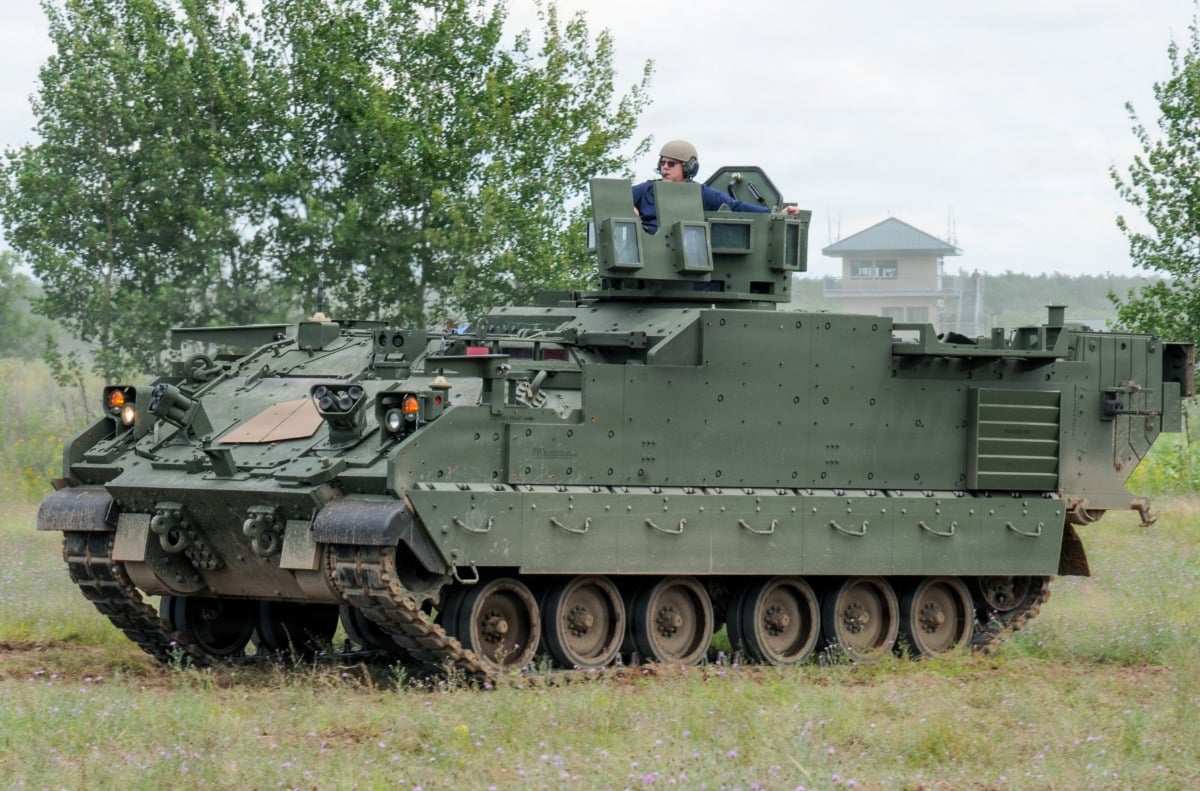
To understand why this $691 million contract points to a deeper crisis, you have to look at what is actually being bought. The contract funds the HMPT 800 series transmission. This hydro-mechanical unit is the mechanical heart of the Bradley Fighting Vehicle, the Multiple Launch Rocket System, the Paladin self-propelled howitzer, and the new Armored Multi-Purpose Vehicle.
The common industry view treats these recurring awards as a routine exercise in logistics. The logic goes that because these vehicles are essential, keeping their parts flowing is inherently positive.
The flaw in that logic is the total absence of competition. According to government procurement disclosures for the Transmission HMPT Operational Reliability program, this contract was restricted as a sole-source procurement. The justification was simple: RENK America is the only source that owns the technical data rights and manufacturing tooling required to build or overhaul these specific units.
I have spent years watching defense acquisition programs burn cash on proprietary platforms. When a single company holds the proprietary keys to a critical system, the government loses all bargaining power. The Army cannot shop around for a more efficient manufacturer. It cannot easily solicit a cleaner, modern technical solution.
The military is locked into a closed ecosystem where it must continuously pay the incumbent vendor to rebuild components designed decades ago. This is not a strategic partnership. It is a hostage situation disguised as a procurement pipeline.
The Legacy Trap of the Bradley and AMPV
Defenders of the status quo point to the Armored Multi-Purpose Vehicle as proof of modernization. The AMPV is replacing the Vietnam-era M113 armored personnel carrier, and it uses the HMPT transmission to ensure component commonality with the Bradley fleet.
On paper, commonality reduces the logistical burden on mechanics in the field. If a unit uses the same transmission across multiple vehicle types, it simplifies parts storage and maintenance training.
In reality, this design choice chains the Army's newest vehicle platforms to historical engineering constraints. By forcing the AMPV to rely on the HMPT 800 architecture, the military has ensured that its modern combat formations remain dependent on heavy, complex hydraulic-mechanical systems.
This design trajectory bypasses the real technological shift occurring everywhere else in heavy machinery: hybrid-electric and fully electric drivetrains. While commercial logistics companies and automotive manufacturers pour billions into high-torque electric drives that eliminate hundreds of moving parts, the defense sector remains bound to an expensive, maintenance-intensive fluid-power paradigm.
Imagine a commercial trucking company bragging that it just spent nearly $700 million to guarantee a supply of gearboxes based on 1980s specifications for its newest delivery trucks. Shareholders would revolt. In defense procurement, it is labeled a victory for readiness.
The Fragility of a Consolidated Industrial Base
The press releases frequently mention the manufacturing footprint in Muskegon, highlighting the deep technical expertise of the local workforce. This local specialization is real, but the heavy concentration of this capability highlights a massive systemic vulnerability.
The entire medium tracked vehicle fleet of the United States military depends on a single point of failure. If the Muskegon facility experiences a catastrophic industrial accident, a prolonged labor dispute, or a targeted supply chain disruption, the production and overhaul of transmissions for the Bradley and AMPV stop completely.
This hyper-consolidation is the logical consequence of thirty years of defense industry mergers. When the Pentagon encouraged defense firms to consolidate after the Cold War, it destroyed the redundant capacity that once allowed the military to pivot between competing suppliers.
Today, the industrial base is so brittle that the Army cannot afford to let a sole-source supplier fail, even if the technology is aging and the costs are high. The government must continuously feed these large multi-year contracts into the same factories simply to keep the specialized assembly lines from dissolving. The contract exists as much to subsidize the vendor’s infrastructure as it does to buy hardware.
The Real Cost of Sustaining Yesterday
Every dollar committed to long-term sustainment contracts for legacy hardware is a dollar diverted from genuine technological transformation. The $691 million allocated to this program represents capital that cannot be spent on developing advanced propulsion concepts, modular open-systems architectures, or autonomous ground platforms.
The true risk of this procurement strategy is not that the transmissions will fail to work. They will work as designed. The risk is that they keep the military anchored to a predictable, heavy-iron philosophy of warfare at a time when precision loitering munitions, unmanned systems, and electronic warfare have fundamentally rewritten the vulnerabilities of traditional armored formations.
We are spending billions maintaining platforms optimized for a style of conflict that may no longer exist, relying on an industrial base that can only reproduce what it built last year.
True defense innovation requires more than funding software startups or buying commercial drones for testing. It requires breaking the structural dependency on legacy mechanical systems that consume the majority of the acquisition budget. Until the Pentagon addresses the sole-source monopolies that dominate its heavy vehicle fleets, announcements of multi-million-dollar sustainment contracts should be viewed with skepticism, not applause. They are a ledger of our inability to move forward.