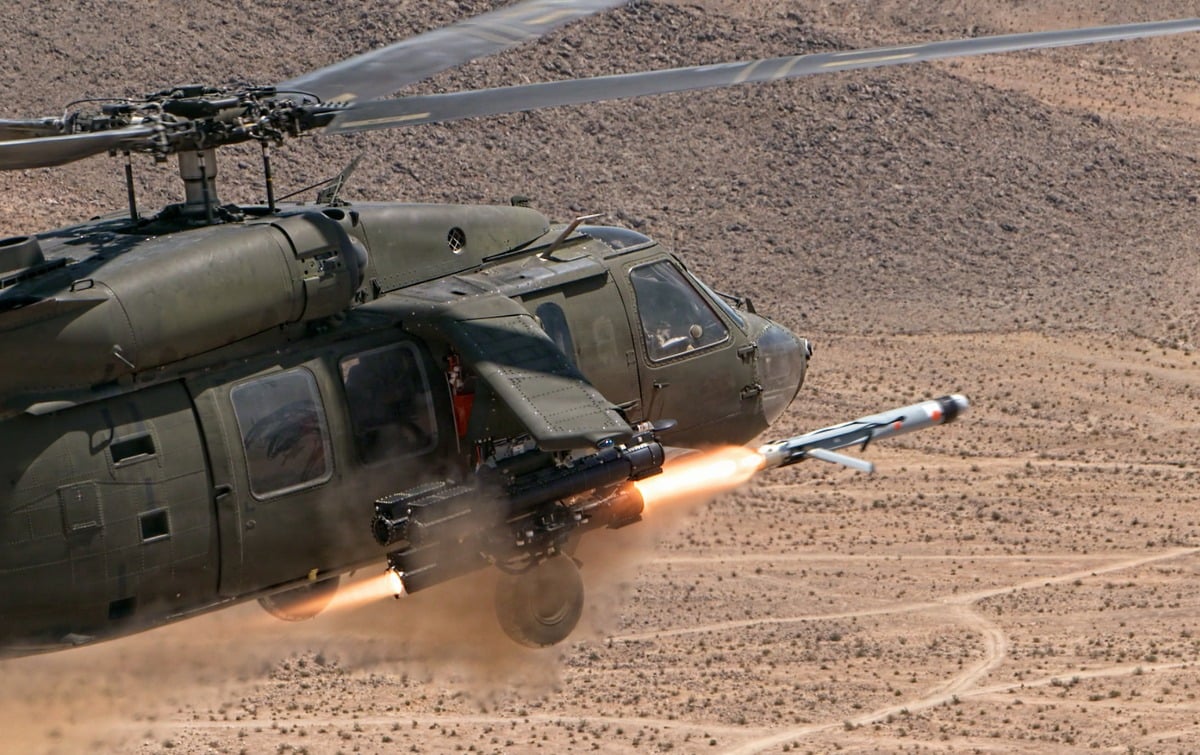
Everyone in defense circles is popping champagne over the latest military press release. The headlines write themselves: the United States Army successfully tested a brand new missile-armed drone, proving once again that software and carbon fiber will soon replace boots on the ground. Defense analysts are drooling over the footage, defense contractors are seeing their stock prices tick upward, and armchair tacticians are declaring traditional infantry obsolete.
They are all completely wrong. For an alternative view, see: this related article.
I have spent the better part of two decades watching defense procurement programs burn billions of taxpayer dollars on flashy hardware that looks incredible in a PowerPoint deck and falls apart the second it meets a real adversary. This latest missile-armed drone test is not a revolution in modern warfare. It is an expensive distraction designed to keep the Pentagon budget bloated while ignoring the brutal physics of contemporary combat.
Stop treating tactical drones as magic wands. They are not. They are fragile, easily jammed, massively expensive toys that crumble the moment they encounter a peer competitor with actual electronic warfare capabilities. Further analysis on the subject has been published by Wired.
The Lazy Consensus Of Drone Supremacy
The prevailing narrative goes like this: put a high-definition camera on a flying platform, strap a precision munition to its belly, connect it to a satellite link, and you have achieved total battlefield dominance. Proponents argue that this keeps pilots out of harm's way, reduces collateral damage, and offers pinpoint accuracy against insurgent threats.
This argument works wonderfully if your enemy has no air defense, no radar, and no signal jammers. It falls apart completely against anyone who can flip a switch and disrupt the electromagnetic spectrum.
Look at what is actually happening in modern high-intensity conflicts. In environments saturated with electronic warfare, cheap off-the-shelf radio-controlled quadcopters have short lifespans measured in hours, not years. Expensive, exquisite military-grade drones face an even harsher reality. They rely on GPS signals, satellite uplinks, and continuous radio frequency communication. Strip those away, and your multi-million-dollar missile platform becomes an expensive brick crashing into a mud field.
The military industrial complex loves selling you the fantasy of pushbutton war because simplicity sells. The reality is messy, analog, and brutal.
The Physics Of Attrition Nobody Wants To Discuss
Let us talk about cost asymmetry. When the Army tests a new missile-armed drone, they test it in a controlled environment against static targets with zero electronic interference. They do not test it against a nation-state adversary firing programmable airburst artillery or deploying dense GPS spoofing rings.
Consider the math. If you build a sophisticated, turbine-powered or heavy-battery tactical drone equipped with targeting optics and proprietary missiles, you are looking at a unit cost running into the hundreds of thousands, if not millions, of dollars. Now, what happens when your enemy deploys a low-cost radar-guided air defense system or uses a localized electronic jamming rig that costs a few thousand dollars to build?
You are trading million-dollar assets for ten-dollar electronic interference. That is not a winning strategy. That is a bankruptcy plan for a superpower.
Attrition is the ugly word nobody in procurement wants to say out loud. In a protracted conflict against a technologically capable adversary, you do not need a handful of exquisite, gold-plated aircraft. You need volume, resilience, and redundancy. If a platform costs too much to lose, commanders become risk-averse. They hesitate to deploy it, rendering it useless when the tactical situation demands immediate aggression.
The Software Mirage And The Human Bottleneck
Another major myth is that autonomy is just around the corner. Vendors love to whisper about artificial intelligence taking over targeting decisions, bypassing the need for constant satellite links.
We are nowhere near that reality. I have seen companies blow millions trying to build fully autonomous target-recognition algorithms for contested environments. Here is the dirty little secret: machine vision models fail catastrophically when camouflage changes, when weather turns bad, or when smoke and dust obscure the battlefield.
Even worse, the cognitive load on the human operator has not decreased; it has shifted. Instead of flying the aircraft, operators are now drowning in a firehose of high-definition sensor data, trying to parse whether a thermal signature in a ruined building is a combatant or a civilian. Adding a missile to that equation does not make the system smarter. It just gives a stressed, sleep-deprived operator the ability to make a catastrophic mistake faster.
The Counter-Intuitive Truth About Modern Firepower
So, what is the alternative? If expensive missile drones are a trap, what should the military actually be focusing on?
We need to stop treating drones as mini-fighter jets and start treating them as disposable, mass-produced ammunition.
The future does not belong to the exquisite, multi-role drone that can fly for ten hours and fire four different types of precision munitions. That is trying to build a Swiss Army knife when what you actually need is a brick. The future belongs to simple, rugged, mass-producible loitering munitions that are hardened against electronic jamming, built out of cheap commercial parts, and deployed by the thousands at the squad level.
If a drone costs less than a used car, you stop caring about losing it to enemy air defense. You can saturate an area, overwhelm opposing sensors, and achieve tactical objectives through sheer volume rather than surgical precision.
Precision is overrated when the enemy can hide behind a hill, jam your frequencies, or simply disperse. Mass, resilience, and simplicity always win wars of attrition.
Dismantling The People Also Ask Fallacy
Whenever a new military technology hits the news cycle, the same set of public questions pops up. Let us dismantle them right now with zero sugar-coating.
Are drones replacing traditional infantry? No. Not now, not ever. You cannot occupy a city, secure a supply route, or build trust with a local population with a flying camera. Infantry do not exist to kill people from a distance; they exist to hold ground. Until a drone can walk down a flight of stairs, kick open a door, and clear a basement, the infantryman is here to stay. Drones are artillery with wings, nothing more.
Can tactical drones operate without GPS? In theory, yes, using internal inertial navigation systems and optical terrain matching. In practice, these backup systems drift over time, lose accuracy in featureless terrain, and are easily blinded by modern counter-measures. Assuming uninterrupted connectivity in a modern combat zone is professional negligence.
Are smaller drones safer from electronic warfare? Ironically, smaller drones are often more vulnerable because they lack the payload capacity for heavy, military-grade frequency-hopping encryption hardware. They rely on commercial radio links that can be sniffed, tracked, and hijacked by a teenager with a laptop and a software-defined radio.
The Downside Of The Contrarian Approach
Let me be entirely transparent about the flaw in my own argument.
By advocating for cheap, disposable, mass-produced systems over exquisite technology, you invite a different kind of danger. When you flood a battlefield with thousands of low-cost autonomous and semi-autonomous platforms, you increase the risk of accidental escalation, friendly fire incidents, and loss of human control over lethal force.
Exquisite platforms, for all their flaws, usually come with robust safety protocols, human-in-the-loop checks, and strict command-and-control chains. Stripping those away in favor of cheap volume opens a Pandora's box of ethical and tactical hazards.
There is no silver bullet in war. Every solution creates a new vulnerability.
The Bottom Line
The U.S. Army testing its new missile-armed drone is a symptom of an institution that loves shiny objects more than hard tactical truths. We are preparing to fight yesterday's war with tomorrow's overpriced toys.
Until defense planners embrace the reality of contested electronic environments, skyrocketing attrition rates, and the absolute necessity of mass over beauty, these expensive tests will remain what they have always been: expensive theater for a system that refuses to learn.
Build cheaper. Build dumber. Build in the millions. Or lose.