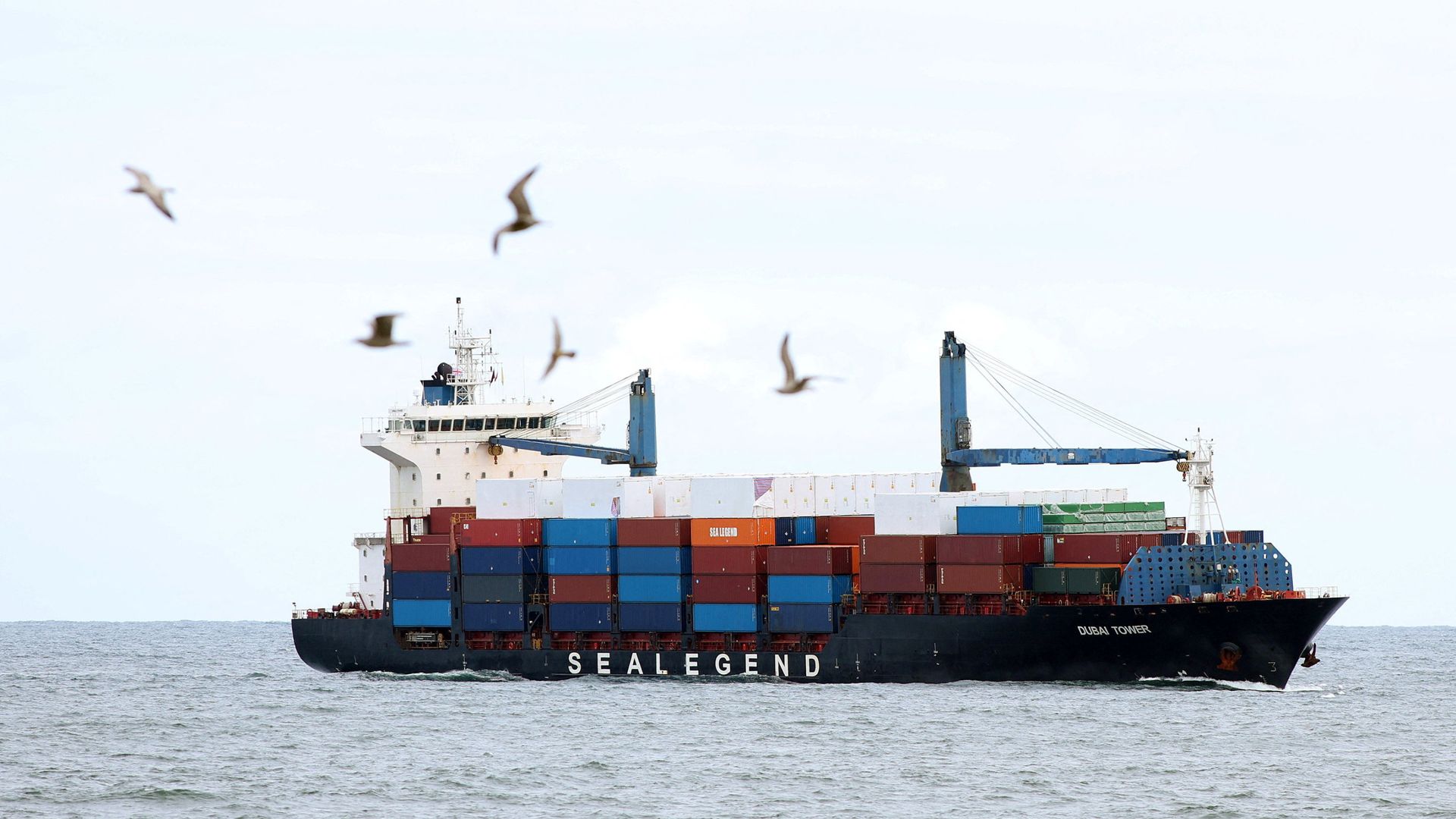
Every shipping trade publication just lost its mind over a container vessel successfully docking in the United Kingdom after transiting the Arctic from China. The headlines scream about historic trade routes, slashed transit times, and the dawn of a new era in global logistics.
It is absolute theatre.
I have spent two decades watching executives throw capital at logistical novelties while ignoring unit economics. The lazy consensus in every newsroom right now is that shaving a few thousand miles off the traditional Suez Canal route via northern ice-choked waters represents an upgrade for international commerce.
It does not. It is an expensive, high-risk parlor trick that defies every fundamental law of commercial maritime operations.
The Physics Problem Nobody Wants to Calculate
Let us look at the reality of northern maritime routes. Water freezing into pack ice tends to ruin ship schedules. The vessel that made this celebrated voyage required specialized hull reinforcement and, crucially, heavy icebreaker escorts for substantial portions of the journey.
Here is what the press releases conveniently omit: icebreaker services are not a public utility provided out of goodwill. They are astronomical line items. When you factor in the charter rates for nuclear or diesel icebreakers, specialized double-acting hull designs that burn extra fuel when moving astern through ridges, and the sheer unpredictability of polar weather windows, the math completely collapses.
You do not save money by burning millions of dollars in specialized escort fees just to bypass a few days of open ocean transit. You simply trade predictable canal tolls for catastrophic operational variance.
The Structural Fallacy of Polar Shortcuts
- Draft Restrictions: Northern passages feature shallow chokepoints that prevent fully laden ultra-large container vessels from passing. You are forced to use smaller ships, destroying the economies of scale that modern global trade relies upon.
- Insurance Penalties: Hull and machinery insurance rates for polar transits are punitive. Underwriters are not romantic adventurers; they look at actuarial tables. The risk of propeller damage or rudder shearing from multi-year ice is too high.
- Zero Redundancy: If a main engine fails in the Malacca Strait or the Mediterranean, you call a local tug. If you lose power in the Laptev Sea during a polar autumn, you are waiting days for help while your cargo freezes and your operating costs skyrocket.
The Environmental Greenwashing Loop
There is another layer of delusion here. Shippers love to point out that shorter distance means lower aggregate fuel burn on paper. This is statistical gymnastics.
Black carbon emissions from heavy fuel oil settling on Arctic ice accelerate regional melting at an exponential rate. When soot coats white ice, albedo drops, absorption rises, and the thermal feedback loop spins out of control. Smart logistics firms know that consumer backlash against Arctic shipping will soon outweigh any marginal transit gains. Regulators are already circling. The International Maritime Organization is tightening emission control areas, and operating a standard container ship through pristine northern ecosystems is a regulatory landmine waiting to detonate.
Imagine a scenario where a minor bunker fuel spill occurs midway through an unmapped northern strait. You do not have a local port authority with containment booms standing by. You have polar bears, pack ice, and a multi-billion-dollar cleanup liability that will bankrupt the operating line before rescue vessels can even navigate the coordinates.
What the PAA Queries Get Wrong
People Also Ask: Will the Northern Sea Route replace the Suez Canal?
The short answer is no, and anyone telling you otherwise is selling consulting decks to venture capitalists who have never chartered a tramp steamer.
The long answer requires looking at operational reliability. Global supply chains do not optimize for speed under ideal conditions; they optimize for predictability under variance. A supply chain manager does not care if a ship can make it through an ice pack in August. They care whether that ship can maintain a weekly cadence twelve months out of the year.
The northern route is navigable for a pitifully narrow window—roughly three to four months annually if conditions cooperate. For the remaining two-thirds of the year, it is a frozen wasteland. You cannot build a global manufacturing inventory model around a seasonal gimmick. Factories in Shenzhen do not shut down for winter just because the northern corridor freezes over. You still need year-round capacity, which means the traditional southern routes via the Cape of Good Hope and Suez remain the permanent backbone of planetary trade.
The Real Agenda Behind the Hype
So why are we drowning in breathless coverage of this single voyage?
Geopolitics. State-backed shipping enterprises need narrative victories. Announcing a successful polar transit sounds incredible to retail investors and government regulators who want to project sovereignty and technological prowess across northern frontiers. It is a flag-planting exercise disguised as a commercial breakthrough.
I have watched companies burn millions of dollars pursuing vanity logistics projects just to secure a headline on a financial blog. They chase novelty while their core operational efficiency rots.
If you run a supply chain, stop looking at polar maps for cost-cutting inspiration. Focus on terminal automation, predictive container repositioning, and fuel hedging strategies that actually impact your bottom line. Let state actors subsidize expensive ice-breaker photo-ops. Your balance sheet cannot survive the novelty tax.