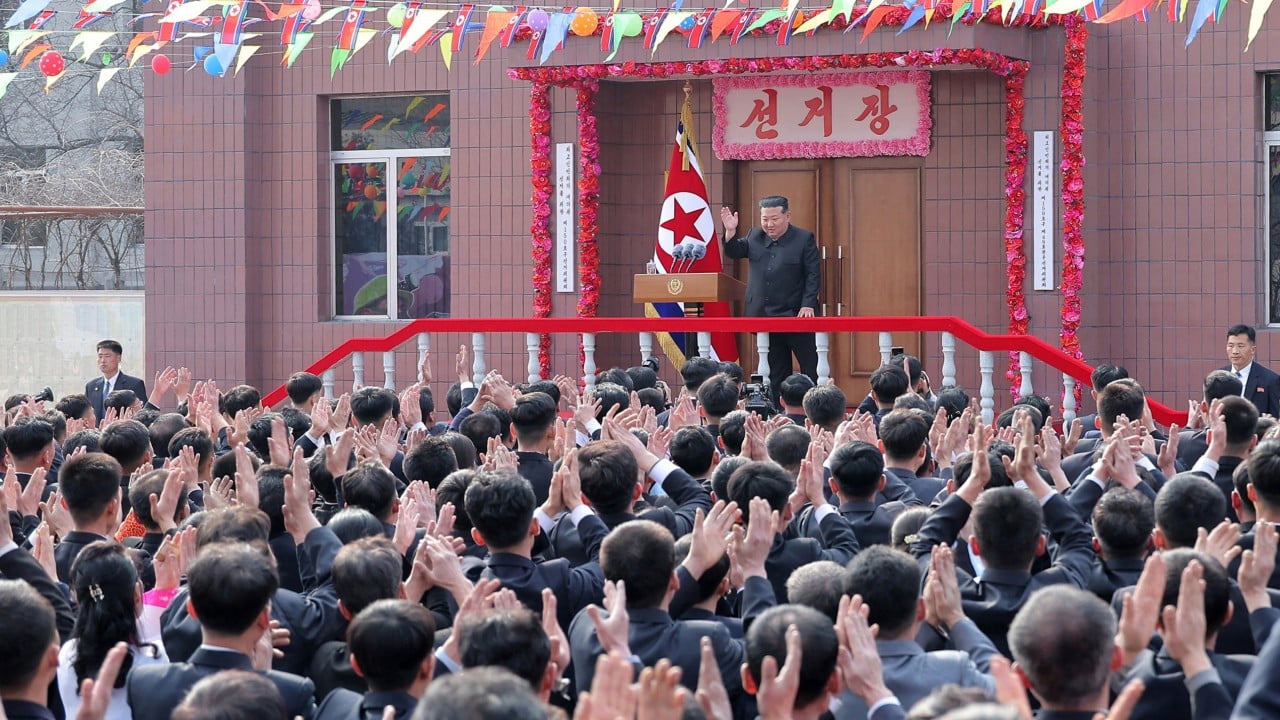
North Korea’s state-sponsored labor export program functions not as a traditional employment scheme, but as a high-margin, vertically integrated extraction system designed to bypass global financial sanctions. By deploying approximately 100,000 citizens across diverse sectors—ranging from Siberian logging camps to IT hubs in Southeast Asia and garment factories in China—the Kim Jong Un administration converts human capital directly into hard currency. The reported US$500 million annual revenue is a conservative floor; the actual economic utility of this system involves a complex interplay of wage garnishment, state-mandated "loyalty funds," and the laundering of digital assets through state-affiliated tech workers.
The Tri-Sector Revenue Model
The regime’s labor export strategy is categorized by three distinct operational profiles, each with unique risk-to-reward ratios and capital overhead requirements.
1. Primary Resource Extraction (High Volume, Low Margin)
This remains the most visible and traditional form of labor export. Workers are sent to the Russian Far East for logging or to construction sites in the Middle East. The infrastructure for these operations is heavily reliant on bilateral state agreements.
- The Cost Function: High transportation and physical maintenance costs.
- The Extraction Rate: The state typically seizes 70% to 90% of the gross salary.
- Strategic Utility: These roles provide a steady, predictable flow of cash while keeping a large, potentially restless male population occupied outside domestic borders.
2. Manufacturing and Processing (Mid-Tier Integration)
Primarily concentrated in Chinese border provinces like Liaoning and Jilin, this sector utilizes North Korean women in garment and electronics assembly. This operates under a "processing-with-trade" framework where raw materials are sent to North Korean-manned factories, processed, and re-exported as "Made in China."
- The Operational Loop: Chinese firms provide the facility and materials; the North Korean state provides the workforce and internal security detail.
- The Arbitrage: The regime captures the delta between the international market value of the labor and the subsistence-level rations provided to the workers.
3. The Digital Workforce (Low Overhead, High Yield)
The most sophisticated and rapidly growing segment involves IT professionals and software developers. Operating out of "disguised" hubs in Southeast Asia, Russia, and occasionally Europe, these workers utilize VPNs and stolen identities to secure freelance contracts on global platforms.
- Technical Verticals: Blockchain development, mobile app creation, and cryptocurrency platform maintenance.
- The Multiplier Effect: Beyond simple wages, these workers often serve as the "bridgehead" for cyber-enabled financial crime. A developer embedded in a crypto firm can facilitate the deployment of malware or provide the internal access necessary for large-scale heists.
Mechanisms of Control and the Economics of Coercion
The sustainability of a US$500 million annual revenue stream requires a near-zero attrition rate. The regime achieves this through a specific psychological and financial "lock-in" mechanism.
The first layer of control is Social Stratification (Songbun). Only those deemed politically loyal are eligible for foreign deployment. This creates a competitive environment where the "privilege" of being exploited abroad is viewed as the only path to upward mobility within the North Korean domestic economy.
The second layer is Collateralized Kinship. Workers are almost never allowed to travel with their families. The relatives remaining in North Korea serve as human collateral. This creates a powerful deterrent against defection, as the "cost" of the worker’s escape is paid by their family in the form of imprisonment or execution.
The third layer is The Surveillance-to-Worker Ratio. North Korean labor detachments are structured in cells, supervised by Ministry of State Security (MSS) officers. These handlers do not produce economic value; they are a fixed operational expense. The efficiency of the labor camp is measured by whether the worker output exceeds the cost of the security apparatus required to prevent their escape.
Financial Flow and Sanction Evasion Logic
The transition of funds from a job site in Vladivostok to the central coffers in Pyongyang involves a deliberate obfuscation of the money trail. The regime employs a "Bulk Cash" strategy alongside "Proxy Banking."
- Physical Remittance: A significant portion of wages is collected in cash by handlers and transported across borders via diplomatic pouches, which are exempt from customs inspections under the Vienna Convention.
- The Shadow Ledger: In the IT sector, payments are often routed through a chain of third-party bank accounts belonging to "front companies" registered in jurisdictions with lax KYC (Know Your Customer) requirements. These funds are eventually converted into stablecoins or other cryptocurrencies, then "tumbled" through mixers to break the audit trail before being liquidated into Renminbi or US Dollars.
This creates a Sanctions Shield. Because the labor is performed under the guise of legal foreign entities or via anonymous digital platforms, traditional financial "red flags" are rarely triggered. The US$500 million is not a single lump sum; it is a granular, high-frequency stream of thousands of micro-transactions.
The Productivity-Survival Paradox
The article by the rights group highlights the "brutal conditions," but from a strategic consulting perspective, these conditions are a feature, not a bug, of the system. The regime is optimizing for Maximum Immediate Extraction (MIE) rather than Long-term Human Capital Value (LHCV).
In standard economic models, a firm invests in worker health to ensure long-term productivity. The North Korean state, however, views its workforce as a depreciating asset with a high replacement rate. If a logger in Siberia becomes incapacitated due to malnutrition or injury, the cost of replacement is negligible due to the massive surplus of domestic labor desperate for a chance to earn even a fraction of the diverted wages.
Comparative Analysis: Domestic vs. Exported Labor
To understand the scale of the US$500 million, one must analyze the domestic opportunity cost. The North Korean internal economy is largely stagnant, characterized by a fractured distribution system and a reliance on informal markets (Jangmadang).
| Metric | Domestic Labor (Avg) | Exported Labor (Avg) |
|---|---|---|
| Gross Monthly Value Generated | US$10 - US$30 | US$500 - US$1,500 |
| State Capture Rate | Variable (Tax/Bribes) | 70% - 95% (Direct) |
| Currency Type | North Korean Won (Volatile) | USD / EUR / RMB (Hard) |
| Operational Scalability | Low (Resource Constrained) | High (Global Demand) |
The export of labor is, essentially, the only "product" North Korea can scale globally without significant investment in manufacturing technology or infrastructure. It is the ultimate "lean" export.
Identification of Structural Vulnerabilities
Despite its resilience, the forced labor matrix faces two primary bottlenecks:
1. The Transparency Paradox
As the regime moves more workers into the IT and high-tech sectors to increase margins, it inadvertently increases the workers' exposure to unfiltered information. This creates an "ideological decay" that requires even more expensive security oversight, eventually hitting a point of diminishing returns.
2. The Third-Party Liability Shift
The primary threat to this revenue stream is not North Korea itself, but the host nations and private corporations that utilize the labor. As ESG (Environmental, Social, and Governance) reporting becomes more rigorous, the "blind spot" in the global supply chain—where North Korean labor is laundered through Chinese or Russian intermediaries—is shrinking.
Strategic Forecast and Tactical Responses
The North Korean state will likely pivot further toward the Digital Labor Sector. The overhead is lower, the anonymity is higher, and the ability to combine "legal" work with "illegal" cyber-exfiltration provides a dual-income stream.
Governments and private entities looking to disrupt this US$500 million engine cannot rely solely on traditional sanctions. The strategic play involves:
- Algorithmic Identity Verification: Developing AI-driven tools for freelance platforms to detect the specific behavioral and network patterns of North Korean IT workers (e.g., specific VPN signatures and code-style consistency across multiple "identities").
- Targeting the Handlers: Shifting focus from the laborers to the "financial facilitators" in the MSS. Disrupting the handlers' ability to move bulk cash or manage proxy accounts is more effective than attempting to block the labor itself.
- Host Nation Diplomatic Pressure: Explicitly linking the presence of North Korean labor detachments to a host country's sovereign credit rating or its eligibility for international trade incentives.
The regime's reliance on this $500 million creates a systemic dependency. If this hard currency flow is restricted, the internal "Loyalty Economy"—the system of gifts and perks that keeps the Pyongyang elite aligned with the Kim family—begins to fracture. The goal is not merely to "expose" the labor, but to make the cost of managing the security and financial obfuscation exceed the revenue generated by the workers themselves.
Would you like me to analyze the specific digital footprints used by North Korean IT workers to infiltrate Western freelance platforms?