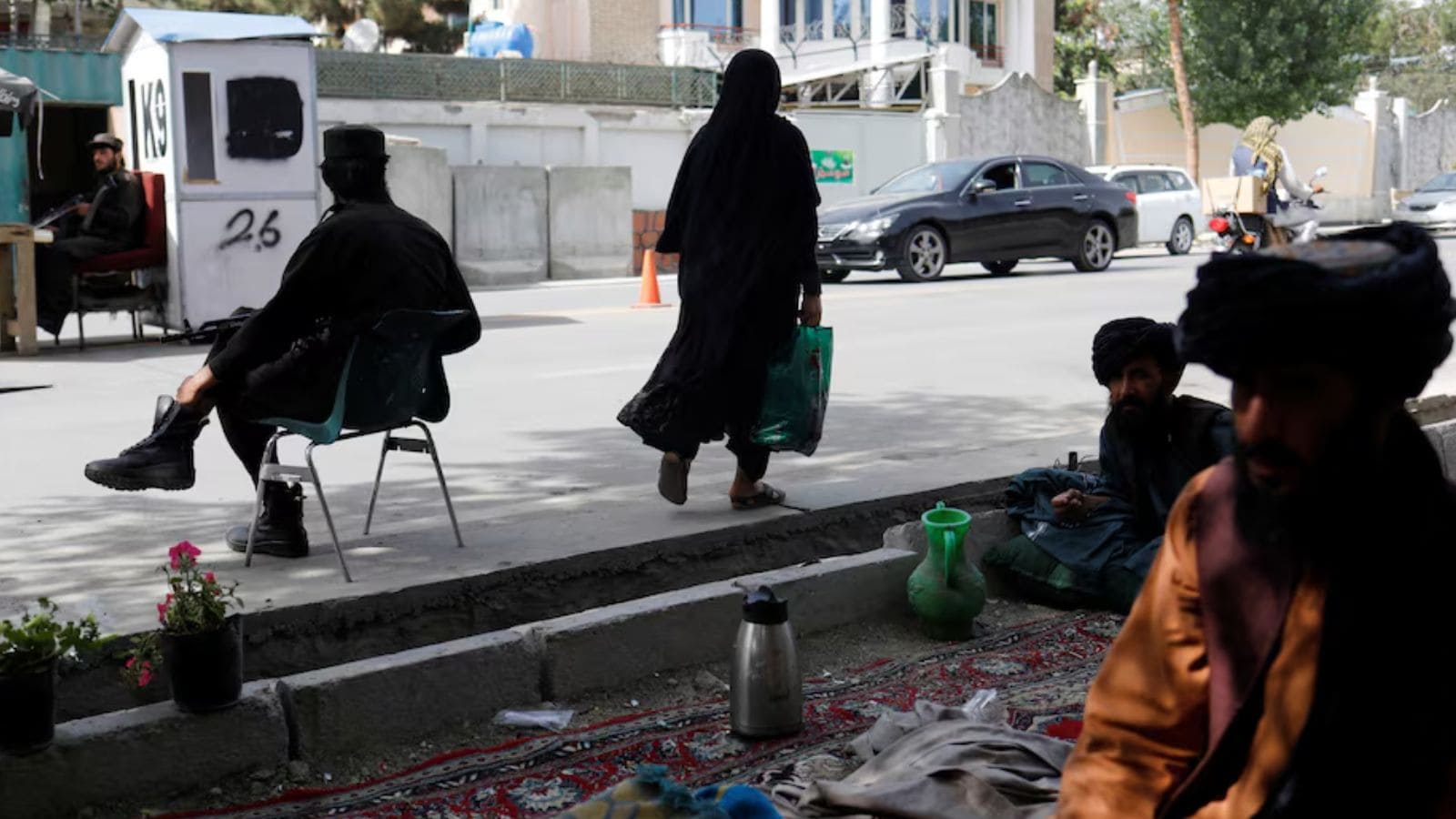
Five years after the return of the Taliban to political dominance in Kabul, the institutional architecture governing public space in Afghanistan has been reconfigured around a single operational objective: the systematic removal of women from civic visibility. Empirical metrics released by UN Women indicate that half of all Afghan women now exit their residences only once or twice a month. This statistic is not an accidental byproduct of economic stagnation or social drift; it is the measurable output of a deliberate governance model enforced by more than one hundred restrictive decrees issued since August 2021. Deconstructing this environment requires moving past anecdotal observations to examine the structural mechanisms, economic penalties, and systemic feedback loops that sustain total spatial exclusion.
The Tripartite Matrix of Enforcement
The restriction of female mobility operates through three distinct administrative pillars designed to eliminate individual autonomy without requiring continuous military intervention.
The first pillar is spatial gating through the mandatory requirement of a mahram, or male guardian. Data shows that nearly three-quarters of Afghan women feel unsafe attempting to transit public areas unaccompanied. This requirement acts as a structural choke point. Because households frequently lack available adult males during daytime working hours due to economic survival demands or displacement, the mahram rule functions as a de facto house arrest mechanism. Private businesses, transport networks, and healthcare facilities have been instructed by the Ministry for the Propagation of Virtue and the Prevention of Vice to deny service to any unaccompanied woman, effectively privatizing the enforcement of state ideology.
The second pillar involves the systematic eradication of human capital pipelines. Afghanistan remains the solitary nation globally enforcing a total prohibition on girls attending secondary education and universities. By cutting off formal schooling at puberty, the state arrests the accumulation of human capital at its foundational stage. This creates a generational feedback loop: as existing cohorts of female professionals—such as teachers, physicians, and administrators—retire or are forced out of the workforce, no pipeline exists to replace them. Projections indicate that current policies risk eliminating more than 25,000 female educators and healthcare workers by 2030.
The third pillar is the dismantling of legal and civil protections. Decrees enacted over the past year have formally altered the legal status of women within domestic and civil frameworks, dismantling legal parity and expanding male authority within marital and inheritance disputes. By removing judicial recourse for civil grievances, the state has deprived women of the legal instruments required to contest domestic isolation or economic deprivation.
The Macroeconomic Cost Function
The macro-level suppression of female labor market participation generates direct, quantifiable losses to the national economy. Female employment sits at approximately 7 percent, contrasted with an 84 percent participation rate for men. This near-total exclusion has compressed gross domestic product through multiple channels:
- Direct loss of labor productivity across formal and informal service sectors.
- Capital destruction within women-led enterprises, compounded by international funding reductions that threaten over half of these organizations with total closure.
- Escalating public health expenditures driven by untreated morbidities, rising maternal mortality rates currently resting at an estimated 638 deaths per 100,000 live births, and surging pediatric health crises.
Economic modeling by international agencies projects that the exclusion of women generates direct macroeconomic losses reaching nearly one billion dollars. This contraction severely limits domestic purchasing power, deepens reliance on contracting humanitarian aid streams, and locks the national economy into a low-productivity equilibrium dependent on primary subsistence and informal trade.
The Mechanics of Attrition in Public Health
The convergence of spatial restrictions and workforce bans creates a critical failure point within the healthcare delivery apparatus. Regulations dictate that female patients must wear specific attire, travel only with a mahram, and ideally receive treatment from female practitioners. Simultaneously, the ban on higher education ensures that the supply of new female doctors, nurses, and midwives is throttled at the source.
When a pregnant woman requires emergency intervention, the interaction of these variables frequently proves fatal. Ambulances and clinics routinely refuse transport or admission to unaccompanied women. The shortage of female medical personnel, combined with prohibitions against male practitioners treating female patients without restrictions, creates localized healthcare vacuums. Consequently, basic health indicators—particularly maternal and neonatal survival rates—deteriorate along steep geographic gradients, hitting rural populations with absolute severity.
Psychological Toll and Social Fracturing
The structural confinement of half the population has catalyzed an internal mental health crisis. Seven out of ten Afghan women categorize their psychological state as bad or very bad. This distress stems from the elimination of physical mobility, the erasure of professional identity, and the destruction of community support networks. The constriction of public life forces individuals into hyper-isolated domestic environments, stripping away external stimuli and peer interaction.
Civil society organizations that traditionally acted as buffers against psychological and social distress are simultaneously collapsing. International aid cuts, coupled with administrative restrictions on female humanitarian workers, have severed the last functional safety nets. Women-led NGOs, which historically provided localized micro-finance, legal aid, and safe spaces, report that funding contractions will force widespread liquidations.
Strategic navigation of this operating environment requires recognizing that the current conditions are structural rather than temporary anomalies. International actors and remaining multilateral agencies must pivot from short-term emergency appeals to decentralized, underground, and digital resource distribution models designed to bypass institutional bottlenecks. Preserving the remaining pockets of female human capital—particularly in primary health and clandestine education networks—remains the sole operational leverage point to prevent total societal collapse.