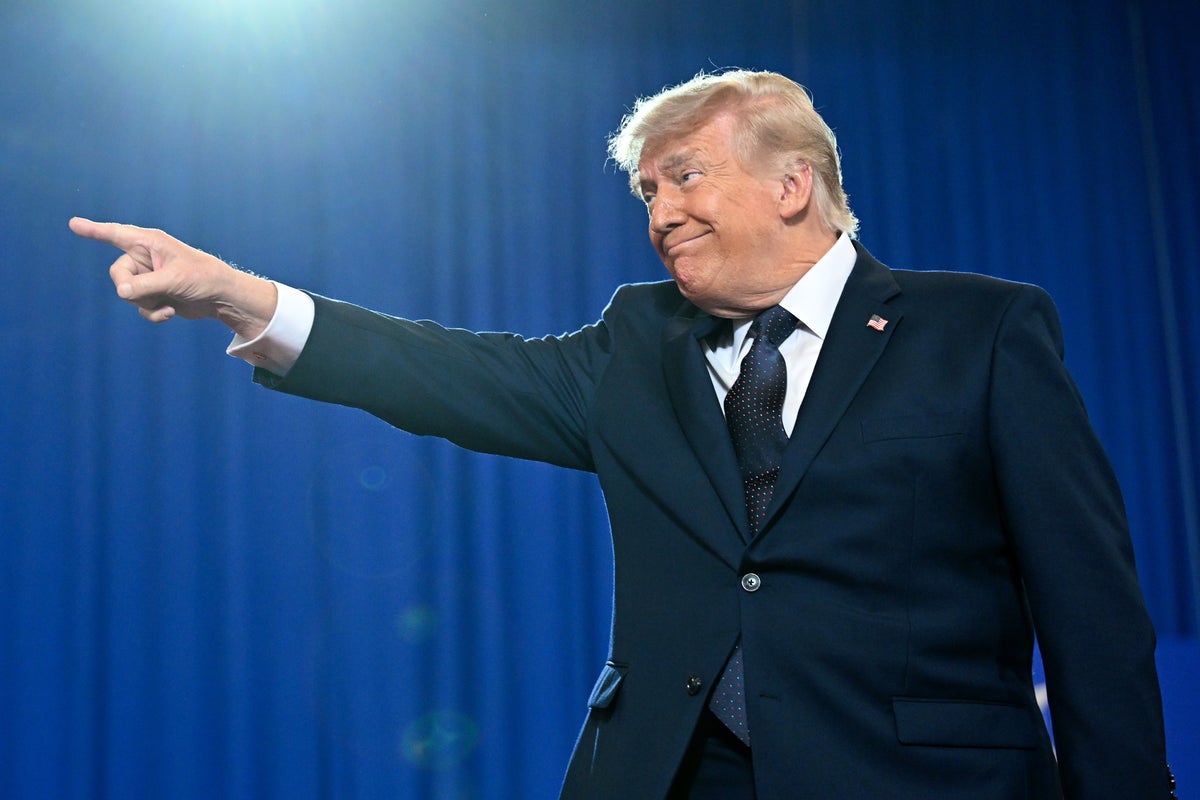
Pundits love a good funeral. Every time a polling group drops a fresh batch of data showing a spike in disapproval ratings, the media rushes to write the political obituary. The latest consensus screams that rising consumer prices and foreign policy friction have finally backed Donald Trump into a corner. They point to the numbers, wring their hands, and declare a crisis.
They are reading the map entirely wrong.
The lazy assumption governing modern political analysis is that public disapproval correlates directly with political impotence or imminent electoral defeat. It does not. In fact, obsessing over a top-line disapproval number misses the structural mechanics of how modern populism interacts with macroeconomic pain. High prices alienate voters, but they also calcify a core base that views inflation not as a policy failure, but as proof that the entire global system is broken.
Let's dissect the reality behind the noise.
The Flawed Premise of the Disapproval Spike
Most polling analysis treats public opinion like a thermometer. If the mercury rises, the patient is sick. But political sentiment in a hyper-polarized environment behaves more like a thermostat—it clicks on and off based on pre-set conditions, regardless of the actual climate outside.
When a pollster calls a household and asks if they approve of the current administration amid a spike in energy costs or international tension, the negative response is an emotional reaction to reality, not a rejection of a specific political philosophy.
What the Polls Actually Measure
Standard polling methodologies often fail to separate three distinct groups:
- The Hard Opposition: Voters who will disapprove regardless of the metric.
- The Disappointed Base: Voters who support the platform but use the poll to express frustration with immediate economic pain.
- The Disengaged Middle: Voters who react purely to the headline price of gasoline or milk on any given Tuesday.
Lumping these groups into a single "disapproval" metric creates a false narrative of a collapsing coalition. I have analyzed voter data trends across multiple cycles, and the most common mistake campaigns make is treating a temporary spike in dissatisfaction as a permanent shift in allegiance. It rarely is.
The Inflation Paradox: Pain as a Political Driver
The conventional wisdom dictates that rising prices are an unmitigated disaster for an incumbent or an dominant political figure. Economic textbook theory suggests that voters punish the executive branch for a loss of purchasing power.
The contrarian truth? Macroeconomic instability often validates the populist narrative.
+-----------------------------------------------------------------+
|                    THE POPULIST FEEDBACK LOOP                  |
+-----------------------------------------------------------------+
|  Global Economic Shock -> Rising Consumer Prices               |
|                                                                 |
|  -> Public Frustration -> High Disapproval Ratings              |
|                                                                 |
|  -> Validation of "Systemic Failure" Narrative -> Base Lock-in  |
+-----------------------------------------------------------------+
When prices rise due to supply chain friction or international conflict, the establishment views it as a management problem to be solved with interest rate adjustments or diplomatic memos. The populist base views it as systemic corruption. Therefore, the pain itself becomes fuel. The message changes from "everything is fine" to "I told you the system was unstable."
This is why traditional disapproval metrics fail to predict actual outcomes. A voter can deeply dislike the current economic environment—and say so to a pollster—while remaining completely committed to a candidate who promises to dismantle the structures that caused it.
Foreign Policy Friction and the Fatigue Factor
The competitor narrative suggests that heightened tension in regions like Iran drives down popularity because the public fears instability. This view is stuck in the 1990s.
The modern electorate views international conflict through the lens of domestic exhaustion. The disapproval registered in recent data isn't a mandate for a return to conventional diplomacy; it is a demand for absolute withdrawal.
Consider the mechanics of public reaction to foreign policy:
- Initial Shock: News outlets broadcast escalation, leading to immediate anxiety.
- Poll Reflection: Anxiety translates into a negative response on tracking polls.
- Realignment: Voters assess whether the conflict directly impacts their daily life beyond the gas pump. If it does not, the issue drops in priority, but the anti-interventionist stance solidifies.
The assumption that international friction automatically weakens a nationalist leader ignores the rally-around-the-flag effect, even when that flag is flown in a defiant, non-traditional manner.
Dismantling the "People Also Ask" Assumptions
Look at the standard questions driving the public conversation right now. The premises are fundamentally broken.
Do high disapproval ratings prevent legislative action?
No. Power in the modern political landscape is driven by intense minorities, not passive majorities. A leader with a 55% disapproval rating can still command total discipline from their legislative caucus if their core 35% base is unshakeable. The obsession with the 50% threshold is a relic of an era before hyper-gerrymandering and closed primaries.
Can an administration recover from peak dissatisfaction?
The question assumes recovery requires changing minds. It doesn't. It requires shifting the focus. Political memory is exceptionally short. A sudden drop in interest rates or a temporary stabilization of energy prices can erase six months of polling deficits in six weeks. More importantly, elections are choices between two specific options, not a referendum on absolute satisfaction. When forced to choose between an unsatisfactory status quo and an unacceptable alternative, voters routinely choose the dissatisfaction they are familiar with.
The Danger of Trusting Aggregated Data
Relying on poll aggregators to judge political viability is like reading a balance sheet from three quarters ago to trade a volatile stock today.
Most tracking polls rely on historical weighting models that assume predictable turnout patterns. They struggle to capture the irregular voter—the individual who tells a pollster they are miserable and hate the direction of the country, but who only shows up to vote when stimulated by high-stakes rhetoric.
I’ve watched corporate boards and political committees burn millions of dollars trying to fix problems highlighted by public polling, only to realize the poll was measuring a temporary mood, not an actionable trend. If you base your strategy on the assumption that a high disapproval rating means a leader is paralyzed, you will be caught completely flat-footed when they leverage that exact public anger to push through high-risk initiatives.
Stop looking at the top-line percentage. Start looking at the intensity of the core. The noise is loud, but the structural power dynamic remains completely unchanged.