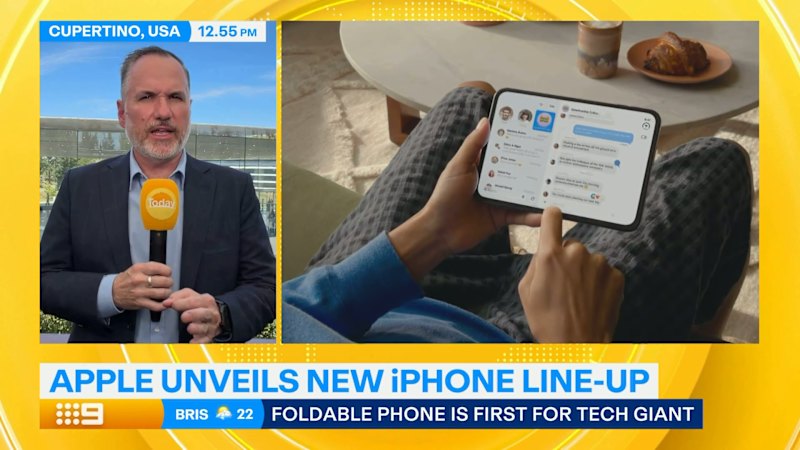
Apple took its sweet time entering the foldable market. While competitors spent years throwing hardware at the wall to see what sticks, Cupertino watched, waited, and let everyone else deal with terrible screen creases and fragile hinges. Now, the wait is over. Apple just pulled the curtain back on its first-ever folding device, officially named the iPhone Duo.
If you expected a rushed response to Samsung or Google, you missed how Apple operates. They don't race to be first. They race to be standard-setting. The iPhone Duo lands with a book-style form factor, a roughly 5.3 to 5.5-inch cover screen, and an expansive inner OLED display stretching to about 7.8 inches. It runs on the A20 Pro chip, packs 12GB of RAM, and carries a starting price tag that easily clears the two-thousand-dollar mark.
Fixing the Seam Problem
Every single folding phone on the market suffers from the same physical flaw. Open it up, run your finger down the middle, and you feel a distinct trench. Apple claims they solved this by prioritizing a near-invisible crease regardless of manufacturing cost. By developing new material properties for the display stack and engineering a more robust hinge system, the goal was to make the interior screen feel like a continuous sheet of glass.
You'll notice the physical dimensions feel different, too. Instead of the tall, narrow outer screens found on rival foldables that make typing feel cramped, the iPhone Duo leans into a wider 4:3 aspect ratio. It mimics a compact iPad when opened. Typing on the outer display doesn't feel like texting on a TV remote anymore.
The Trade-Offs Apple Hopes You Won't Mind
Achieving a profile that measures around 4.5mm when open requires sacrifices. You won't find Face ID here. Because the chassis is too thin to house a traditional TrueDepth camera array, Apple brought back Touch ID, embedding the fingerprint sensor directly into the side power button much like an iPad Air.
The rear camera layout is also stripped down compared to a max-tier Pro model. You get a dual-lens system featuring Wide and Ultra Wide shooters, omitting the dedicated telephoto lens due to sheer spatial limits. Yet, software features compensate heavily. On-device processing via the A20 Pro allows the outer display to act as a live viewfinder for whoever you're photographing, turning the rear cameras into the ultimate high-resolution selfie machine.
Pricing and Market Realities
Let's address the elephant in the room. This device starts north of $2,000, with maxed-out storage options climbing even higher. It's an ultra-premium product aimed squarely at early adopters, enterprise power users, and die-hard loyalists who refuse to switch to Android just to get a folding screen.
Market analysts predict this launch will single-handedly jolt global foldable adoption rates upward. When Apple enters a category, consumer hesitation usually evaporates. Competitors should worry.
If you want one, start saving your cash and watch out for pre-order dates kicking off in October. Just remember that first-generation Apple hardware always comes with a premium tax. Decide if a folding display is genuinely useful for your daily workflow, or if you're just dazzled by shiny new tech.