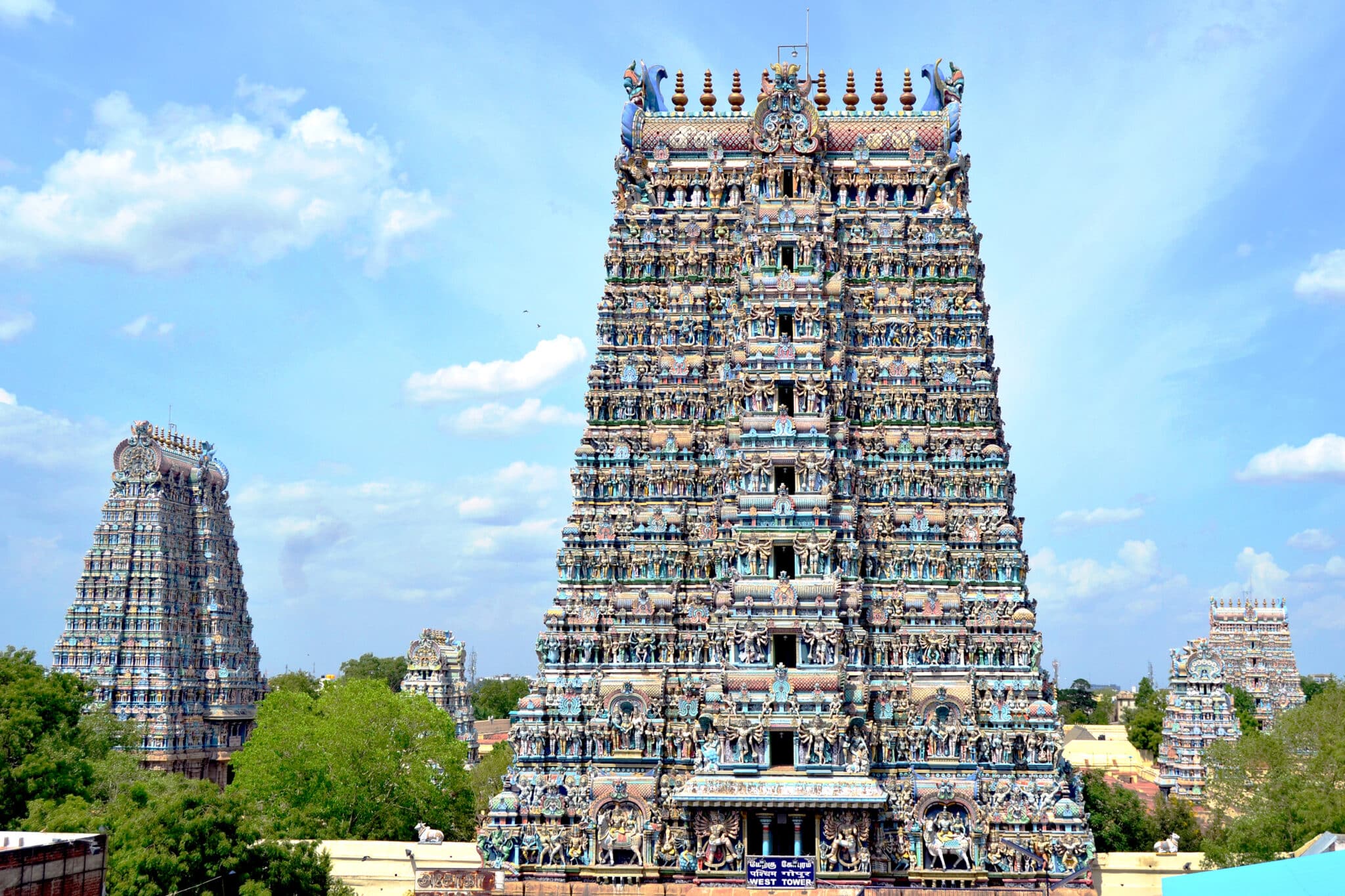
India's Ministry of External Affairs formally flagged growing racist hostility and anti-India hate in the United States following a foiled plot to carry out a mass shooting at a Hindu temple in Aurora, Illinois, on October 11, 2026. Spokesperson Randhir Jaiswal pointed to the reported anti-Hindu and racist dimensions of the alleged plan—including references to violence against people of Indian origin—and pressed American authorities for thorough investigation and decisive protection of the diaspora. Weeks after the arrest, a Cook County grand jury expanded the case against 19-year-old suspect Alexandros Paporakis, indicting him on 27 charges including terrorism and weapons offenses.
Diplomatic warnings rarely emerge in a vacuum. When New Delhi raises alarms over domestic extremism inside an allied nation, it is not merely reacting to a single crime scene or a single court docket. It is signaling a structural friction point between American domestic threat patterns, state and federal charging thresholds, and the lived reality of millions of Indian Americans and South Asians whose safety has become entangled with broader cultural and political flashpoints.
What Investigators Uncovered in Suburban Chicago
A jammed rifle. A co-worker's phone call. Those two elements, rather than a grand counterterrorism sweep, stopped a potential tragedy on the first day of Navaratri.
According to police accounts and court filings, the investigation began on October 11, 2026, after co-workers at a Taco Bell alerted authorities that Paporakis, a 19-year-old from Palatine, Illinois, had spoken about plans to attack a Hindu temple in Aurora and kill Indian people. Investigators traced a vehicle registered to him to a temple parking lot in Aurora for roughly thirteen minutes earlier that day. Rep. Raja Krishnamoorthi stated that he and his family were worshipping at Sri Venkateswara Swami (Balaji) Temple on the day of the alleged attempt, though police have not formally confirmed the exact target location.
A search of Paporakis's residence turned up a rifle with a barrel shorter than 16 inches, loaded magazines, hundreds of rounds of ammunition, body armor in a tactical vest, and a patch bearing white supremacist imagery. Prosecutors also cited an eight-page document titled Why I Fought: A.K.A. (Aurora Shooter's Manifesto), which allegedly expressed white supremacist and neo-Nazi ideology, targeted people of Indian ancestry alongside Black and Jewish people, and reflected months or years of planning.
Those allegations remain subject to judicial proceedings, and Paporakis's defense attorney has indicated a not-guilty plea while pushing for a speedy trial. Still, the mechanics of the case expose an uncomfortable truth about modern extremism in the United States. Lone actors steeped in online supremacist subcultures often leave digital and social breadcrumbs long before they act, yet prevention still hinges on ordinary bystanders—co-workers, neighbors, or family members—deciding that a threat is serious enough to report.
Why Anti-India Hostility Has Gained Traction
For decades, Indian Americans were frequently discussed in policy circles through the lens of economic mobility, high educational attainment, or model-minority tropes. Those generalizations never captured the full complexity of the community, and today they offer little shield against targeted animosity.
Several converging forces have sharpened anti-India and anti-Hindu sentiment in recent years:
- Immigration and labor resentments. Debates over visa programs, hiring practices, and housing or job competition frequently harden into sweeping generalizations about Indian immigrants and South Asians as a bloc.
- Online radicalization ecosystems. Extremist forums and social feeds borrow language and symbols from established white supremacist networks while adapting grievances to newer targets, turning racial animus into a performative identity.
- Geopolitical spillover. Tensions involving India's foreign policy, diaspora politics, and domestic debates sometimes bleed into local American commentary, blurring lines between political argument and ethnic hostility.
- Identity misrecognition. Violence driven by racial or religious bias rarely stops at precise theological or national boundaries; Sikh, Hindu, Muslim, and broader South Asian communities have repeatedly faced spillover hostility rooted in appearance, dress, or perceived foreignness.
Civil rights advocates and South Asian leaders in the Chicago area pointed to this wider climate of rhetoric immediately after the Aurora plot came to light. Their argument is straightforward. Extremist manifestos do not invent hostility out of thin air; they radicalize individuals inside environments where scapegoating has already become louder and more normalized.
Terrorism Charges Versus Hate Crime Law
One of the sharpest legal questions surrounding the Aurora case involves how prosecutors classify the offense. A Cook County grand jury indicted Paporakis on 27 counts spanning terrorism, making a terrorist threat, armed violence, and unlawful weapon possession. Yet federal hate crime charges had not been announced as of mid-November, even after Rep. Krishnamoorthi and more than a hundred fellow lawmakers urged federal authorities to investigate the plot as a hate crime.
To a casual observer, the distinction can look like bureaucratic hair-splitting. In practice, it carries real legal and symbolic weight.
State terrorism statutes focus heavily on violent acts or threats intended to intimidate a civilian population or coerce government or public institutions, paired with severe firearm penalties. Federal hate crime statutes, by contrast, specifically target bias-motivated violence or attempted violence tied to race, color, religion, or national origin, bringing federal investigative resources and explicit legal recognition of the bigoted motive.
Charging a case under state terrorism laws can yield severe sentences and strong detention arguments—a judge already ruled Paporakis a danger to the public. Even so, omitting a hate crime designation can leave affected communities feeling that the specific targeting of their faith and ancestry has been folded into a generic security file rather than named directly in court.
At the same time, prosecutors have to weigh evidentiary standards, jurisdictional boundaries, and trial strategy carefully. Prosecutors noted potential mental health concerns alongside the extremist writings, a combination that defense counsel and courts routinely examine closely during pretrial litigation. Treating extremism and mental instability as mutually exclusive misses how modern lone-actor plots frequently unfold; grievance, obsession, and ideological validation often reinforce one another.
The Diplomatic Tightrope Between New Delhi and Washington
When the Ministry of External Affairs speaks out on a domestic American security case, it is walking a delicate diplomatic line.
On one side sits domestic accountability in New Delhi. Millions of families in India have relatives studying, working, or raising children in the United States. When headlines warn of a mass shooting plot at a Hindu temple during Navaratri, Indian officials face intense public pressure to show they are watching closely and demanding action.
On the other side lies sovereign sensitivity and strategic partnership. Washington and New Delhi cooperate closely across defense, technology, and regional security, and neither government wants routine consular concern to turn into a diplomatic crisis. Conversely, American officials have also raised their own concerns in past years about transnational repression and security issues involving diaspora activists, making bilateral rhetoric on rights and rule of law doubly sensitive.
That tension explains why Jaiswal's remarks paired sharp concern over racist hostility with explicit acknowledgment of U.S. law enforcement's arrest and detention of the suspect. It was a calibrated signal, not a rupture. Still, diplomacy alone cannot harden a suburban house of worship or calm a nervous congregation on a Sunday morning.
What Comes Next for Temple Security and Community Trust
Hardening physical security around temples, mosques, gurdwaras, and synagogues is necessary, yet brick, cameras, and security patrols only address the perimeter. Houses of worship are built for openness and community gathering, not fortress living, and turning every sacred space into a high-security compound exacts its own psychological toll.
Real prevention requires unglamorous coordination between local police departments, federal threat-assessment teams, house-of-worship boards, and mental health services before a suspect ever drives into a parking lot. It also requires public leaders across the political spectrum to draw a firm line between legitimate policy disagreements—over immigration, trade, or foreign affairs—and rhetoric that paints entire communities as threats.
A single jammed firing pin kept the Aurora plot from becoming a mass casualty event, leaving courts and communities to confront a much harder question: how to dismantle the hostility that made the target look plausible in the first place.
India calls out U.S. over 'anti-Hindu', 'racist' nature of mass shooting
This broadcast segment examines the reaction to the foiled Illinois temple plot and the broader concerns over anti-Hindu and anti-Indian hostility in the United States.