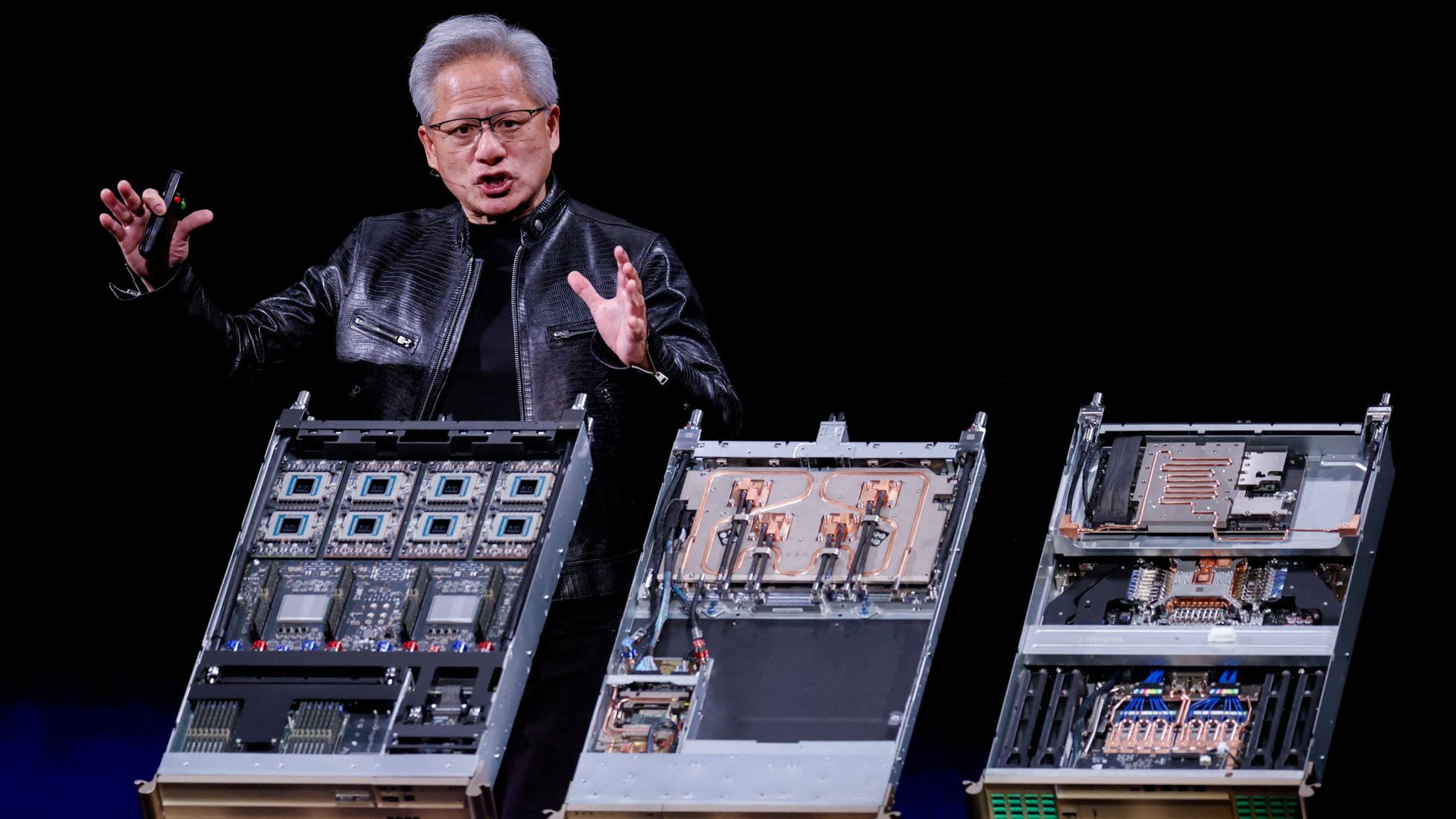
The headlines hit the financial trades like a thunderclap. Anthropic locking arms with Nscale for a staggering forty-five billion dollar cloud buildout is being cheered by the consensus crowd as a masterclass in scaling velocity. Wall Street analysts are popping cheap champagne. Venture capitalists are tweeting about exponential moats. Everybody is nodding along to the lazy narrative that bigger clusters automatically equal better intelligence.
They are completely missing the plot.
I have watched enterprise technology executives light billions of dollars on fire chasing speculative capacity loops for the better part of two decades. This massive capital commitment is not a position of supreme market dominance. It is a desperate hedge against an impending compute bottleneck, driven by the panic of burning through training budgets faster than actual revenue generation can justify.
Let us dissect the anatomy of this massive agreement and why the standard tech press narrative is dangerously wrong.
The CapEx Trap Everyone Is Ignoring
The lazy consensus says that AI labs need infinite infrastructure because model performance scales predictably with compute. Feed the beast more electricity, stack more GPUs in a warehouse, and emergence happens.
That theory is hitting a brutal brick wall of diminishing returns.
When a company commits to a cloud infrastructure price tag of this magnitude, they are locking themselves into fixed, depreciating hardware costs while the underlying software economics are moving in the opposite direction. Open-source models are compressing performance gaps at a frightening pace. You are paying peak-market prices for silicon that will look like a vintage paperweight in thirty-six months.
I have seen companies blow millions on this exact treadmill. They sign generational compute leases assuming demand curves will remain vertical forever. Then, inference optimization hits, distillation techniques improve by an order of magnitude, and suddenly you are renting a cathedral to host a high school play.
Anthropic makes incredible technology. Claude is a brilliant engineering achievement. But building a financial dependency on massive third-party infrastructure partnerships while competing against cloud behemoths who own the underlying silicon supply chain is a structural disadvantage.
The Nscale Factor And The Illusion Of Open Capacity
Let us talk about Nscale. They are positioning themselves as the sovereign alternative for heavy-duty AI workloads, promising bespoke infrastructure designed specifically for frontier labs.
Here is what the press releases leave out: raw gigawatts and specialized interconnects do not solve the fundamental physics of training stability.
When you scale clusters across tens of thousands of accelerators, hardware failure stops being an exception and becomes a continuous background event. Checkpointing takes hours. Interconnect latency bleeds efficiency. Throwing forty-five billion dollars at a data center buildout does not magically repeal the laws of distributed systems engineering.
Imagine a scenario where a cluster of this scale experiences a cascading hardware degradation event mid-run on a frontier training cycle. You lose millions of dollars of compute time in a single afternoon. The operational overhead of managing these gargantuan physical footprints is an administrative nightmare that few software-first companies are genuinely equipped to handle.
Anthropic is essentially outsourcing its physical destiny to a third party while trying to out-innovate competitors who manufacture their own chips and control their own power grids. That is not a moat. That is a rented fortress built on a fault line.
Why The Efficiency Paradigm Shift Changes Everything
The real battleground in artificial intelligence is no longer raw scale. It is efficiency.
We are moving past the era where brute-force scaling was the only path forward. Algorithmic breakthroughs in post-training reasoning, test-time compute, and smaller, hyper-optimized models are rendering massive training runs increasingly obsolete for everyday enterprise utility.
Why spend billions wiring up bespoke data centers when smarter routing, architectural pruning, and retrieval-augmented frameworks extract ninety percent of the capability at five percent of the operational cost?
The market is pricing AI labs as if hardware scarcity will persist forever. It will not. Silicon supply chains are stabilizing, and specialized inference chips are decentralizing the entire stack. By the time these multi-billion-dollar data centers come fully online, the market may very well have pivoted to decentralized, edge-native execution models that make centralized hyper-clusters look like mainframe mainstays of the nineteen-eighties.
The Uncomfortable Truth About Margin Compression
Software used to have seventy to eighty percent gross margins because marginal distribution costs were near zero. Artificial intelligence has fundamentally shattered that business model.
Every single query processed by a frontier model costs real capital in electricity, cooling, and hardware amortization. When you layer a forty-five-billion-dollar infrastructure commitment on top of those operational realities, your unit economics are squeezed from both ends.
You are charging subscription fees that barely cover inference costs, while locked into heavy capital expenditures just to stay in the race. Venture capital subsidies masked this reality for a few years. Those subsidies are evaporating.
Companies celebrating this agreement are confusing revenue top-line vanity with bottom-line survival. Piling up debt and lease obligations to secure compute is a strategy born of panic, not prudence.
Stop treating infrastructure expansion as proof of product-market victory. Real strength is doing more with less silicon, squeezing higher reasoning out of leaner parameters, and building a business model that does not require a small nation's power grid to answer a customer service prompt.
Cut the hardware worship. Focus on the code.