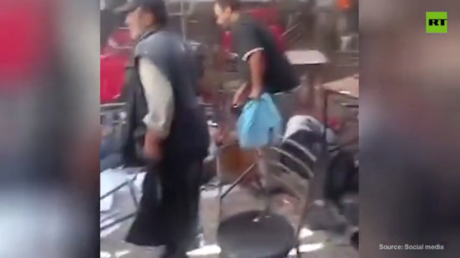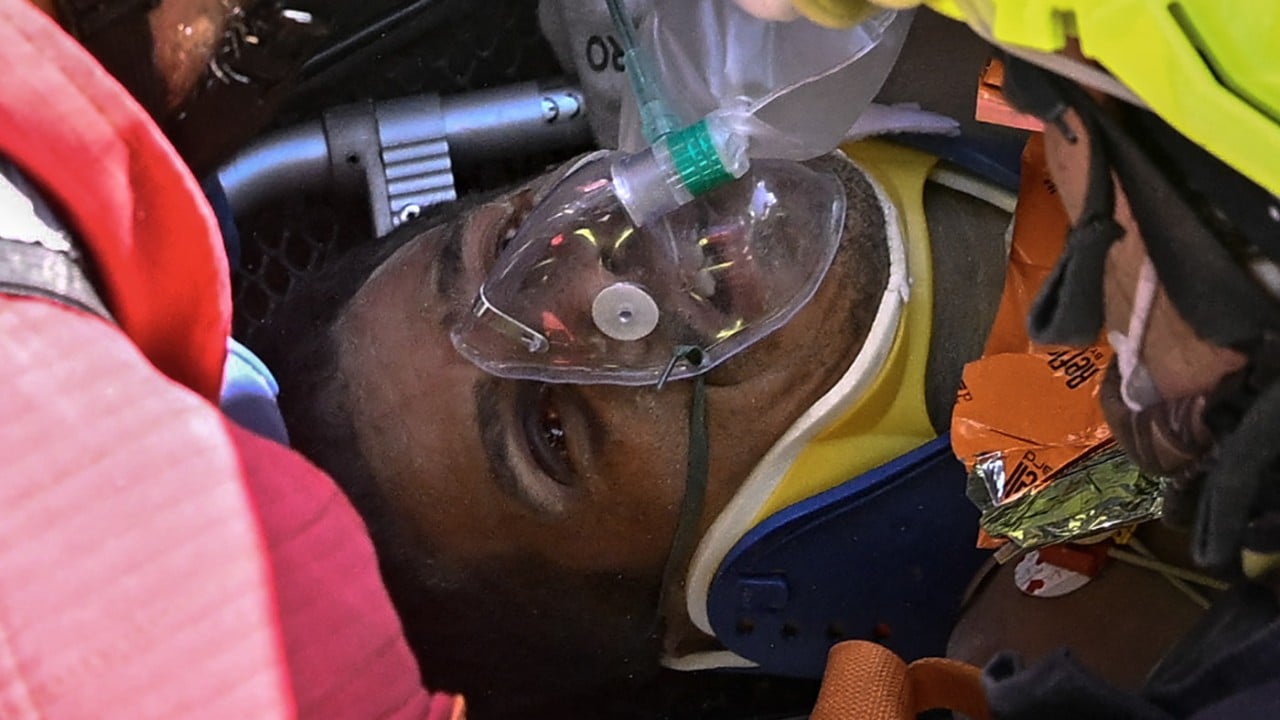
Standard disaster response protocols dictate that the golden window for finding earthquake survivors closes decisively between 48 and 72 hours post-incident. Beyond this threshold, the statistical probability of extraction drops exponentially due to acute dehydration, crush syndrome, and progressive structural shifting. Yet, the extraction of a 43-year-old survivor from the basement rubble of the Galerías Playa Grande shopping centre in La Guaira, Venezuela, occurred 192 hours after consecutive 7.2 and 7.5 magnitude earthquakes. This anomaly provides an objective blueprint for analyzing the mechanical, physiological, and logistical variables required to extend human viability under collapsed structural mass.
Understanding this operational success requires moving past narrative framing to dissect the technical inputs. Survival under 29 feet of compromised reinforced concrete depends on a strict configuration of structural mechanics, metabolic maintenance, and highly coordinated international engineering.
Structural Survivability: The Mechanics of Void Space Preservation
The primary constraint on immediate mortality during a catastrophic building failure is the distribution of load. When the nine-story commercial complex in Catia La Mar collapsed on June 24, the failure pattern was not uniform. The survivor’s preservation depended entirely on the structural integrity of a localized enclosure: a reinforced steel security cabin.
This micro-environment altered the standard collapse dynamics via two structural mechanisms:
- Load Deflection: The rigid, high-density frame of the workstation cabin acted as an internal load-bearing pillar. As the surrounding unreinforced masonry and concrete slabs underwent structural failure, the kinetic energy of the falling mass was absorbed and redistributed around the perimeter of the cabin rather than directly crushing it.
- The Void Space Coefficient: This deflection created a localized air pocket within the basement level. In structural engineering terms, a void space coefficient measures the ratio of air volume preserved relative to the total collapsed volume. Because the cabin maintained its geometric envelope, it prevented the complete compaction of debris, securing a localized atmospheric pocket with sufficient oxygen density to prevent immediate asphyxiation.
The Physics of Delayed Extraction: Shifting the Survival Curve
The secondary constraint in urban search and rescue (USAR) is human physiology under extreme deprivation. The standard human body cannot survive eight days without hydration. The timeline of this operation reveals a distinct two-phase survival matrix that systematically pushed the boundaries of standard clinical thresholds.
Phase 1: Passive Survival (Hours 0 - 96)
[Entrapment] ──> [Void Space Oxygenation] ──> [Metabolic Deceleration]

Phase 2: Active Intervention (Hours 97 - 192)
[Acoustic/Tech Detection] ──> [Micro-Shaft Insertion] ──> [Nutrient/Fluid Delivery]
Phase 1: Passive Isolation and Metabolic Deprivation
During the first four days, the survivor existed in absolute isolation. Human survival during prolonged entrapment is dictated by metabolic deceleration and environmental factors. The basement location shielded the survivor from direct solar radiation, suppressing ambient temperatures and minimizing fluid loss through perspiration. Faced with immobility, the body shifts into a hypo-metabolic state, decreasing oxygen consumption and conserving caloric reserves.
Phase 2: Active Stabilization via Micro-Shafts
The operational paradigm shifted on day four when a specialized technical team from the Costa Rican Red Cross deployed acoustic sensors and telescopic cameras to locate the individual. Once visual and verbal contact was established through 29 feet of wreckage, the rescue strategy evolved from a standard excavation into an in-situ life support operation.
Rather than waiting for full structural extrication, crews drilled a narrow, highly controlled micro-shaft directly into the preserved void space. This conduit solved the physiological bottleneck through a precise intake loop:
- Hydration Delivery: Pure water and specialized liquid nutrients were passed down the shaft, bypassing the critical 72-hour dehydration limit.
- Atmospheric Stabilization: Supplemental oxygen was channeled into the pocket to combat the accumulation of toxic dust, carbon monoxide, and metabolic waste products.
- Psychological Regulation: Constant communication managed by a dedicated handler from the Chilean firefighting team mitigated the severe panic-induced cortisol spikes that accelerate metabolic exhaustion.
Logistical Orchestration: Managing Multilateral Rescue Bottlenecks
The final phase of the operation required a massive international technical deployment consisting of 80 highly trained personnel from USAR Florida Task Force 2, alongside specialist teams from Chile, Portugal, Mexico, Costa Rica, El Salvador, and Venezuela. Managing a multi-national deployment inside a volatile, collapsed structure presents severe engineering risks.
The execution of the final 53-hour continuous digging phase required mitigating three distinct operational vulnerabilities.
Structural Instability and Aftershock Vulnerability
Every movement of debris alters the center of gravity of the entire rubble pile. Because the shopping center suffered consecutive major seismic shocks, the surrounding structural mass was highly unstable. Rescuers could not use heavy mechanical excavators, as the vibrations risked triggering secondary collapses into the central void space. The solution required manual tunneling combined with pneumatic shoring systems to lock the surrounding slabs in place.
Environmental Complications
The operation was severely impacted by torrential tropical rainfall. Water accumulation in a collapsed zone introduces two lethal variables: it rapidly increases the dead weight of the porous concrete debris, and it threatens to flood basement void spaces. Teams had to install continuous pumping mechanisms and water-diversion barriers while simultaneously executing underground tunneling.
Particulate Hazard Management
The final stages of concrete breaching generate high concentrations of crystalline silica dust. Within an enclosed basement pocket, this particulate matter poses an immediate threat of acute respiratory distress or asphyxiation for the survivor. Rescuers enforced strict protocols, including the delivery of protective goggles and oxygen masks through the micro-shaft, ensuring the survivor's airway remained patent during the final physical breach.
Strategic Playbook for High-Density Urban Disasters
The extraction of a survivor after 192 hours demonstrates that structural survival limits are dynamic, not static. To replicate these outcomes in future high-density urban failures, municipal engineering and emergency response frameworks must integrate three structural variables.
First, commercial building codes in seismically active zones must mandate the installation of reinforced "survival nodes" or hardened structural cabins within sub-grade utility spaces. When structural columns fail, these high-strength micro-enclosures ensure the mechanical preservation of life-supporting void spaces.
Second, rescue protocols must treat micro-shaft insertion as a primary objective over immediate bulk excavation. Deploying fiber-optic cameras and fluid-delivery conduits within the first 48 hours effectively decouples the survivor's biological clock from the physical timeline of concrete removal.
Finally, international USAR deployments must operate under unified, localized command structures that standardize technical equipment interfaces. The deployment of standardized pneumatic shoring and communication gear across international lines prevents mechanical bottlenecks, ensuring continuous operations through severe aftershocks and adverse environmental transitions.