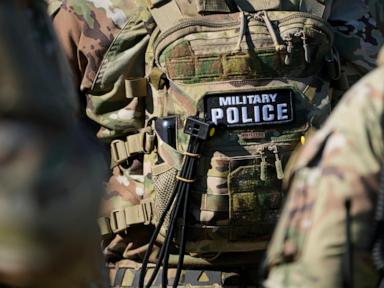
The deployment of military personnel for domestic urban law enforcement operates at a complex intersection of municipal jurisdiction, federal constitutional authority, and operational friction. When the Memphis Safe Task Force — a joint federal-local initiative deployed in October 2025 — resulted in the fatal shooting of 20-year-old Tyrin Johnson on July 5, 2026, it exposed systemic structural vulnerabilities inherent in mixing military assets with local police actions. Rather than viewing this incident through a purely political lens, a rigorous operational evaluation requires analyzing the fiscal, legal, and tactical frameworks that govern these deployments and tracking the inevitable bottlenecks that emerge when military units assume civil police responsibilities.
The Jurisdictional Intersection and Task Force Structure
Domestic militarized policing relies on overlapping layers of authority that frequently conflict. In the Memphis deployment, the command structure splits between a federal mandate, state gubernatorial execution, and local municipal resistance.
The structural blueprint of the Memphis Safe Task Force operates across three tiers:
- The Executive Mandate: The federal administration instituted deployments across six metropolitan areas led by political opponents, including New Orleans, Washington, D.C., and Memphis, categorizing the interventions as emergency responses to urban crime waves.
- Gubernatorial Authorization: Because the Posse Comitatus Act restricts active-duty federal military personnel from executing domestic laws, the mechanism relies on Title 32 state status. Under Title 32, Tennessee Governor Bill Lee retains operational command of the Tennessee National Guard, but funding streams flow directly from the federal government. This structure bypasses local municipal consent.
- Municipal Integration: The local municipal government, led by Mayor Paul Young, contested the deployment, creating a fractured command ecosystem where the city police department and state-controlled military units must co-execute daily patrols.
This tier division introduces immediate communication bottlenecks. Local police forces operate under municipal standard operating procedures, city charters, and local district attorney oversight. Conversely, National Guard units answer to a military chain of command running through the state adjutant general. When units are co-deployed to respond to rapid-escalation incidents — such as the 4:00 a.m. shots-fired call on July 5 at Ida B. Wells and Gayoso Avenue — the lack of a unified tactical command structure increases the probability of divergent operational responses.
The Cost Function and Fiscal Scaling of Federalized Urban Patrols
The execution of multi-agency task forces introduces compounding fiscal realities that often outpace measurable utility. According to data from the nonpartisan Congressional Budget Office, the collective cost of the six federal urban National Guard deployments reached nearly 500 million dollars through December 2025. Projections for the full calendar year of 2026 estimate total expenditures exceeding 1 billion dollars.
To evaluate the economic efficacy of this allocation, the expenditure must be broken down into specific operational cost centers:
- Personnel Activation Premiums: Activating National Guard members on continuous state active duty requires matching or exceeding civil service pay scales, alongside hazardous duty stipends, lodging allowances, and per diem infrastructure costs.
- Logistical Dispersal: Transporting, housing, and maintaining military equipment within a municipal core shifts resources away from standard training cycles, creating secondary long-term readiness deficits for the state’s military infrastructure.
- Specialized Capability Overhead: The Memphis incident involved National Guard medical specialists performing immediate first aid on-scene. Incorporating specialized combat lifesavers and medical infrastructure directly into urban patrols inflates the per-capita daily operational cost of a standard patrol unit compared to local police counterparts.
When evaluating these cost centers against traditional municipal law enforcement budgets, the spending efficiency drops. A 1 billion dollar annualized expenditure distributed across six cities yields approximately 166 million dollars per city. For a municipality like Memphis, with a population exceeding 600,000, this influx of capital represents a massive, temporary expansion of enforcement capability. However, because these funds are tied to military personnel activation rather than local institutional development, the capital expenditure fails to construct permanent municipal law enforcement infrastructure, create long-term investigative technology upgrades, or fund community-level diversion programs.
Rules of Engagement vs. Police Use of Force Standards
The core operational variance between a National Guard soldier and a municipal police officer lies in their fundamental training baselines. A civil police officer is trained in constitutional law, community de-escalation, local statutes, and a gradual use-of-force continuum. A military soldier is trained in combat operations, unit self-defense, and distinct rules of engagement.
[Threat Identified] ---> [Police Continuum: De-escalation/Less-Lethal Options Available]
                   ---> [Military ROE: Hostile Intent/Act Triggers Immediate Force]
When National Guard elements patrol alongside the Memphis Police Department, these two philosophies collide during foot pursuits. The Tennessee Bureau of Investigation reported that the July 5 escalation occurred when the suspect fled on foot and turned toward the pursuing personnel with a handgun. Under standard military rules of engagement, the display of a weapon by an individual fleeing an active shots-fired scene constitutes an explicit indicator of hostile intent, justifying a lethal response to neutralize the threat.
The primary structural limitation of this framework in a civil setting is the compressed timeline for de-escalation. A local police officer’s training incorporates specific tactical repositioning and weapon-retention protocols designed to minimize lethal outcomes during urban foot chases. When military personnel are injected into these fast-moving scenarios, they default to high-readiness defensive postures. The result in Memphis was two National Guard members discharging their service weapons, striking the individual twice in the chest.
Data from the Tennessee Bureau of Investigation indicates that the task force has been linked to at least four officer-involved shootings since its inception, including incidents in May and October. This frequency points to a predictable systemic outcome: increasing the density of high-readiness military personnel in high-crime zones escalates the frequency of lethal force events, regardless of the underlying local arrest protocols.
The Baseline Disconnect: Crime Rate Trends vs. Tactical Interventions
The strategic justification for the federal task force rests on the premise that military intervention is required to suppress out-of-control urban crime waves. However, a granular look at the data reveals a profound misalignment between deployment timelines and macroeconomic crime trends.
Violent crime categories in Memphis, including homicides, carjackings, and aggravated assaults, recorded measurable contractions in early 2025. These reductions occurred prior to the October 2025 National Guard deployment. The downward trajectory matched broader macroeconomic trends observed across dozens of major United States metropolitan areas, independent of federal military intervention.
This statistical divergence reveals that the deployment functions as a lagging political reaction rather than a data-driven tactical response. When macro-level crime numbers are already declining due to local law enforcement stabilization, post-pandemic normalization, or municipal violence-interruption initiatives, the introduction of a high-cost military task force creates an attribution error. Proponents credit the deployment for subsequent crime drops, while the underlying data demonstrates that the contractionary trend was already established under local authority.
The secondary effect of this baseline disconnect is the reliance on volume-based metrics to justify the expenditure. The U.S. Marshals Service reported in June 2026 that the task force had executed more than 10,000 arrests. While a five-figure arrest metric suggests high operational velocity, it fails to distinguish between low-level misdemeanor encounters and the neutralization of high-tier violent criminal networks. Volume-driven enforcement strategies clear local dockets but do not structurally alter the foundational socioeconomic drivers of violent crime within a municipality.
Accountability Bottlenecks and Legal Safeguards
The institutional friction generated by the Memphis Safe Task Force extends directly into civil liberties and legal accountability frameworks. The introduction of state military forces into municipal policing creates an immediate transparency deficit, as evidenced by ongoing litigation and community pushback.
In May 2026, four Memphis residents, represented by the American Civil Liberties Union, filed a federal lawsuit challenging the task force's operational tactics. The legal friction centers on two distinct systemic issues:
- The 25-Foot Exclusion Rule: The task force has enforced a buffer policy barring civilians from approaching within 25 feet of personnel, effectively neutralizing the ability of residents to record law enforcement conduct during public interventions.
- Surveillance and Retaliation Patterns: The federal filings allege that task force elements engaged in systemic surveillance of citizens who attempted to document their activities, including following individuals in unmarked vehicles and deploying personnel in tactical vests outside private residences.
These operational choices create a severe breakdown in community trust. In standard municipal policing, body-worn camera mandates, local civilian review boards, and transparent open-records acts provide a mechanism for community feedback and accountability. National Guard units operating under Title 32 state status are largely insulated from municipal open-records requests and local civilian oversight boards.
When a fatal shooting occurs, the investigation cannot be processed internally by the local police department without allegations of conflict of interest. Instead, the case must be referred outward to the Tennessee Bureau of Investigation and the Shelby County District Attorney. This multi-layered investigative structure delays the release of body camera footage, autopsy reports, and officer statements, compounding local civil volatility and leaving the municipality to manage the social fallout of an operation it did not authorize.
Strategic Operational Realignment
The current framework governing joint civil-military task forces in domestic urban centers is unsustainable from a fiscal, legal, and operational standpoint. To prevent catastrophic command failures and optimize municipal safety resource allocation, a strict operational decoupling must be executed.
The deployment of Title 32 military personnel on routine urban patrols must be terminated. Military assets are fundamentally unsuited for the fluid, legally complex environment of municipal civil enforcement. The 1 billion dollar federal allocation projected for 2026 must be structurally rechanneled directly into local municipal budgets through targeted Department of Justice grants. This capital transition should prioritize three specific areas: expanding localized, crisis-intervention training for municipal officers; upgrading local forensic and investigative technologies to accelerate violent crime clearances; and funding sustained, non-militarized community violence interruption programs.
Any remaining state or federal law enforcement task forces operating within municipal boundaries must be legally mandated to operate under a single, unified local command structure. This command must require absolute compliance with local body-camera transparency laws, immediate submission to the jurisdiction of local civilian oversight mechanisms, and the complete elimination of arbitrary recording exclusion zones. Continued reliance on high-density, insulated military personnel to execute civil arrests will inevitably result in further escalations, compounding fiscal inefficiencies and accelerating the erosion of constitutional protections within the urban core.