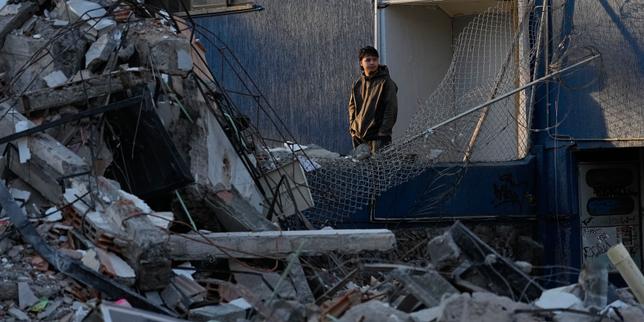
The Architecture of Seismic Failure in Colombia
Earthquake response analysis requires stripping away the immediate emotional impact of disaster reporting to examine the underlying mechanical and infrastructural variables. When a major seismic event strikes Colombia, the resulting mortality and infrastructural damage are rarely random outcomes of geological force alone. Instead, they represent the intersection of tectonic release, structural vulnerability, soil mechanics, and emergency supply chain efficiency.
Evaluating a catastrophic event involving hundreds of fatalities and thousands of injured individuals demands a shift from descriptive journalism to a systematic autopsy of the response framework. Every phase of a post-earthquake environment functions as a stressed system where early bottlenecks dictate cascading failures. Meanwhile, you can find related developments here: Strategic Architecture of India Liberia Diplomacy and Global South Alignment.
Tectonic Stress and Structural Vulnerability
The primary determinant of casualty rates in any seismic event is the physical interface between energy release and built infrastructure. Colombia occupies a complex tectonic setting governed by the convergence of the Nazca, South American, and Caribbean plates. This subduction zone mechanics generates high-frequency, shallow-focus earthquakes that concentrate maximum energy release near population centers located within Andean fault systems.
The Mechanics of Structural Collapse
The transition from a seismic tremor to structural failure depends on building material properties and adherence to seismic-resistant design codes. The high density of informal housing, masonry construction without reinforced concrete tie-columns, and soft-story architectural configurations create predictable collapse patterns. To see the full picture, we recommend the recent report by The New York Times.
- Unreinforced Masonry: Lacks tensile strength, resulting in catastrophic brittle failure under lateral shear forces.
- Non-Engineered Concrete Frames: Frequently suffer from inadequate transverse reinforcement in column-beam joints, causing premature shear failure during cyclic loading.
- Site Amplification Effects: Sedimentary basins and valley floors—common topographical features of Andean urban centers—trap and amplify seismic waves, dramatically increasing peak ground acceleration relative to bedrock recordings.
When evaluating casualty metrics such as 240 deaths and over 1,000 injured, the distribution of these injuries directly reflects building typology failure modes. Compression injuries and asphyxiation dominate structural entrapment fatalities, whereas blunt force trauma from falling non-structural elements (facades, parapets, unanchored utilities) accounts for a significant share of outpatient emergency room admissions.
The Logistics of Emergency Triage and Medical Surge
Once the initial shock wave subsides, the immediate operational bottleneck shifts from geological mitigation to medical triage and trauma management. The sudden influx of over a thousand injured individuals overwhelms baseline healthcare capacity in affected regional hubs, necessitating immediate surge protocols.
Healthcare System Saturation Curves
Medical facilities operating in disaster zones experience a non-linear demand spike immediately following impact. The capacity of local hospitals to absorb mass casualties is bounded by three critical resource constraints:
- Surgical Bed Capacity: Specialized orthopedic and trauma surgical suites dictate the maximum throughput of survivable critical injuries.
- Blood Product Reserves: Hemorrhagic shock from crush injuries rapidly depletes local blood banks, requiring expedited cold-chain transport from unaffected national reserves.
- Personnel Fatigue and Availability: Healthcare workers are simultaneously victims and responders, leading to localized staffing deficits during the critical golden hour of trauma care.
Triaging over a thousand patients requires rapid field-level categorization using established protocols like START (Simple Triage and Rapid Treatment). In resource-constrained environments typical of regional Colombian departments, the failure to execute immediate triage leads to preventable secondary mortality among patients with tension pneumothoraxes, uncontrolled external hemorrhages, or crush syndrome complications.
Supply Chain Fractures in Disaster Zones
The speed of humanitarian and operational relief deployment is a function of regional infrastructure resilience. When an earthquake damages key transportation arteries, the entire logistics network transitions from a continuous flow model to a constrained distribution problem.
The Geography of Access Bottlenecks
Andean geography inherently restricts transportation redundancy. Mountainous terrain relies on a sparse network of primary highways, bridges, and tunnels. A single seismic-induced landslide or structural bridge failure can completely sever access to primary impact zones.
- Primary Arterial Disruption: Landslides on mountain passes isolate municipal centers, turning ground transport into an inefficient, high-latency operation.
- Airfield Dependency: Regional airports with short runways or limited instrument landing capabilities become single points of failure for aerial reconnaissance and heavy equipment transport.
- Utility Interdependence: Water treatment plants and electrical grids dependent on regional distribution lines fail simultaneously, complicating emergency medical operations and threatening public health through secondary contamination vectors.
Operational recovery depends on establishing clear clearing priorities. Heavy rescue equipment, clearance engineering units, and emergency medical teams must take precedence over general humanitarian aid during the initial 72-hour window. Allowing uncoordinated civilian vehicle traffic to clog damaged roadways creates a secondary logistics failure, delaying the arrival of life-saving interventions.
Data Verification and Uncertainty Modeling
In the immediate aftermath of a high-casualty seismic event, quantitative reporting is inherently subject to error and revision. Analysts must differentiate between verified operational data and preliminary estimates generated during the chaos of initial response phases.
Sources of Variance in Disaster Metrics
- Communication Blackouts: Loss of cellular and municipal communications prevents rural municipalities from reporting casualties to central disaster authorities, leading to an artificially deflated initial death toll that rises as remote areas are reached.
- Hospital Admission Lags: Injured individuals who seek care at private clinics, makeshift field stations, or self-evacuate to neighboring cities are frequently omitted from initial municipal tallies.
- Definition Ambiguities: Categories such as "injured" conflate severe surgical trauma with minor outpatient cuts and bruises, rendering raw aggregate counts useless for precise epidemiological or logistical assessment.
Rigorous evaluation requires treating early casualty figures as lower-bound estimates while monitoring the stabilization of infrastructural throughput metrics.
Operational Reform and Resource Allocation Priorities
Mitigating the systemic vulnerabilities exposed by a major seismic event requires shifting resources from reactive disaster response to preventative structural reinforcement and decentralized logistics prepositioning.
Municipal authorities must enforce strict retrofitting mandates for critical infrastructure, including schools, hospitals, and high-density residential buildings located within active seismic zones. Concurrently, emergency management agencies need to establish localized supply depots on both sides of major mountain passes to maintain operational continuity when arterial highways are inevitably compromised by slope failures. Prepositioning heavy excavation machinery, portable water purification units, and autonomous emergency power generation within high-risk municipalities reduces reliance on centralized national dispatch networks during the critical opening phase of a disaster response cycle.


