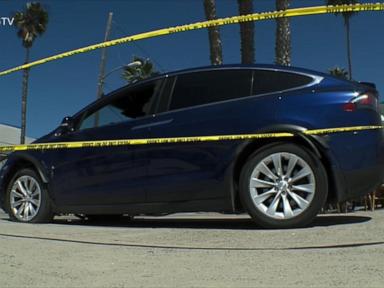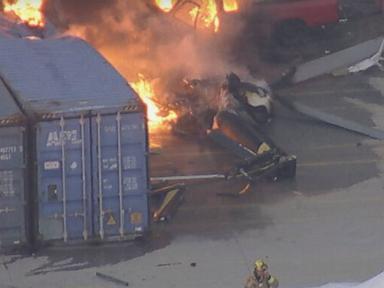
On July 4, a truck bed became a mobile launch platform for Roman candles traveling through the dry topography of Washington State. The resulting Chelan Hills fire did not manifest as an unpredictable act of nature, but as the precise mathematical convergence of high ambient vapor pressure deficit, dry fine fuels, and dynamic ignition sources introduced into a wind-driven corridor. When law enforcement subsequently released footage of individuals discharging pyrotechnics from a moving vehicle, the media framed the event primarily through the lens of individual recklessness.
A rigorous post-incident evaluation requires moving past surface-level moral outrage to dissect the physical, operational, and legal failure modes that transformed a localized stunt into a fatality-producing conflagration.
The Three Pillars of Pyrotechnic Ignition Failure
Understanding how a commercial novelty item transitions into a landscape-scale disaster requires analyzing the thermal energy transfer mechanics involved. Pyrotechnic devices rely on rapid oxidation-reduction reactions, ejecting burning slag and chemical pellets at temperatures often exceeding 1,000 degrees Fahrenheit.
The first failure mode is the spatial velocity vector mismatch. Discharging a projectile from a moving vehicle introduces compounding kinetic vectors. The trajectory is unpredictable, reducing operator accuracy to near zero and guaranteeing that burning material is deposited outside the user's immediate control zone into unmitigated roadside fuel beds.
The second failure mode is environmental vulnerability coupling. July conditions in central Washington feature cured cheatgrass, low relative humidity, and elevated ambient temperatures. Fine fuels possess a rapid time-lag factor of one hour, meaning their moisture content drops into strict alignment with atmospheric conditions almost instantaneously. When a high-temperature pyrotechnic slag particle lands on a 1-hour fuel bed with a moisture content below six percent, the ignition probability approaches unity.
The third failure mode is social diffusion of responsibility. The newly released police and bystander footage reveals multiple occupants recording the act, establishing a peer-reinforcement feedback loop. Risk assessment is systematically suppressed by group dynamics, where the presence of recording devices shifts the primary objective from hazard mitigation to behavioral validation for an external audience.
The Cost Function of Mobile Arson
The aftermath of the Chelan Hills fire—resulting in one fatality, multiple structural losses, and severe firefighter injuries—exposes the catastrophic asymmetry between minor operational amusement and systemic ecological destruction. In public policy and legal analysis, this represents an extreme negative externality.
When perpetrators introduce ignition sources into high-risk zones, the cost function expands exponentially rather than linearly.
$$\text{Total Damage Cost} = f(\text{Wind Speed}) \times f(\text{Fuel Load}) \times \int_{0}^{t} \text{Response Latency} , dt$$
Because initial suppression response time is dictated by remote geography and reporting delays, a fire ignited by a moving vehicle gains a critical propagation advantage. By the time emergency response assets mobilize, the fire has transitioned from the surface fire spread phase to a crown or high-intensity wind-driven phase. The perpetrators' immediate evasion of the scene compounds the tactical delay, preventing early containment when suppression resource requirements are minimal.
Evidentiary Tracking and Digital Footprints
The investigation methodology employed by local deputies following the Chelan Hills incident highlights a major evolution in how law enforcement deconstructs modern human-caused wildfires. Traditional wildfire investigation relied almost exclusively on burn-pattern geometry, point-of-origin indicators, and physical debris recovery.
In this instance, the investigation leveraged digital self-incrimination. The inclusion of high-definition video recording captured by the participants inside the truck provided prosecutors with a closed evidentiary loop.
Digital forensics transformed the case from circumstantial to deterministic. Video metadata, spatial backgrounds visible through vehicle windows, and subsequent digital tracking allowed investigators to establish temporal timelines down to the minute. When deputies confronted vehicle owners and occupants with search warrants for digital devices, DNA, and physical property, the defense posture of plausible deniability collapsed immediately. The physical truck served as a primary artifact, while the digital files established intent, active participation, and depraved indifference under the law.
This establishes a clear operational paradigm for future environmental crimes: the proliferation of personal recording devices ensures that high-risk illicit behavior creates its own permanent evidentiary archive, accelerating suspect identification but arriving far too late to prevent the physical devastation.
Operational Directives for Mitigation
Mitigating the recurrence of vehicle-born pyrotechnic disasters requires systemic interventions rather than reliance on public compliance.
Targeted surveillance deployments must focus on high-risk geographic corridors during peak fire-weather index days. Static license plate readers combined with thermal imaging sensors along rural arterial roads can identify unauthorized high-heat emissions in real time.
Jurisdictions must implement strict civil liability models that hold registered vehicle owners financially and criminally liable for any hazard originating from their property or asset, independent of active operator designation at the precise moment of ignition.
Finally, emergency communication protocols during Red Flag Warnings must shift from passive public service announcements to active cellular geo-fencing alerts that disable or restrict retail access to high-velocity pyrotechnics within designated high-hazard zones.
The structural elimination of this risk vector depends on removing the intersection of high-energy ignition sources and vulnerable wildland-urban interfaces before human error or bravado translates into ecological and human loss.