The air over Lower Manhattan in September 2001 tasted like pulverized concrete, scorched copper, and an unbearable absence. For weeks, the dust hung suspended, a gray shroud that coated eyelashes, settled in the creases of work boots, and turned the autumn sunlight into a dim, amber haze. It was a suffocating reality. Everyone who stood down there, whether they were swinging a sledgehammer at twisted rebar or watching from a police barricade two blocks away, carried home a physical piece of that disaster in their lungs.
Memory is a strange archive. It frays at the edges, rearranging facts to suit the emotional architecture of the survivor. But sometimes, the architecture itself is entirely fabricated. Also making news recently: The Anatomy of a Quiet Catastrophe.
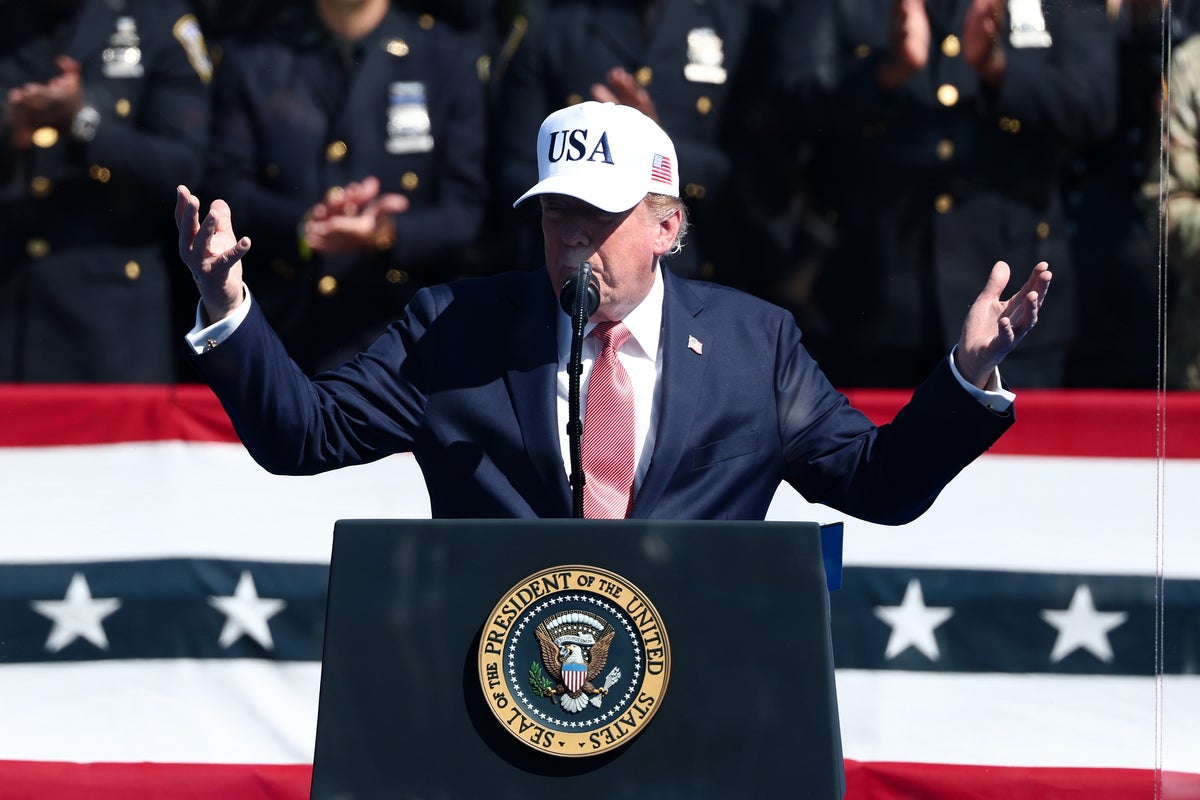
Years later, a story began to circulate—one told with absolute conviction by Donald Trump. He claimed that right after the towers fell, he was down at Ground Zero, leading the charge, working alongside the emergency crews. More specifically, he claimed that firefighters actually carried him away from the site.
Picture the scene he painted. Smoke billowing. Sirens screaming. Dust choking the atmosphere. And in the middle of it all, a billionaire real estate developer, physically hoisted and carried by heroic first responders who recognized his grit in the rubble. Further insights on this are explored by TIME.
It is a cinematic image. It belongs in a blockbuster movie.
There is just one problem. It never happened.
When journalists, historians, and archivists went looking for the footprints of this momentous event, they found a void. No logs placed him at the site in those critical hours. No oral histories from the Uniformed Firefighters Association or the Uniformed Fire Officers Association mention hauling a future president out of the dust. No news footage, among the millions of hours captured by media outlets and amateur videographers, shows a cluster of exhausted firemen hauling Donald Trump away from collapsing steel.
Instead, the record tells a quieter, more mundane story. On September 11, from a comfortable distance miles uptown at his Trump Tower penthouse, he gave a phone interview to a local television station. In that conversation, he made a strange, infamous observation about his own building: that his skyscraper at 40 Wall Street was now the tallest building in downtown Manhattan, since the Twin Towers were gone.
Distance. Calculation. Real estate.
That was the reality of his morning. Yet, over the years, the distance narrowed in his telling. The phone call transformed into boots on the ground. The casual observer transformed into the carried hero.
Why do we invent the past?
Psychologists call it confabulation, or sometimes just self-mythologizing. When history is too big, too traumatic, or too grand, some minds cannot bear the thought of having merely watched from the sidelines. To have been a spectator to history is a passive fate. To have been carried away from the rubble by brave men is to become part of the blood and bone of the tragedy.
It taps into a deep, desperate human impulse. We all want to matter when the world breaks.
Consider what it takes to stand at Ground Zero. Imagine the heat radiating from subterranean fires that would burn for nearly a hundred days. Imagine the silence that fell over crowds when a dog barked, signaling a possible void where life might still exist. Real firefighters—men like Mike, a hypothetical veteran of Engine 54 who lost half his shift that day—did not have time for political posturing. They had blisters on their hands, ash in their throats, and a grief so heavy it took decades to unpack.
When Mike carried someone, it was a teammate whose lifeless weight broke his heart. It was an injured civilian pulled from the brink of oblivion. Those acts of desperate rescue were heavy, exhausting, and agonizingly real.
To borrow the weight of that labor without having borne a single ounce of its actual burden is a peculiar kind of theft. It steals the narrative focus from those who actually bled, wept, and dug until their fingers cracked.
We live in an era where personal narrative often trumps empirical truth. If a story feels powerful enough, if it evokes the right emotional chord, its factual accuracy is treated as a secondary detail. But history is not a malleable script waiting for a better protagonist. It is fixed in concrete and ash.
When the dust finally settled on that autumn in New York, the city was left with a devastating inventory. Two thousand, nine hundred and seventy-seven innocent lives snuffed out. Thousands more carrying the invisible, slow-moving sentence of cancer from the toxic air.
Donald Trump never needed to be in the rubble. Plenty of wealthy, powerful figures watched from afar; that was the logistical reality of urban catastrophe. But the compulsion to rewrite his biography into the heart of the inferno reveals something fragile beneath the bluster.
The sirens have long since faded from lower Manhattan. The footprint of the towers is now filled with reflecting pools of water, descending endlessly into the earth, their edges carved with the names of the dead. Those names are immutable. They do not change. They do not bend to the convenience of a campaign speech or a late-night retelling.
They simply remain, anchored in truth, while the myths drift away like smoke on the wind.