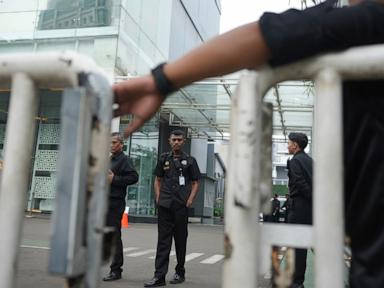
The operational integrity of a massive state welfare initiative is determined by the vulnerability of its decentralized procurement nodes. When the Indonesian Attorney General’s Office executed a 2:00 a.m. raid on the National Nutrition Agency (BGN) headquarters on June 3, 2026, it signaled more than a political scandal. The immediate arrest and detention of former BGN Chief Dadan Hindayana, alongside former deputy heads Sony Sonjaya and Lodewyk Pusung, exposes a critical operational truth: state-driven logistics networks scale rapidly without rigorous administrative safeguards, creating immediate opportunities for institutional corruption.
The swift downfall of the agency's leadership—occurring less than 24 hours after their dismissal by President Prabowo Subianto—centers on the Makan Bergizi Gratis (MBG) initiative. This flagship free nutritious meals program is projected to cost $28 billion through 2029, with the 2026 state budget alone dedicating Rp335 trillion (approximately $19.8 billion) to its execution. Deconstructing this institutional collapse requires analyzing the economic bottlenecks, regulatory loopholes, and misallocated capital that caused a vital public health initiative to break down into a criminal investigation under Articles 603 and 604 of the Indonesian Criminal Code.
The Rent-Seeking Framework of Decentralized Kitchen Nodes
The core vulnerability of the MBG program lies in its structural design. To feed an estimated 90 million children and pregnant women across a vast archipelago of 282 million people, BGN could not rely on a centralized supply chain. Instead, the agency engineered a decentralized model dependent on thousands of specialized community kitchen nodes tasked with localized meal preparation and distribution.
This infrastructure created a lucrative market for operational licenses. According to whistle-blower reports and investigative findings from the Attorney General's special crimes division, the primary mechanism of corruption was the illicit trading of these kitchen node operational licenses.
When an infrastructure network is distributed but managed by a centralized regulatory authority, it creates a gatekeeping bottleneck. This environment generates distinct rent-seeking dynamics:
- Artificial Scarcity of Operational Rights: Demand for guaranteed state contracts incentivizes private and politically affiliated operators to secure kitchen node licenses through non-market mechanisms.
- Arbitrage of State Funds: Operators paying illicit premiums to secure licenses must recover these upfront costs. This dynamic directly reduces the capital available for food procurement, compromising meal quality and caloric value.
- Exclusion of Competitive Suppliers: BGN classified the free meals program as a national strategic project. This classification allowed the agency to bypass standard public tenders in favor of direct appointments, reducing transparency and allowing corrupt officials to award licenses based on bribes rather than operational capacity.
The Cost Function and Capital Misallocation
A financial analysis of the MBG allocation reveals structural pressure on the broader macroeconomic landscape. Of the Rp335 trillion allocated to the program in 2026, a staggering 83.4% is sourced directly from the nation’s education sector budget, while 9.2% is diverted from health spending, and 7.4% from various economic development programs.
This budget structure creates a stark operational trade-off. By diverting Rp223 trillion from the core education budget, the state compromised classroom resources, reduced formal instruction hours, and forced teachers to take on administrative logistics for meal distribution.
The internal capital management of BGN further highlights these operational inefficiencies. While the agency projected an additional funding shortfall of Rp50 trillion and relied on a Rp100 trillion presidential standby fund, it simultaneously held Rp9.1 trillion in completely unused, stagnant funds. This co-existence of capital deficits and unspent allocations indicates a major breakdown in budgetary execution.
Rather than deploying capital toward strict nutritional quality control, the agency misallocated funds into non-essential capital expenditures. A clear example is BGN's controversial purchase of 25,000 electric motorbikes under the guise of field inspection vehicles—a deployment of capital that occurred while localized kitchen operations lacked standard refrigeration and sanitation infrastructure.
Operational Failures in Quality Assurance
The failure to enforce Standard Operating Procedures (SOPs) within the decentralized kitchens led to immediate, systemic breakdowns in food safety. The lack of independent verification mechanisms at individual kitchen nodes created a severe variance in meal quality, resulting in documented cases of food poisoning among school children across multiple regions.
In supply chain economics, product quality correlates directly with the rigor of local governance and monitoring frequency. BGN’s oversight model suffered from a fundamental misalignment of incentives:
$$\text{Oversight Failure} = f(\text{Rapid Scale} \times \text{Direct Appointment Procurement} \times \text{Absence of Third-Party Auditing})$$
Because local suppliers were chosen through direct appointment rather than competitive, transparent bidding, they faced no market pressure to optimize their logistics, hygiene, or cold-chain management. The removal of competitive discipline, combined with corruptly acquired licenses, weakened the enforcement of food quality standards. Operators prioritized cost-cutting measures to maximize profit margins on each state-subsidized meal.
Strategic Restructuring for Program Survival
The appointment of Nanik S. Deyang to replace Hindayana as the head of BGN is a reactive crisis management move, but it does not fix the underlying structural flaws. For the free nutritious meals program to achieve long-term viability and avoid complete financial failure, the administration must shift from a model of political appointment to a framework of institutional resilience.
First, the program must strip away the "national strategic project" exemptions that allow for direct appointments. All kitchen node licenses and supply contracts must be processed through an open, digitized electronic procurement system (LPSE). This change will re-introduce market competition and create an unalterable digital audit trail for every contract awarded.
Second, the operational management of the kitchen nodes must be completely separated from regulatory and oversight duties. BGN should function strictly as a regulatory and standards-setting body. Day-to-day logistics, supply chains, and food preparation should be outsourced to established, third-party logistics firms and food-service corporations with proven cold-chain networks and ISO-certified hazard control protocols.
Finally, quality assurance must be decoupled from internal agency politics. The government needs to establish an independent, multi-agency oversight board comprising representatives from the Financial and Development Supervisory Agency (BPKP), the Food and Drug Authority (BPOM), and independent civil society organizations like Indonesia Corruption Watch. This board must be given full authority to conduct unannounced operational audits, verify supply costs, and run random laboratory testing on meals.
Without these structural corrections, the multi-billion dollar program will continue to face supply bottlenecks, systemic corruption, and severe operational failures that undermine its core goal of improving national nutrition.