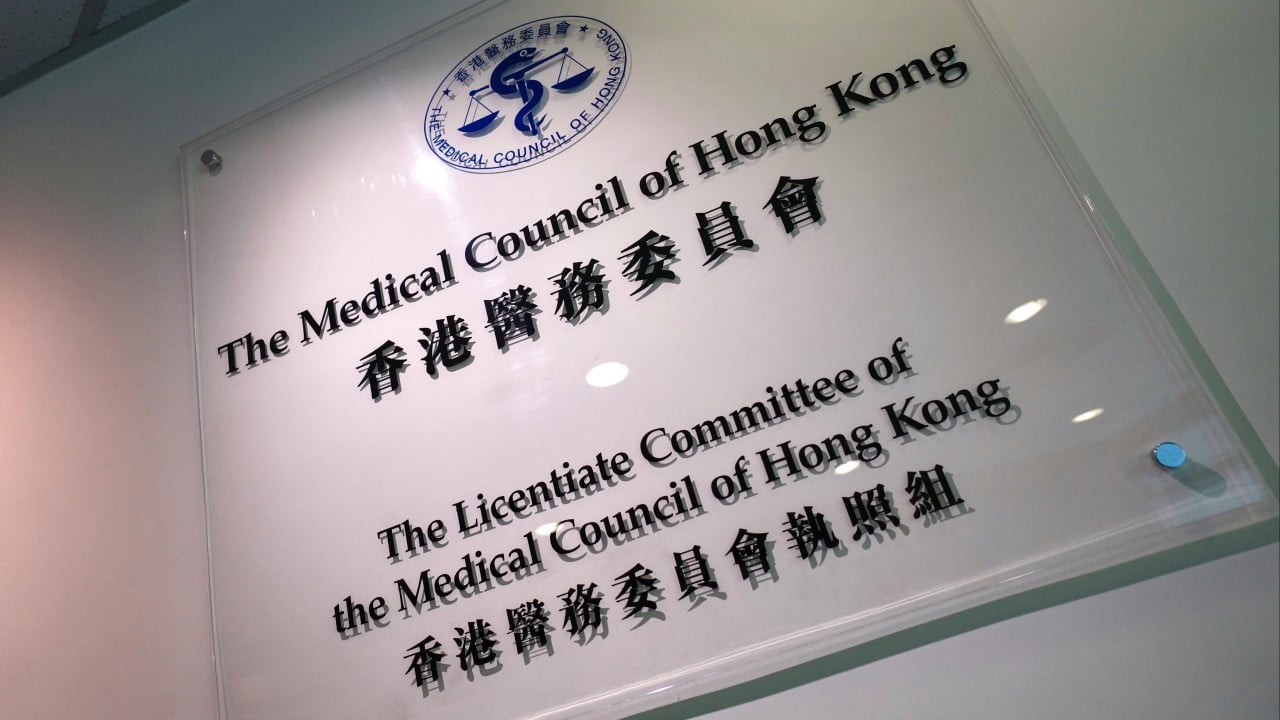
Regulatory latency is the primary failure mode of professional oversight bodies. When a medical regulatory watchdog takes fifteen years to resolve a single complaint, the breakdown is not an administrative anomaly. It is the predictable outcome of a system optimized for self-preservation rather than temporal efficiency. The recent acquittal of a Hong Kong doctor after a decade and a half of investigative purgatory highlights structural dysfunctions that extend far beyond a single jurisdiction. Evaluating this case requires moving past the emotional narrative of prolonged distress and examining the mechanics of investigative friction, evidence degradation, and procedural inertia.
Professional accountability relies on a delicate balance between due process and public protection. When that balance collapses into a multi-year vacuum, the utility of the regulation itself is compromised. To understand how a case can persist for fifteen years, we must deconstruct the operational variables that govern disciplinary proceedings.
The Three Vectors of Regulatory Friction
Investigative delay is a compounding variable driven by three distinct structural forces: institutional risk aversion, evidentiary decay, and procedural redundancy.
Institutional risk aversion dictates the pace of professional watchdogs. Regulatory bodies face asymmetric incentives. If a watchdog dismisses a valid complaint prematurely, public backlash and reputational damage follow. If the same body drags out an investigation indefinitely, the political cost is diffused over time. Consequently, risk-averse committees default to hyper-cautious procedural loops. Every document is reviewed, challenged, and re-reviewed to build an unassailable legal fortress, effectively trading temporal efficiency for defensive insulation.
Evidentiary decay accelerates as the calendar advances. Medical malpractice and professional misconduct inquiries depend heavily on clinical records, witness testimony, and expert interpretation. Over a fifteen-year timeline, human memory degrades, witnesses relocate or pass away, and standards of care evolve. A procedure considered avant-garde or borderline in two thousand and eleven may be standard practice by twenty twenty-six. Judges and tribunal members are then forced to evaluate past actions through contemporary lenses, introducing retroactive bias into the adjudicative process.
Procedural redundancy compounds the first two vectors. Medical councils typically operate under legislative frameworks that mandate multi-tiered review boards, preliminary investigation committees, and formal disciplinary inquiries. Each tier operates as a silo. Cases frequently bounce between investigative panels and legal counsels, creating communication bottlenecks. The absence of strict statutory deadlines for internal review stages allows administrative backlogs to accumulate without penalty.
The Cost Function of Timelines
Prolonged regulatory processes generate severe externalities for both the accused practitioner and the complainant, though the nature of the cost differs significantly.
For the practitioner, an active, unresolved investigation functions as an indefinite professional penalty. Even in the absence of an immediate suspension, the shadow of a pending disciplinary action restricts career mobility, dampens institutional trust, and inflicts severe psychological toll. The presumption of innocence exists in legal theory, but in operational reality, the accusation itself carries an informal sanction. The longer the proceeding, the greater the unrecoverable loss of professional capital.
For the public and the complainant, temporal drag destroys accountability. Justice delayed is not merely denied; it is rendered irrelevant. When a regulatory decision takes fifteen years, the educational and deterrent value of the ruling evaporates. Practitioners currently in the field receive no timely guidance on where the boundaries of professional conduct lie. The feedback loop between clinical error and regulatory correction is broken.
Comparative Mechanics of Oversight Systems
Different jurisdictions attempt to solve regulatory latency through varying statutory designs, yet most share the same foundational vulnerability.
In common law jurisdictions, medical councils often mirror judicial courts, adopting adversarial procedures that prioritize formal cross-examination and legal formalism. This approach maximizes thoroughness at the expense of speed. Conversely, administrative models found in certain European systems utilize inquisitorial frameworks driven by specialized medical inspectors. While these models can reduce investigative timelines, they frequently face criticism regarding transparency and the protection of practitioner rights.
The Hong Kong case underscores the vulnerability of adversarial administrative tribunals when subjected to high caseloads and rigid procedural safeguards. Without automated case-management metrics or statutory time-bars, watchdogs operate in an environment devoid of operational friction limits. An organization without internal speed limits will naturally expand to fill the available time.
Systemic Reform Variables
Resolving the crisis of protracted medical oversight requires mechanical intervention rather than superficial appeals for efficiency. Watchdogs must be re-engineered around three operational imperatives.
First, statutory time-bars must be introduced for preliminary investigations. If an investigative committee cannot establish a prima facie case of professional misconduct within a defined window, the complaint must be automatically dismissed or escalated. Infinite timelines reward administrative inertia.
Second, evidentiary standards must be modernized to account for technological obsolescence. Tribunals require formal frameworks that evaluate past clinical decisions strictly against the standards of care active at the time of the incident, insulated from subsequent shifts in medical consensus.
Third, the separation of investigative and adjudicative functions must be streamlined. When the same administrative apparatus controls both the gathering of evidence and the scheduling of hearings, conflicts of interest favor delay. Independent case-flow management can decouple the investigative phase from the tribunal docket.
Implement a strict case-triage matrix that separates low-complexity administrative grievances from complex clinical misbehavior within thirty days of filing, backed by mandatory dismissal thresholds for stagnant investigations.