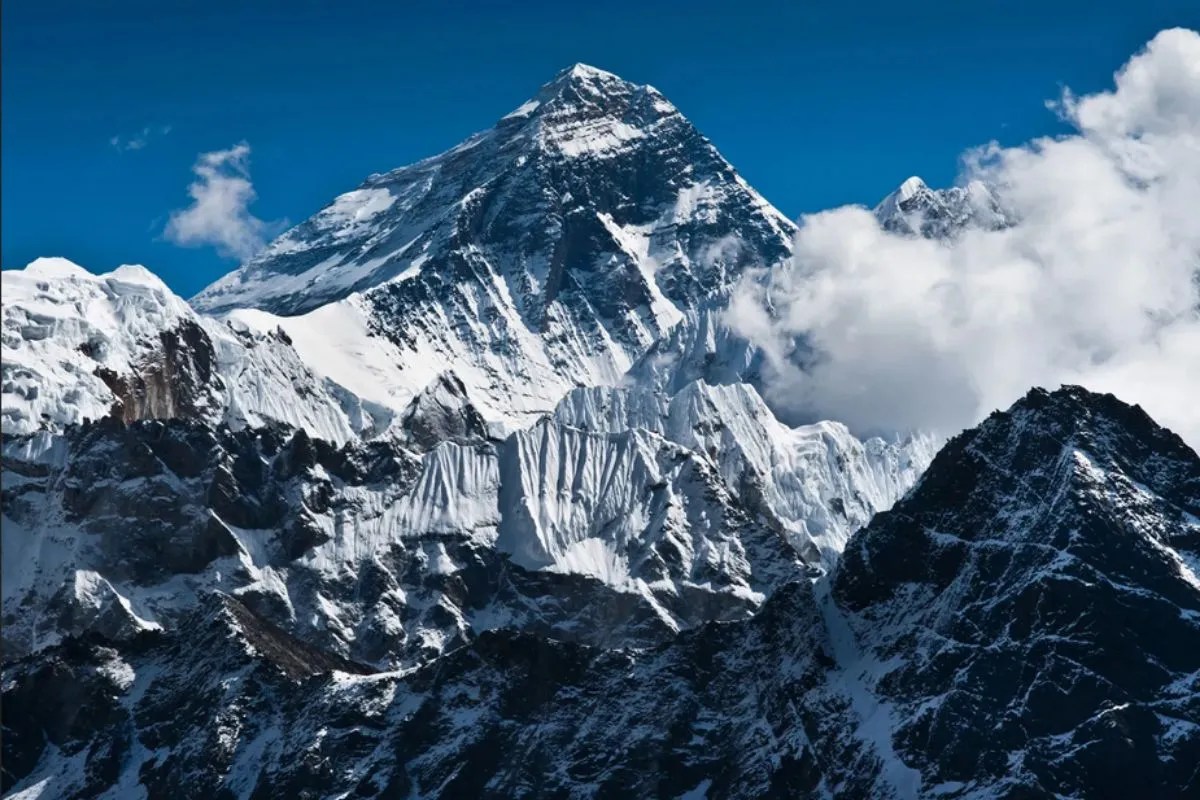
The fatal descent of two Indian mountaineers on Mount Everest exposes a systemic flaw in commercial high-altitude logistics: the asymmetry between ascent-focused energy expenditure and descent-phase physiological depletion. Statistically, over 80% of fatalities on 8,000-meter peaks occur during the descent. This reality contradicts the standard consumer perception that reaching the summit equates to mission success. A rigorous analysis of high-altitude mountaineering reveals that mortality is rarely the result of a single catastrophic event. Instead, it is the mathematical compounding of physiological degradation, environmental exposure, and supply-chain bottlenecks within the "Death Zone" above 8,000 meters.
To understand why climbers succumb during descent, the operational framework must be broken down into three interdependent variables: the physiological cost function, the environmental bottleneck coefficient, and the logistical margin of safety.
The Physiological Cost Function of the Death Zone
Above 8,000 meters, the effective oxygen percentage remains 21%, but the atmospheric pressure drops to roughly one-third of sea-level pressure. This reduction decreases the partial pressure of oxygen, making it biologically impossible for the human body to adapt or recover. At this altitude, the body operates on a terminal deficit, consuming its own tissue and glycogen reserves to maintain basic cellular function.
Total Metabolic Expenditure = Baseline Metabolic Rate + Ascertained Ascent Cost + Compounded Descent Deficit
The primary failure point in descent logistics is the miscalculation of the turn-around time. The human brain, suffering from progressive hypoxia, experiences impaired executive function, leading to cognitive biases such as the sunk-cost fallacy. Climbers push past safe operational windows to achieve the summit, ignoring the reality that the return journey requires equivalent, if not greater, metabolic output.
- Hypoxic Hypothermia Compound Effect: As core body temperature drops, muscular efficiency decreases. This slows the descent velocity, directly increasing the duration of exposure to sub-zero temperatures and low-oxygen environments.
- The Dehydration Cascade: At high altitudes, hyperventilation causes rapid moisture loss through respiration. Dehydration increases blood viscosity, multiplying the risk of frostbite, stroke, and High Altitude Cerebral Edema (HACE).
- Cognitive Deceleration: A brain deprived of adequate partial oxygen pressure loses the spatial awareness required to navigate technical terrain, such as the Hillary Step or the Blue Ice sections below the Balcony. A single misstep on a fixed line is often the physical manifestation of an advanced metabolic failure that began hours prior during the ascent.
Environmental Bottlenecks and Traffic Density
The physical geography of Mount Everest creates natural choke points that turn human traffic into a lethal variable. When multiple commercial expeditions target the same narrow weather window, the route from Camp IV (South Col) to the Summit becomes a single-file queue.
On a standard commercial route, a bottleneck introduces a critical disruption to a climber's calculated oxygen consumption rate.
The Fixed-Line Dependency
Climbers are clipped into a single fixed rope managed by the expedition's Sherpa teams. When an individual slows down or stops due to exhaustion or injury, the entire line behind them stalls. In the Death Zone, a stationary climber expends critical supplemental oxygen without making downward progress. This transforms a structural delay into a direct physiological threat.
Thermal Radiation Loss
Moving bodies generate internal heat. Forced stagnation in a traffic jam accelerates convective heat loss caused by high-altitude winds. This rapidly depletes the battery life of heated gear and accelerates tissue freezing, forcing climbers into systemic shock before they can reach lower camps.
The Logistical Margin of Safety and Supplemental Oxygen Metrics
Commercial guiding operations rely on a precise calculation of liters per minute (LPM) of supplemental oxygen. A standard oxygen cylinder contains approximately 680 liters of compressed oxygen.
Available Liters / Flow Rate (LPM) = Operational Duration (Minutes)
At a high flow rate of 4 LPM, a single cylinder provides roughly 2.8 hours of life support. A standard summit push requires a minimum of three to four cylinders per climber, excluding the allocation for the guiding Sherpa.
The logistics break down when the safety factor—the buffer built into the supply chain for unexpected delays—is reduced to zero. The fatal descent of the two Indian climbers highlights the fragility of this margin. If a climber experiences a 4-hour delay due to traffic at the Hillary Step or the Balcony, their oxygen reserves are entirely depleted before they reach the relative safety of Camp IV.
Without supplemental oxygen, an exhausted, hypoxic climber experiencing sudden ambient pressure drops faces near-instantaneous physical collapse. The body can no longer generate the heat required to prevent hypothermia, nor the muscular force needed to navigate vertical terrain.
Structural Risk Mitigation Frameworks for Expedition Providers
To prevent descent mortalities, the commercial guiding industry must shift its operational metrics from summit-centric KPIs to descent-validated safety frameworks.
Implementation of Hard Automated Turn-Around Protocols
Expedition leaders must enforce non-negotiable turn-around times based on real-time biometric tracking and remaining oxygen volume, independent of proximity to the summit. If a climber has not reached the summit by 13:00, the guide must mandate an immediate descent. This eliminates subjective decision-making compromised by hypoxia.
Oxygen-to-Time Buffer Ratios
Expeditions must mandate a minimum 35% oxygen reserve buffer specifically earmarked for descent anomalies. This means assuming a lower descent speed than historical averages to account for traffic, weather degradation, or physical injury.
Decentralized Rescue Depots
Guiding agencies should establish autonomous emergency oxygen and medical caches at key transition points, specifically the Balcony (8,400m) and the South Col (7,900m). These depots must operate independently of specific team logistics, serving as a universal safety net for critical failures across all operators on the mountain.
The ongoing loss of life during Everest descents is not an unavoidable consequence of extreme mountaineering. It is a predictable failure mode born of compressed safety margins, human traffic congestion, and unyielding physiological limits. Mitigating these risks requires a structural overhaul of how time, oxygen, and human capacity are managed above the 8,000-meter threshold.