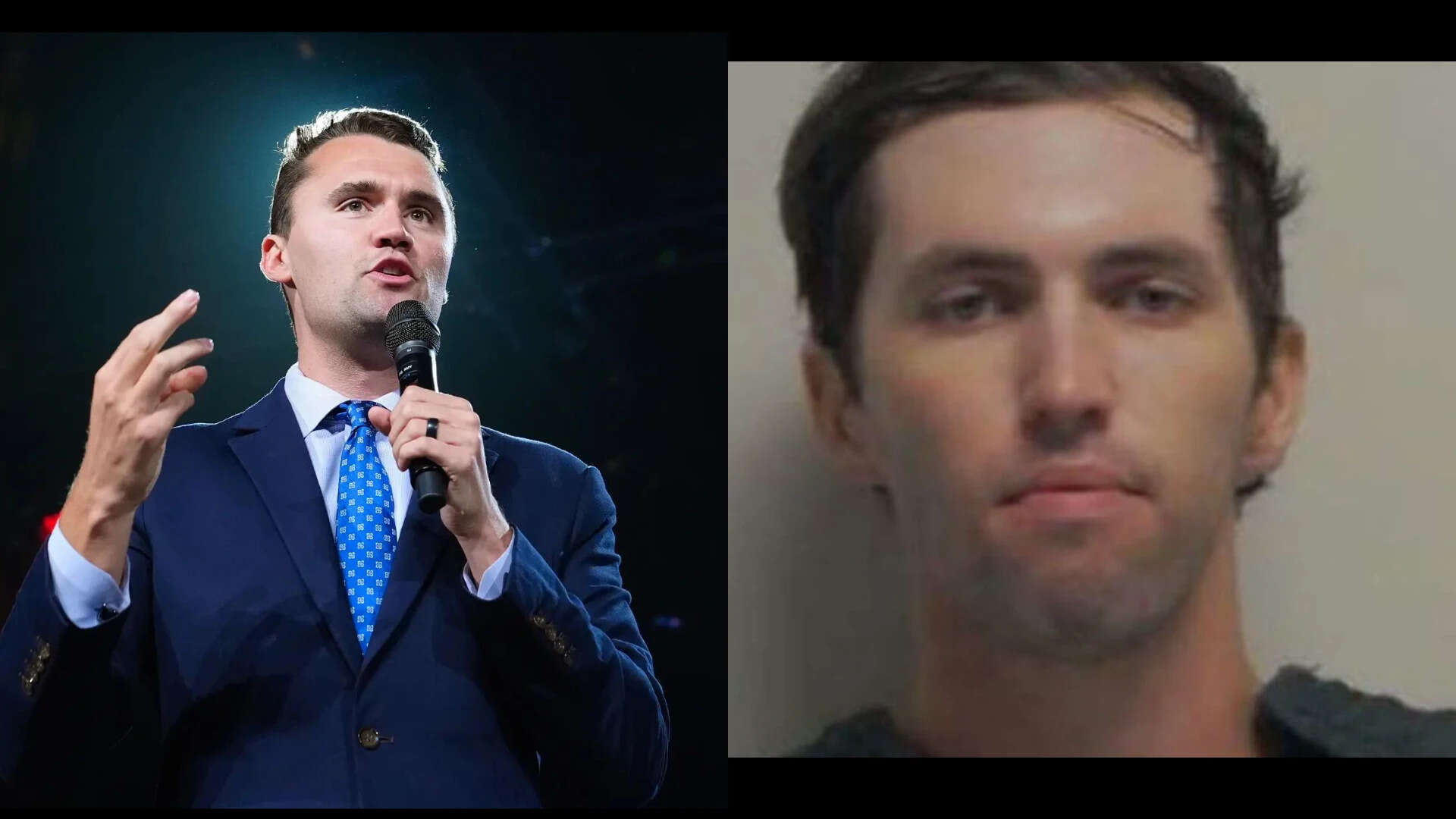
The fourth day of the preliminary hearing for Tyler Robinson, the 23-year-old defendant accused of the September 2025 aggravated murder of conservative activist Charlie Kirk, exposed the structural friction between raw digital evidence and subjective interpersonal admissions. By introducing a redacted law enforcement interview with Robinson’s former roommate and romantic partner, Lance Twiggs, prosecutors sought to establish an unassailable timeline of consciousness of guilt. Yet, evaluating this development requires analyzing more than the emotional weight of a defendant expressing immediate regret. It demands an examination of the evidentiary mechanics, the limitations of forensic isolation, and the strategic maneuvering of a capital defense team working to neutralize a multi-layered digital trail.
The prosecution’s structural framework relies on three pillars: explicit pre-intent documentation, immediate post-incident digital confirmation, and secondary verbal admissions. While mainstream narratives focus heavily on the emotional optics of Robinson pacing their St. George townhouse and crying that he "wishes he hadn't done it," the true legal weight rests on the mechanical synchronization of digital timestamps with physical geolocation data.
The Three Pillars of the State's Culpability Model
To secure a trial pathway for aggravated murder—a charge carrying the potential for a death sentence under Utah law—the state must prove not only that Robinson fired the single fatal shot into Kirk’s neck at Utah Valley University, but that the act involved premeditation and created a systemic public danger. The evidence detailed by State Bureau of Investigation Agent Brian Davis establishes a clear, chronological sequence of intent.
- Pillar 1: Antecedent Intent Documentation: Investigators recovered a physical note left under a computer keyboard in the St. George apartment. The document contained an explicit operational objective: “I had the opportunity to take out Charlie Kirk and I'm going to take it.” This establishes a baseline of premeditation that undercuts any defense strategy built around sudden provocation or a momentary psychological break.
- Pillar 2: Real-Time Digital Admission: Text message threads displayed in open court reveal a real-time log of the defendant’s movements directly following the assassination. While lurking near the campus amphitheater to retrieve a bolt-action rifle hidden in the brush, Robinson explicitly text-messaged Twiggs. When Twiggs asked, “You werent the one who did it right????” Robinson replied, “I am, I'm sorry.”
- Pillar 3: The Post-Facto Verbal Validation: The video interview played in court on July 9, 2026, serves as the final structural layer. Twiggs detailed confronting Robinson on September 11, 2025, regarding the written note. Robinson confirmed its accuracy, began pacing, and stated his regret before subsequently posting an explicit admission on a Discord server ("it was me at UVU yesterday") roughly an hour before surrendering to the Washington County Sheriff's Office.
Forensic Vulnerabilities and the Defense Isolation Strategy
The defense team, led by Richard Novak and Michael Burt, is executing a systematic isolation strategy designed to separate these communicative admissions from physical, scientific proof. In capital litigation, confessions rarely stand alone if the underlying forensic links can be destabilized. The defense's cross-examination focuses heavily on the technical margins of error within the state’s physical evidence.
The primary point of friction lies in the DNA mixture analysis found on the recovered murder weapon—a bolt-action rifle belonging to Robinson's grandfather—and a towel wrapped around it in a wooded area near the crime scene. FBI forensic analyst Amanda Bakker testified that the genetic material on the towel constituted a complex mixture. While the state presents the re-run data as a clean match to exactly two individuals—Twiggs and Robinson—the defense has aggressively questioned the thresholds used for sample distinction. Burt's assertion that the analyst "can't match Mr. Robinson to the questioned samples" aims to exploit the probabilistic nature of low-copy-number DNA testing.
A secondary vulnerability is the ballistics report. Testing performed on the single bullet fragment extracted from Kirk’s neck yielded inconclusive results when matched against the grandfather's rifle. In the absence of a definitive ballistic fingerprint linking the projectile directly to the barrel of the weapon, the prosecution’s physical narrative depends entirely on circumstantial proximity: surveillance footage showing a individual matching Robinson's build scaling a roof overlooking the amphitheater, and text messages where Robinson explicitly frets about leaving fingerprints on the firearm.
The Operational Reality of Use Immunity
The legal status of Lance Twiggs highlights the strategic calculations required in complex homicide investigations. Twiggs, who now resides in Texas and did not appear in person, was granted use immunity by the state. This mechanism is an operational necessity when a critical witness occupies a shared physical environment with a suspect.
Use immunity ensures that while Twiggs' statements cannot be leveraged to build a criminal case against him, his cooperation becomes compulsory, effectively neutralizing any potential Fifth Amendment hurdles. This allows the prosecution to present a highly cohesive look into the defendant's immediate domestic environment post-homicide without the risk of the narrative being derailed by a key witness refusing to testify.
The defense fought aggressively to prevent the public broadcast of Twiggs' recorded interviews, arguing that the media dissemination of a highly charged, recorded confession would irreparably taint the prospective jury pool in Utah County. By allowing a redacted version to be played, Judge Tony Graf attempted a delicate balancing act: preserving public transparency and satisfying the Kirk family's demands for evidentiary access, while stripping out the most prejudicial elements that could trigger a future mistrial or successful appeal.
The state’s case does not hinge on a single dramatic courtroom reveal, but on the overlapping convergence of independent data sets. The defense may successfully introduce doubt regarding individual strands of forensic material—such as the inconclusive ballistics fragment or the precise cellular distribution of mixed DNA on a screwdriver found on the rooftop. However, neutralizing a physical note, a real-time SMS confession, a verbal admission captured on video, and a matching public Discord post requires a comprehensive alternative theory that the defense has yet to articulate.
With the preliminary hearing concluding, the court's upcoming determination on whether the state has met the threshold of probable cause will dictate the boundaries of the trial. The transition from preliminary assessment to a formal capital trial will force the defense to move past merely questioning forensic margins and directly address the recorded timeline of confession that currently anchors the state's prosecution.