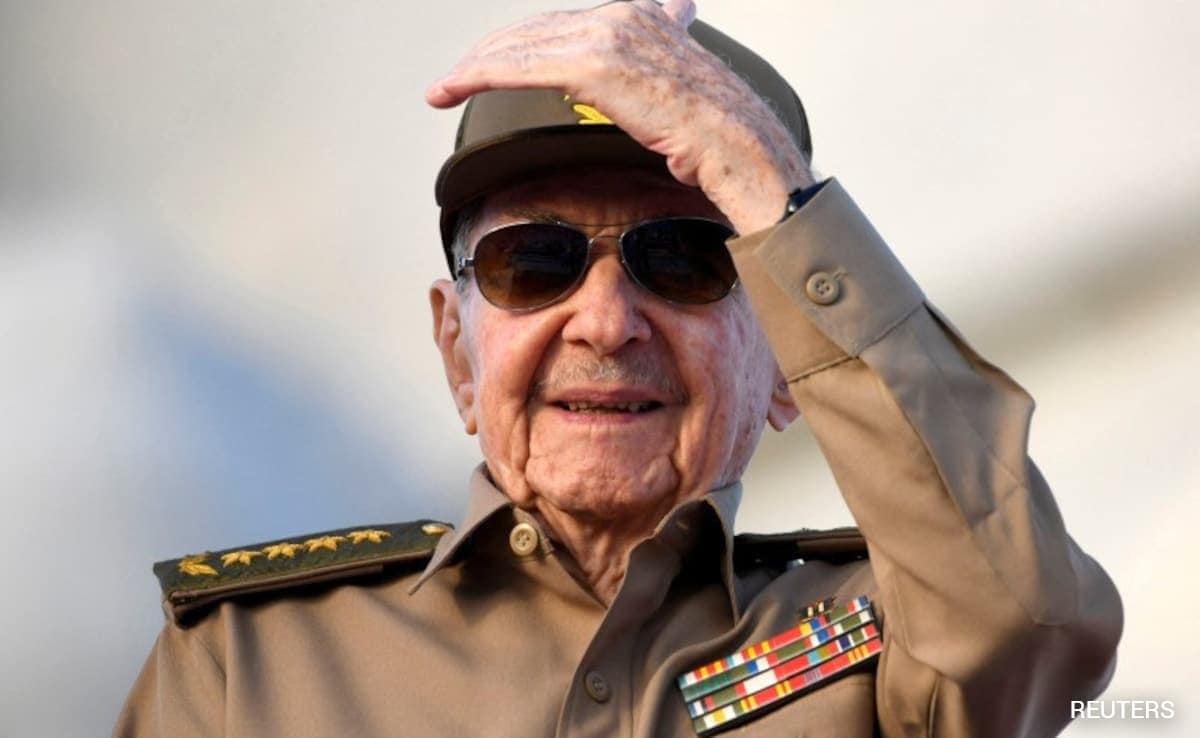
The United States Department of Justice is preparing to unseal a criminal indictment in Miami against 94-year-old former Cuban President Raúl Castro on May 20, 2026. While mainstream media characterizes this as a sudden escalation of historic grievances, an objective structural analysis reveals a calculated application of extraterritorial jurisprudence designed to achieve maximum geopolitical leverage. This is not merely a symbolic legal maneuver; it represents a functional blueprint for regime change executed through the mechanism of lawfare.
To understand the strategic reality of this move, one must deconstruct the explicit legal architecture being utilized, analyze the systemic economic pressures applied concurrently, and map the operational precedents that signal Washington’s true intent.
The Legal Architecture: Jurisdiction and the 1996 Incident
The core of the upcoming indictment relies on a specific historical event: the February 24, 1996, downing of two civilian aircraft operated by the Miami-based Cuban exile organization, Brothers to the Rescue (Hermanos al Rescate). Raúl Castro served as the Minister of the Revolutionary Armed Forces (MINFAR) during this period, establishing a direct chain-of-command link to the MiG-29 interceptors that fired upon the Cessna 337s.
The legal mechanism required to prosecute a foreign head of state for actions occurring outside U.S. borders rests on three distinct pillars:
- The Principle of Passive Personality: This framework grants a nation jurisdiction over offenses committed abroad where the victim is a national of that state. Because the four individuals killed in the 1996 shootdown were Cuban-American U.S. citizens, the Southern District of Florida claims a valid jurisdictional hook.
- The Antiterrorism and Effective Death Penalty Act (AEDPA): Enacted in April 1996—partially in response to the downing of these very aircraft—this statute explicitly strips foreign states of sovereign immunity in U.S. courts if they are designated as State Sponsors of Terrorism and commit acts of extrajudicial killing.
- The Non-Applicability of Statutory Limitations: Under U.S. federal law (18 U.S.C. § 3281), there is no statute of limitations for capital offenses, which includes first-degree murder or acts of terrorism resulting in death. This completely nullifies the defense that a three-decade delay invalidates the charges.
Cuba’s historical defense has rested on the assertion of territorial sovereignty, claiming the aircraft violated Cuban airspace. However, international law—specifically Article 3 bis of the Chicago Convention on International Civil Aviation—prohibits the use of weapons against civilian aircraft in flight, regardless of airspace violations. By framing the actions of the Cuban military as a clear breach of international civil aviation protocols rather than a standard military interception, U.S. prosecutors have engineered a durable criminal framework capable of withstanding domestic legal scrutiny.
The Economic Attrition Matrix
The unsealing of criminal charges does not occur in a vacuum. It represents the judicial component of a dual-track strategy combining legal pressure with intense economic attrition. The current U.S. administration has weaponized secondary sanctions to create a structural bottleneck in Cuba’s energy infrastructure, specifically targeting fuel shipments to the island.
This economic strategy operates via a specific causal loop:
[Secondary Sanctions on Tankers/Insurers]
                  │
                  ▼
[Disruption of Maritime Fuel Supply Chains]
                  │
                  ▼
[Systemic Collapse of the Cuban Electrical Grid]
                  │
                  ▼
[Severe Deficits in Industrial Production & Basic Public Utilities]
                  │
                  ▼
[Maximum Domestic Political Instability]
By starving the island of petroleum, the U.S. has triggered severe blackouts, food preservation failures, and a collapse in domestic economic productivity. The simultaneous introduction of criminal charges against the historic leader of the Cuban Revolution is timed to exploit this systemic vulnerability, driving a wedge between the ruling elite and a highly fatigued populace.
The Precedent Matrix: Lawfare as a Military Enabler
The strategic deployment of federal criminal indictments against foreign leaders is a defined operational methodology in modern U.S. foreign policy. This technique uses domestic judicial power to strip an adversarial leader of international legitimacy, effectively transforming them from a sovereign diplomat into an international fugitive.
The current strategy mirrors a explicit historical precedent:
- The Venezuela Blueprint (January 2024): The U.S. military executed a direct operation in Venezuela, framing the intervention as a "law enforcement action" rather than an act of war, expressly to execute federal arrest warrants against President Nicolás Maduro on drug trafficking charges.
By utilizing the U.S. Attorney’s Office for the Southern District of Florida to issue an indictment against Castro, the executive branch establishes the necessary legal justification for subsequent physical or kinetic operations. Under this doctrine, any future deployment of force can be structurally categorized as a targeted federal law enforcement raid rather than an invasion. This distinction is critical for navigating domestic congressional oversight and mitigating standard international law challenges at the United Nations.
Operational Limitations and Strategic Risks
While the legal architecture is robust, the strategy contains significant structural limitations that prevent it from being a guaranteed mechanism for regime change. A cold assessment reveals two primary failure modes:
- The Martyrdom Effect: Indicting a founding figure of the Cuban state can backfire by triggering nationalistic alignment. Even citizens highly critical of the current government's economic mismanagement may rally around the state structure when faced with what is viewed as an extraterritorial overreach by a historical adversary.
- The Diplomatic Impasse: Labeling the senior leadership of a nation as indicted criminals eliminates any viable off-ramp for negotiated transition. When a regime’s elite faces the absolute certainty of incarceration in a U.S. federal penitentiary upon relinquishing power, their rational incentive shifts toward absolute entrenchment and maximum domestic repression.
Furthermore, the timing of this indictment introduces a geopolitical variables matrix. CIA Director John Ratcliffe’s recent trip to Havana to deliver a direct message to Cuban intelligence and Castro's grandson, Raúl "Raulito" Guillermo Rodríguez Castro, indicates that the indictment is being used as an immediate negotiation chip. The U.S. offer is explicit: engage in fundamental economic structural adjustments—effectively opening the state-controlled economy to foreign capital—or face the total deployment of the lawfare apparatus.
The Next Strategic Play
The unsealing of the indictment on May 20 will formalize a point of no return in U.S.-Cuba relations. Because the administration has already established the operational precedent in Venezuela, the threat of an eventual kinetic enforcement mechanism must be treated by Havana as a high-probability event.
The Cuban state cannot survive a prolonged energy blockade while its symbolic leadership is systematically criminalized. Therefore, the strategic play for Havana will likely involve a rapid pivot toward alternative security guarantees. Expect an immediate acceleration of military and logistics integration with extra-hemisphary adversaries—specifically Russia and China—who are highly motivated to maintain a strategic foothold 90 miles from the U.S. coast. This defensive counter-move will likely manifest as a formal grant of naval base access or the deployment of advanced electronic warfare assets under the guise of joint commercial ventures, structurally shifting a regional law enforcement issue into a global containment crisis.
U.S. moving to indict Cuba's Raúl Castro, sources say
This broadcast outlines the immediate details regarding the Department of Justice's upcoming legal actions against Raúl Castro, linking the case directly to the 1996 plane shootdown.