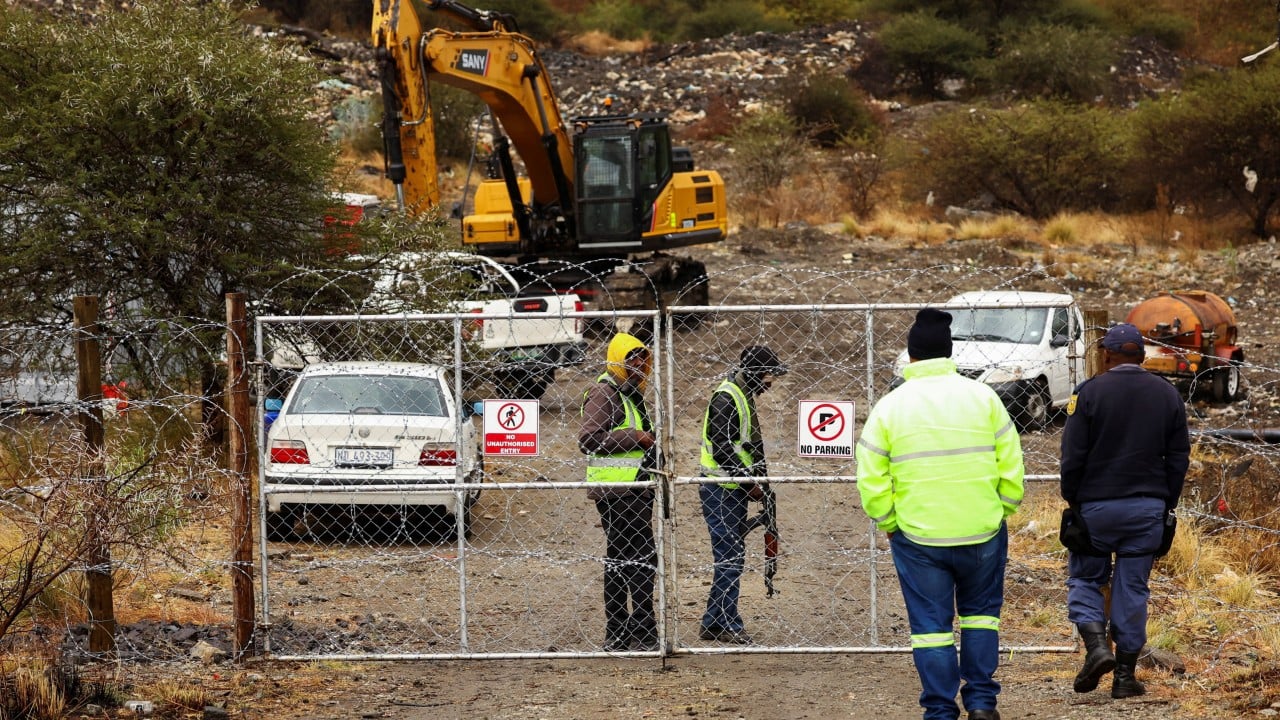
The mechanics of fatal ground failure inside informal extraction zones are governed by predictable geotechnical thresholds rather than random tragedy. When fourteen informal miners died and eight sustained injuries following a collapse at the Nkaneng dumping site in South Africa's North West Province, mainstream coverage framed the event as an isolated breakdown of safety protocols.
This surface-level reading ignores the systemic economic pressures and structural variables driving thousands of individuals known locally as zama-zamas into unstable excavations. Deconstructing the incident requires examining the intersection of resource exhaustion, labor migration economics, and regulatory vacuums that dictate high-risk underground extraction. Expanding on this idea, you can find more in: Why Blaming Islamabad For PoJK Protests Misses The Entire Point.
The Economic Drivers of High-Risk Manual Excavation
Informal mining operations persist not because participants are ignorant of geotechnical hazards, but because the expected utility of extraction outweighs the perceived risk of structural collapse. In regions surrounding Rustenburg, platinum group metals waste repositories and tailings dumps contain residual minerals left behind by commercial mining operations using less efficient historical processing methods.
Commercial entities optimize recovery rates based on industrial cost functions. When the marginal cost of extracting trace elements exceeds the prevailing market price of the commodity, operations cease and sites are abandoned or designated as low-value waste dumps. Experts at NPR have also weighed in on this trend.
This commercial threshold creates an economic vacuum. Informal actors operate with near-zero capital expenditure, relying entirely on manual labor to re-process discarded material. Without heavy machinery or engineered shoring, these operators undercut the stability of excavated faces to maximize immediate mass yield per labor hour. The geometric design of an artisanal excavation typically involves undercutting vertical or steep sloping faces to target higher-grade strata, violating fundamental rules of slope stability and inducing shear failure.
Geotechnical Mechanics of Waste Dump Failures
Tailings dumps and excavated waste sites lack the consolidated integrity of undisturbed geological formations. Composed of crushed rock, processed ore, and slurry waste, these structures possess low cohesion and high sensitivity to moisture content and gravitational loading.
The physical collapse at Nkaneng illustrates the predictable failure modes of unengineered excavations:
- Surcharge Loading: The placement of excavated overburden or human weight directly at the crest of an unstable slope increases gravitational stress beyond the shear strength of the material.
- Lack of Lateral Support: Manual vertical digging creates unsupported overhangs. Once the tensile strength of the upper layers is exceeded, brittle fracturing occurs without warning.
- Hydrological Infiltration: Subsurface moisture reduces apparent cohesion within granular waste dumps, significantly lowering internal friction angles and triggering liquefaction or sliding events.
Commercial operations mitigate these risks through continuous geotechnical monitoring, controlled benching, and engineered angle-of-repose design. Informal sites operate entirely outside this technical envelope, turning temporary earth walls into vertical death traps.
Regulatory Vacuum and Regional Labor Economics
The persistence of these operations is directly linked to regional macroeconomics and labor mobility across Southern Africa. A substantial proportion of informal miners originate from neighboring states, notably Lesotho, driven across borders by structural unemployment and localized poverty.
State interventions typically rely on criminal justice frameworks, such as immigration enforcement and asset seizure, combined with military deployments like Operation Vala Umgodi. However, penalizing labor supply without altering the underlying economic incentive structure generates a displacement effect rather than a reduction in activity. When law enforcement secures one disused shaft or waste dump, operators migrate to alternative marginal sites, often increasing the velocity of extraction and abandoning basic precautionary measures to outpace policing cycles.
Furthermore, underground supply chains are frequently controlled by organized criminal syndicates that manage the logistics of food, equipment, and black-market metal sales. These syndicates extract economic rent from frontline workers while externalizing all safety risks onto the manual laborers who execute the physical digging.
Policy Reconfiguration and Structural Intervention
Mitigating fatalities in informal mining economies requires shifting from a pure deterrence model to a risk-mitigation framework. Traditional policing strategies fail because they treat an economic survival mechanism exclusively as a criminal conspiracy.
Future containment depends on three structural adjustments:
- Reprocessing Integration: Commercial holders of mineral rights and state agencies must incentivize the systematic remediation or commercial reprocessing of legacy waste dumps. Removing the accessible residual material eliminates the physical resource that attracts informal operators to specific high-risk sites.
- Controlled Artisanal Formalization: Where localized deposits cannot support industrial extraction but sustain communities, establishing regulated cooperatives with mandatory basic engineering standards transfers geotechnical oversight to the operators.
- Supply Chain Tracing: Disrupting the illicit market circuits that monetize illegally recovered metals dismantles the financial architecture sustaining syndicates, reducing the capital available to fund hazardous deep-level and unstable surface digging.
To alter the trajectory of these incidents, state and corporate stakeholders must address the root cost-benefit ratio of manual extraction. As long as the marginal return of digging in an unstable waste dump exceeds zero, and alternative formal employment remains scarce, physical barriers and punitive enforcement will remain insufficient to prevent structural failures.


