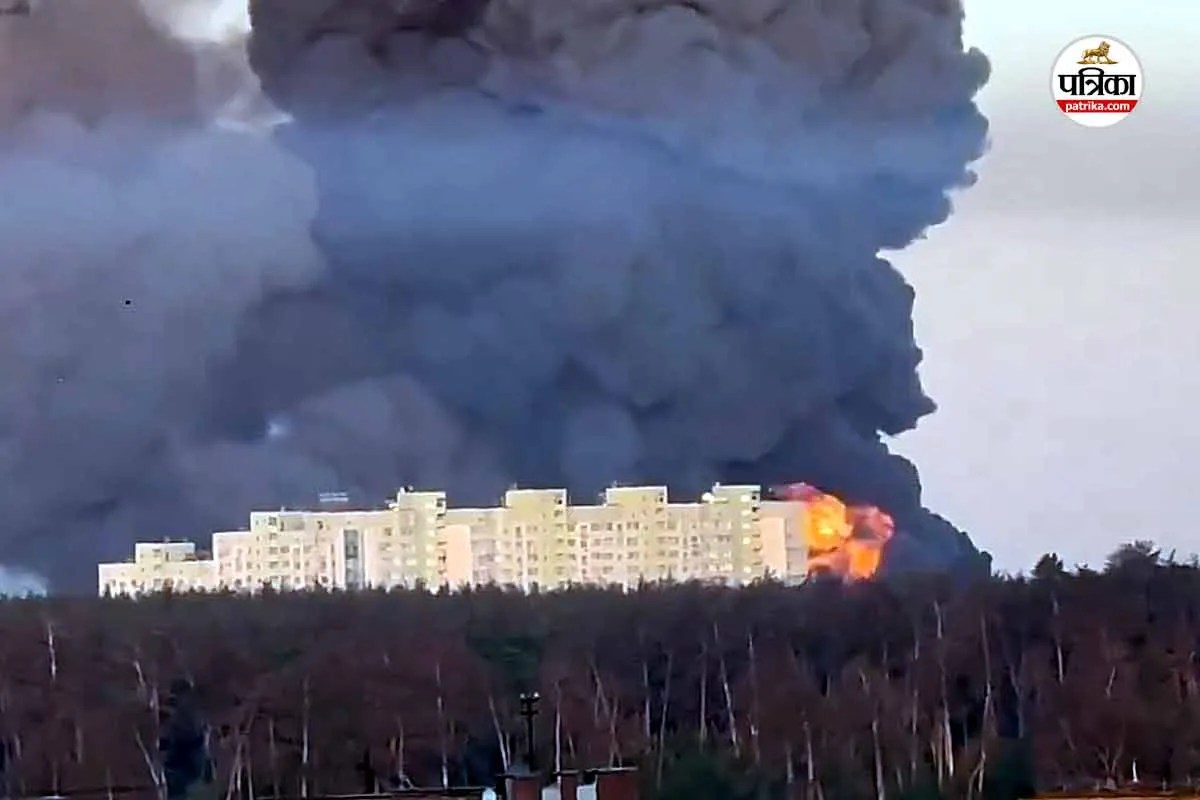
Iran's Regional Targeting Strategy
The military exchanges between Iranian armed forces and United States forward positions in the Persian Gulf mark a transition from low-intensity proxy friction to direct state-level counter-infrastructure operations. By designating United States military formations as hostile terrorist organizations and targeting forward logistical hubs in Kuwait, Tehran has operationalized a doctrine aimed at raising the strategic and economic cost of forward-stationed American power projection.
This operational doctrine rests on three structural mechanics designed to bypass traditional defensive parity. Read more on a connected subject: this related article.
+-----------------------------------------------------------------------+
|                    IRANIAN ESCALATION MECHANICS                       |
+-----------------------------------------------------------------------+
|  1. Infrastructure Asymmetric Cost Imposition                         |
|     -> Targeting critical water desalination and energy production    |
|     -> Forces host nations to absorb civilian operational friction    |
|                                                                       |
|  2. Integrated Layered Saturation (Missile & Drone Swarms)           |
|     -> Exploiting sensor saturation thresholds in air defense systems |
|     -> Depleting interceptor stockpiles via low-cost attack drones    |
|                                                                       |
|  3. Strategic Host-Nation Separation                                  |
|     -> Leveraging geographic proximity to threaten Gulf logistics     |
|     -> Pressuring regional governments to limit US basing rights      |
+-----------------------------------------------------------------------+
Infrastructure Asymmetric Cost Imposition
Rather than seeking tactical victory against heavily fortified combat units, strikes against facilities like Camp Arifjan, Ali Al-Salem Air Base, and adjacent dual-use infrastructure target the critical support nodes of regional sustainment. Kuwait serves as a central staging ground for American land logistics, equipment storage, and tactical air coordination. Disruption at these points creates compounding operational friction throughout the entire regional theater.
Integrated Layered Saturation
The employment of combined surface-to-surface ballistic missiles and low-cost one-way attack drones tests the interception threshold of modern integrated air defense networks. By forcing defense platforms to expend high-cost interceptors against low-unit-cost drone waves, the attacker alters the economic depletion rate of defense stockpiles. Additional journalism by Al Jazeera delves into similar perspectives on this issue.
Strategic Host-Nation Separation
By inflicting secondary damage on host-nation power generation, desalination plants, and petroleum facilities, Tehran targets the political alignment between Washington and Gulf Cooperation Council (GCC) states. The objective is to demonstrate that hosting American installations creates unacceptable operational risks for host-nation domestic infrastructure.
Logistical Vulnerabilities across Kuwaiti Defense Nodes
Kuwait’s geographical position creates a acute operational paradox for forward military infrastructure. The concentration of airfields, supply depots, and naval staging areas within a narrow operational radius makes defense nodes susceptible to short-range ballistic vectors and low-altitude drone routes launched from southern coastal zones or proximity positions.
Defense Node Susceptibility
- Camp Arifjan: Functions as the primary command-and-control and logistics management hub. Its broad surface footprint and high-density material storage make passive defense complex, leaving localized assets reliant on kinetic interception platforms.
- Ali Al-Salem Air Base: Serves as the primary operational airfield for tactical airlift, ISR assets, and strike fighter detachments. Vulnerability centers on centralized radar complexes, fuel storage farms, and specialized hangar facilities housing long-endurance platforms.
- Ahmad al-Jaber Air Base: Provides forward air power projection capability. Strike vectors aimed at runway infrastructure and automated maintenance nodes restrict flight generation rates regardless of airframe survivability.
The operational bottleneck is not the destruction of individual combat platforms, but the degradation of turn-around capability. When radar systems, communications nodes, or fuel distribution infrastructure are damaged, the operational sorties-per-day capacity drops precipitously.
The Deterrence Disparity and Interception Economics
The strategic calculation governing long-range exchange dynamics is governed by kinetic attrition dynamics. Air defense systems operating in high-threat environments face finite interceptor capacity, operational radar engagement limits, and reloading latency.
The Interceptor Depletion Rate
Point-defense systems like Patriot PAC-3 and NASAMS maintain high target-kill probabilities against tactical ballistic missiles and incoming air-breathing threats. However, the economic ratio remains severely asymmetrical.
[Attacker Vector: $30k - $100k Attack Drone]
                   │
                   ▼
       [Sensor Detection Matrix]
                   │
                   ▼
[Defense Vector: $2M - $4M Interceptor Missile]
When attack vectors integrate salvo firings of short-range surface-to-surface missiles alongside massed drone arrays, air defense batteries face sensor saturation. Radar systems must track, classify, and assign interceptors to scores of simultaneous contacts within narrow time windows.
Civilian Infrastructure Spillover and Economic Shockwaves
The vulnerability of Gulf energy and utility infrastructure amplifies the strategic impact of military targeting. Kuwait relies heavily on centralized thermal desalination and coastal power plants to sustain civilian populations and industrial capacity.
- Water security in arid environments presents zero baseline margin for prolonged infrastructure disruption.
- Damage to petroleum processing centers creates immediate volatility in global energy markets through risk-premium expansion.
- Maritime shipping lanes transiting nearby waters face insurance rate surges, restricting commercial flow even in the absence of direct blockades.
When military exchanges impact municipal utility grids, the host government faces immediate political and social costs that complicate continued support for coalition operations.
Escalation Governance and Regional Realignment
The tactical engagements in Kuwait represent a calculated attempt to rewrite regional escalation parameters. Strategic stability relies on clear signal transmission, credible retaliation capability, and defined operational red lines.
Strategic Redefinition of Basing Rights
Host states in the Middle East balance defense agreements with external powers against regional security risks. By directly targeting facilities on Kuwaiti soil, Iranian strategy forces a recalculation among regional policymakers regarding the net security benefit of foreign military stationing.
If hosting coalition forces exposes domestic water, energy, and commercial sectors to persistent fire without a absolute guarantee of defense, host nations face internal pressures to impose flight and operational restrictions on foreign military commands.
Counter-Strategy and Defensive Adaptation
To mitigate structural vulnerabilities exposed by saturation strikes and host-nation disruption, military posture in the Gulf requires immediate operational adjustments:
- Geographic Dispersion of Logistical Depots: Transitioning from centralized megabases like Camp Arifjan to dispersed, hardened, and mobile logistical positions prevents single-point-of-failure vulnerabilities.
- Layered Counter-Unmanned Aerial Systems (C-UAS): Integrating directed-energy weapons, electronic warfare jamming systems, and low-cost kinetic interceptors reduces reliance on multi-million-dollar air defense missiles against cheap drone arrays.
- Hardening of Dual-Use Utility Assets: Developing redundant water desalination channels and modular mobile power systems limits civil disruption caused by collateral or direct infrastructure impacts.
- Unified Regional Radar Integration: Streamlining sensor-sharing across GCC members expands early-warning reaction times, giving defense batteries greater space to prioritize high-value threat vectors.
The military conflict across Kuwaiti air bases and energy infrastructure highlights a fundamental shift in regional confrontation. The survival of forward posture depends on rapidly adapting air defense economics, hardening strategic infrastructure, and managing the political stability of regional coalition partnerships.