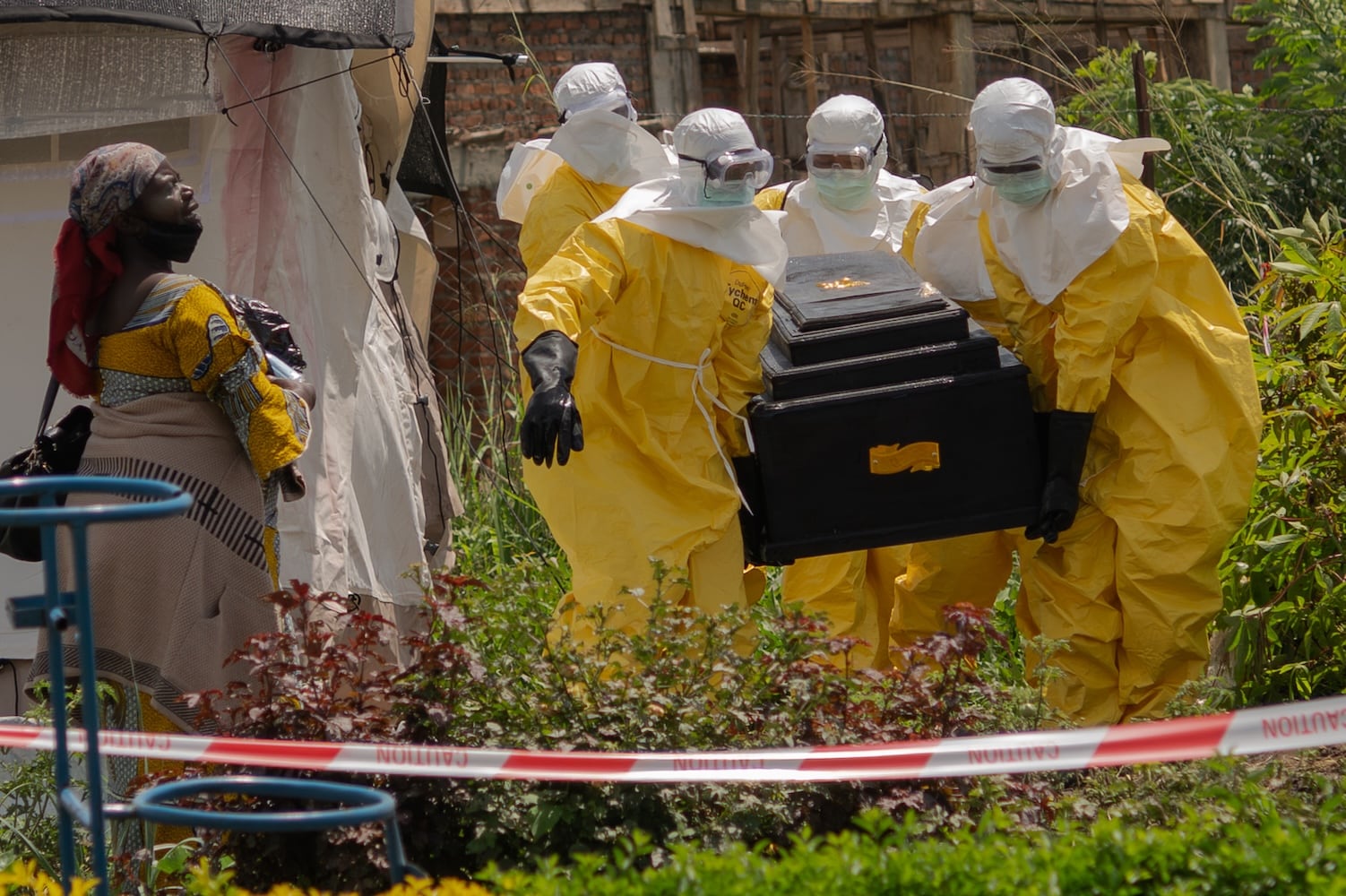
Infectious disease containment relies on a predictable mathematical reality: the effective reproduction number ($R_t$) must be driven below 1.0 to halt transmission. In the context of highly lethal pathogens like the Ebola virus, achieving this threshold requires the flawless execution of a four-part containment vector: rapid case identification, secure isolation, meticulous contact tracing, and safe, dignified burials.
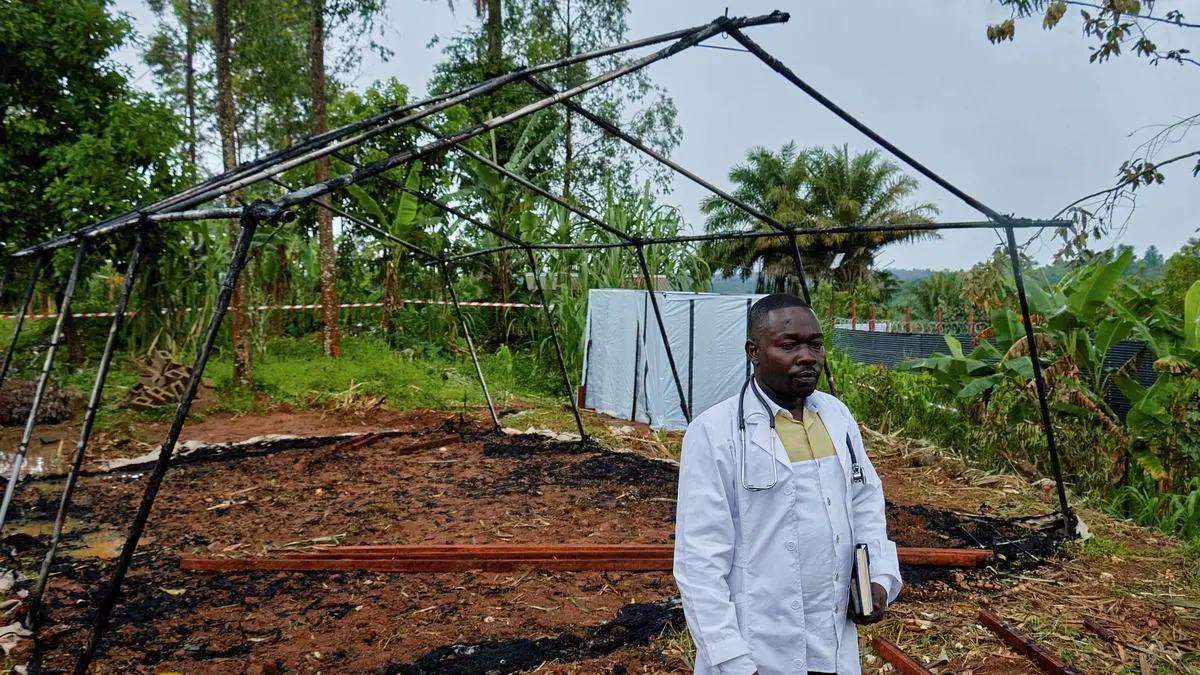
When containment infrastructure becomes the target of kinetic violence and civil unrest, the entire epidemiological apparatus collapses. The breakdown of containment in the Democratic Republic of the Congo (DRC) during major outbreaks demonstrates that public health failures are rarely just biomedical. Instead, they are structural breakdowns where community mistrust, historical marginalization, and security deficits intersect to turn a manageable biological event into an uncontrolled regional crisis.
The Triple-Bottleneck Framework of Conflict-Driven Outbreaks
Evaluating the disruption of health interventions in volatile regions requires mapping the specific mechanisms that arrest medical operations. This breakdown occurs across three distinct bottlenecks.
1. Velocity of Transmission vs. Velocity of Surveillance
Epidemiological surveillance operates on a time-sensitive decay curve. The utility of contact tracing degrades exponentially with every 24-hour delay in case isolation. When health facilities are attacked or abandoned due to security threats, the immediate consequence is an instantaneous blinding of the surveillance network.
Patients flee isolation units, returning to dense communal settings while actively shedding viral loads through bodily fluids. This creates an unmonitored dispersal pattern that scrambles existing contact tracing data. The time required to re-establish contact with a single displaced patient often exceeds the incubation period of the virus, allowing secondary and tertiary generations of transmission to occur entirely outside the view of health authorities.
2. Supply Chain Contraction and Resource Attrition
Biomedical containment demands a continuous, highly specialized logistical pipeline. This includes Personal Protective Equipment (PPE), cold-chain maintenance for therapeutics and vaccines (such as Ervebo), and specialized waste management systems for biohazardous materials.
[Security Incident]
       │
       ▼
[Logistical Suspension] ──► [Cold-Chain Failure] ──► [Vaccine Invalidation]
       │
       ▼
[Personnel Evacuation]  ──► [Care Capacity Drops] ──► [Mortality Rate Rises]
Kinetic targeted strikes on treatment centers force international and domestic health agencies to suspend logistics. When supply lines contract, local facilities face immediate resource depletion. Without adequate PPE, clinical staff experience an exponential increase in nosocomial (facility-acquired) infection risk. This risks turning the treatment centers themselves into super-spreading hubs. Furthermore, the physical destruction of decentralized triage points forces centralized facilities to absorb unvetted patient surges, breaking down triage protocols.
3. The Trust Deficit and the Institutional Void
The third bottleneck is psychological and historical. In regions marked by decades of civil conflict, the sudden influx of heavily funded, top-down international health interventions creates a profound economic and social asymmetry.
Local populations often view foreign-led medical teams with deep suspicion. This suspicion hardens when community members observe that vast resources are deployed instantly for an acute epidemic, while chronic, everyday health crises like malaria, malnutrition, and maternal mortality remain systematically underfunded.
When military or militarized police forces escort health workers to enforce quarantine or safe burial protocols, the medical intervention becomes indistinguishable from state-sponsored coercion. This dynamic transforms health facilities into symbols of an oppressive state apparatus, making them logical targets for local armed groups and frustrated civilian populations.
The Mathematical Cost of Intervention Interruption
To quantify the impact of these disruptions, one must look at how security incidents alter the basic reproductive math of an outbreak. The basic reproduction number ($R_0$) represents the transmissibility of a pathogen in a completely susceptible population without intervention. The goal of public health teams is to calculate and lower the effective reproduction number ($R_t$), which accounts for interventions like vaccines and isolation:
$$R_t = R_0 \times (1 - v \cdot E) \times c$$
Where:
- $v$ is the proportion of the population vaccinated.
- $E$ is the vaccine effectiveness.
- $c$ is a contact/isolation modifier reflecting the efficacy of behavioral interventions and quarantine protocols.
Under baseline containment conditions, $c$ is minimized through rapid isolation and contact tracing, pulling $R_t$ well below 1.0.
When an attack occurs, multiple variables shift simultaneously. The isolation modifier ($c$) spikes because infected individuals flee back into the community. Concurrently, the vaccination variable ($v$) stagnates as ring vaccination teams pull back due to safety concerns.
Because the Ebola virus possesses an inherently high $R_0$ (historically ranging between 1.5 and 2.5 depending on the specific strain and setting), even a brief 48-hour suspension of containment efforts can cause $R_t$ to surge back above baseline levels. This triggers a geometric expansion of the case map that can take weeks of stable operations to reverse.
Structural Pathologies of Current Intervention Models
The recurring vulnerability of health responses in the DRC and similar conflict zones points to fundamental design flaws in traditional humanitarian blueprints.
- Hyper-Centralization of Treatment Architecture: Relying on massive, highly visible Ebola Treatment Centers (ETCs) creates high-value, easily targeted symbols. These centers alienate communities by removing sick individuals from their families and placing them behind plastic sheeting and high fences, which fuels rumors of organ harvesting and Western exploitation.
- Decoupling Epicenter Economics from Local Environments: The sudden arrival of international organizations introduces a disruptive hyper-inflationary micro-economy. Driving high-end vehicles, renting local real estate at inflated prices, and hiring external personnel creates deep resentment among local health workers, who are frequently left underpaid and under-equipped on the front lines.
- Failure to Integrate Armed Actor Realities: International response frameworks frequently operate under the flawed assumption of a neutral humanitarian space. In active conflict zones featuring decentralized rebel factions (such as the Allied Democratic Forces or local Mai-Mai militias), ignoring the political economy of these armed groups guarantees that health infrastructure will be used as bargaining chips or targets to undermine state legitimacy.
Re-Engineering Epidemic Response in Insecure Environments
Overcoming these vulnerabilities requires shifting away from top-down, security-heavy intervention models toward decentralized, community-insulated operational frameworks.
Decentralized Triage and Low-Visibility Care Networks
The centralized ETC model must be replaced by a highly distributed network of smaller, low-visibility isolation and transit units integrated into existing, trusted local clinics. These micro-units should prioritize transparency, allowing families to see and communicate safely with hospitalized relatives. This directly reduces the fear and mystery that drive community attacks.
Asymmetric Contact Tracing and Peer-to-Peer Surveillance
When security conditions prevent formal contact tracing teams from entering specific neighborhoods or rebel-controlled territories, operations must shift to an asymmetric model. This involves training and compensating trusted local community leaders, traditional healers, and neighborhood youth representatives to conduct peer-to-peer symptom monitoring. Data can then be relayed back via encrypted SMS or secure mesh networks, keeping the surveillance apparatus functioning without exposing high-profile health workers to physical danger.
The Unified Health Fund Mechanism
To cure the trust deficit, international funding must stop operating in a disease-specific silo. Interventions should implement a dual-track funding model where every dollar spent on acute epidemic containment is matched by an immediate investment in local primary healthcare infrastructure.
┌────────────────────────────────────────────────────────┐
│               Unified Health Fund                      │
└──────────────────────────┬─────────────────────────────┘
                           │
             ┌─────────────┴─────────────┐
             ▼                           ▼
┌─────────────────────────┐ ┌─────────────────────────┐
│ Acute Epidemic Vector   │ │ Primary Care Vector     │
│ (Ebola Isolation, Ring  │ │ (Malaria Therapeutics,  │
│  Vaccination, PPE)      │ │  Clean Water, OB/GYN)   │
└─────────────────────────┘ └─────────────────────────┘
If a community sees that the arrival of an Ebola team also means their children finally receive malaria therapeutics, clean water infrastructure, and maternal care, the community's incentive to protect that infrastructure from insurgent disruption rises sharply.
Dynamic Security Architecture and Non-State Neutrality
Humanitarian teams must abandon the practice of using state military escorts, which compromises neutrality and invites insurgent retaliation. Instead, response coordinators should engage in professional, neutral negotiation with all local stakeholders—including non-state armed actors—to establish verified "health corridors." These agreements must frame disease containment not as a state-led counter-insurgency tool, but as a mutually beneficial biosecurity necessity designed to prevent the collective depletion of the regional population.