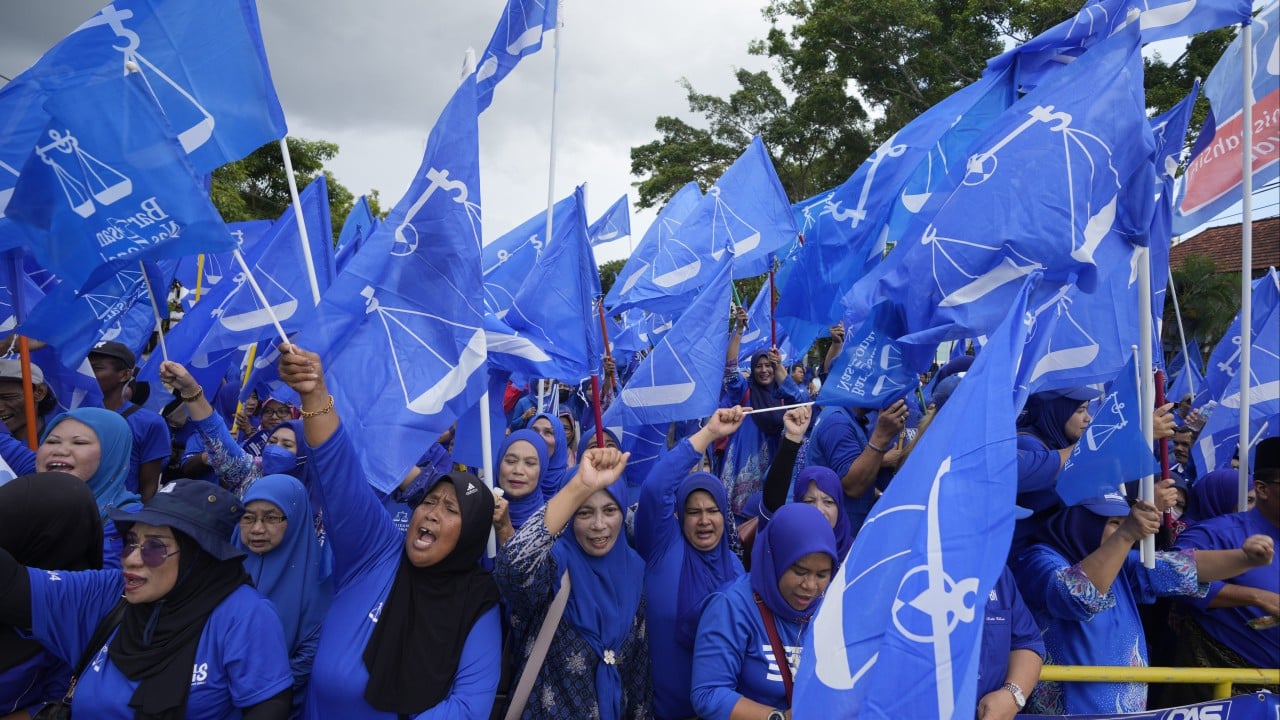
The upcoming Johor state election scheduled for July 11, 2026, functions less as a standard localized plebiscite and more as an stress test of Malaysia’s federal political architecture. While casual political analysis attributes coalition instability to transient rhetorical friction or shifting personality dynamics, the structural vulnerability of Prime Minister Anwar Ibrahim’s federal unity government is dictated by a rigid mathematical mismatch: the preservation of a national multi-ethnic coalition versus the localized demographic incentives driving regional parties.
Understanding the survival probability of the federal government requires mapping the distinct fiscal, demographic, and institutional leverage points shaping the Johor campaign. The illusion of a unified federal-state alignment dissolves under the pressure of regional financial claims and competing ethnic mobilization strategies. Also making headlines lately: The Thirty-Nine Seconds That Changed Everything.
The Fiscal Asymmetry Model: Federal Claims vs Regionalism
The primary macroeconomic friction point defining the pre-election period is the conflict over tax revenue retention. Johor’s regional executive branch has increasingly weaponized federal-state fiscal dynamics to build local leverage. This mechanism can be understood through a structural fiscal imbalance model, where a subnational region’s perceived economic exploitation becomes a potent political narrative, irrespective of net accounting realities.
The core tension operates along two distinct accounting balance sheets: Further information on this are detailed by NPR.
- The Regional Claim Line: Assertions from Johor’s regional leadership state that the territory generates over RM40 billion annually for the federal government while receiving an infrastructure and operational return of only RM2 billion to RM3 billion. This creates a perceived retention deficit of roughly 90% to 95%, fostering a localized grievance narrative that appeals directly to regionalist sentiments.
- The Federal Rebuttal Line: Data from the Ministry of Finance indicates that between 2023 and 2025, Johor contributed approximately RM14 billion in specific direct federal revenues while absorbing RM16 billion via direct projects, cash assistance programs like Sumbangan Tunai Rahmah (STR), and broader operating expenditures.
The political utility of this friction does not rely on a resolution of the data mismatch. The subnational executive uses the RM40 billion figure to build regional solidarity that cuts across traditional party lines. This structural tension creates a paradox for Anwar's federal leadership: if the federal center concedes to demands for a fixed 20% to 30% revenue retention model, it risks destabilizing the federal budget and setting a precedent for other wealthy states like Selangor and Penang. If the center holds its ground, it hands a powerful campaign tool to regionalist actors looking to weaken federal dominance.
Demographic Stratification and the Multi-Coalition Equilibrium
The electoral mechanics of Johor's 56 state constituencies prevent any single party from achieving absolute dominance without navigating complex ethnic variations. The electorate splits into three distinct strategic blocks, which can be analyzed through their respective voter efficiency profiles.
+-------------------------------------------------------------------------+
|                    JOHOR ELECTORAL COMPOSITION                          |
+-------------------------------------------------------------------------+
|  [ Malay-Majority / Rural ]  | [ Mixed Demographic ] | [ Urban / Non-Malay ]  |
|  - High UMNO/PAS Competition | - Three-Way Split     | - DAP Fortress         |
|  - Vulnerable to Nationalist  | - High Volatility     | - Defensive Posture    |
|    Rhetoric                  |                       |                        |
+-------------------------------------------------------------------------+
The Malay Heartland Split: UMNO vs Perikatan Nasional
In constituencies where the Malay voting population exceeds 60%, electoral success depends on mobilizing traditional institutional loyalty versus conservative reform. The United Malays National Organisation (UMNO), anchoring the Barisan Nasional (BN) banner, relies on deep-seated patronage networks and rural development structures. Conversely, the opposition Perikatan Nasional (PN)—driven by Bersatu and PAS—targets these same voters by highlighting federal compromise and perceived concessions to non-Malay political entities. The battle here is a zero-sum competition for ethnic representation efficiency.
The Urban Non-Malay Fortress
Constituencies with significant Chinese and Indian populations, largely concentrated in urban centers near the Johor-Singapore border, remain key strongholds for the Democratic Action Party (DAP), a core member of Anwar’s Pakatan Harapan (PH). For these voters, the primary incentive is preventing the rise of a conservative PN administration. However, this produces a secondary strategic bottleneck: to preserve these seats, PH must maintain an explicit reformist and multi-ethnic platform, which directly complicates UMNO’s efforts to defend its flank against PN in rural areas.
The Mixed-Demographic Volatility Zone
In seats where no single ethnic group holds a clear majority (40% to 50% Malay, balanced by Chinese and Indian minorities), voting patterns become highly volatile. These areas serve as the definitive test for the federal "unity" formula. In a standard two-coalition matchup, a combined BN-PH vote share would guarantee a comfortable victory. However, because BN and PH are contesting the state election with distinct candidate slates rather than a unified ticket, the non-Malay vote splits away from UMNO, while the Malay vote fragments between UMNO and Bersatu. This fragmentation lowers the victory threshold, allowing disciplined, single-issue minority blocs to swing the outcome.
The Tri-Coalition Strategic Matrix
The Johor election departs from historical two-front battles, operating instead as an asymmetrical three-coalition conflict. Each entity operates under completely distinct optimization goals.
- Barisan Nasional (BN): Led locally by incumbent Menteri Besar Onn Hafiz Ghazi, BN's primary objective is to replicate its 2022 supermajority and re-establish itself as an independent political force. By maximizing its seat count, BN aims to reduce its reliance on Anwar’s PH at the federal level, shifting from a junior partner in the unity government to a dominant broker capable of dictating terms ahead of the next general election.
- Pakatan Harapan (PH): Anwar Ibrahim’s coalition faces a delicate defensive task. PH must retain its urban strongholds while proving it can transfer non-Malay votes to its nominal federal partner, UMNO, in mixed seats. The core risk for PH is structural marginalization: if UMNO wins big on its own, PH loses its leverage within the federal cabinet; if PN wins big, Anwar’s federal leadership faces an immediate legitimacy crisis.
- Perikatan Nasional (PN): The opposition coalition enters the race with a clear disruptive strategy. PN does not need to win an outright majority in Johor to achieve its political goals. By capturing a significant portion of UMNO’s traditional rural base, PN can undermine UMNO’s claim to Malay leadership, shaking the foundations of the federal unity coalition and increasing pressure on its constituent parts to fracture.
Strategic Forecast and Systemic Risks
The outcome of the July 11 polls will generate immediate structural consequences for Malaysia’s political trajectory. Rather than looking for a simple victory or defeat, the stability of the national landscape will be determined by two specific data points:
The first indicator is the Malay voter retention rate achieved by UMNO. If PN captures more than 45% of the Malay vote across rural Johor, the internal pressure within UMNO to abandon its partnership with Anwar's multi-ethnic coalition will hit a critical tipping point. Party strategists would likely view their association with the federal government as an existential threat to their core brand, paving the way for mid-term re-alignments.
The second variable is the voter turnout delta among urban minorities. A decline in voter participation within DAP-dominated urban strongholds would signal growing exhaustion with the compromises required by the federal unity government. If non-Malay voters choose to stay home rather than support a coalition that includes their traditional rivals, the voter efficiency of the PH-BN alliance collapses in mixed-demographic seats.
The final strategic play does not depend on ideological consensus, but on raw seat efficiency. If the regional BN machine secures a standalone majority in Johor Bahru, it will immediately trigger a recalibration of power in Kuala Lumpur. Anwar Ibrahim will be forced to choose between offering major policy concessions to an emboldened UMNO or facing a slow unraveling of his legislative majority. The Johor state election is not a local detour; it is the arena where the long-term viability of Malaysia's multi-ethnic governance model will be decided.