Seismic events expose the structural integrity of both physical infrastructure and emergency management protocols. When a magnitude 7.1 earthquake struck the Kumamoto prefecture on Japan's southern island of Kyushu, the resulting deployment of emergency resources and the subsequent casualty metrics laid bare the harsh realities of urban risk management under sudden environmental stressors.
Evaluating the efficiency of rescue operations requires analyzing the temporal decay of survival probabilities, the mechanics of structural collapse in commercial versus industrial zones, and the secondary operational constraints imposed by environmental conditions.
The Temporal Decay of Rescue Probabilities
In urban search and rescue operations, the survival curve declines exponentially as a function of time elapsed since the triggering event. The initial seventy-two hours represent the critical window during which extraction yields the highest probability of saving trapped individuals. As the timeline extends past this boundary, physiological degradation from dehydration, crush syndrome, and environmental exposure drastically diminishes survival odds.
The Kumamoto deployment faced immediate friction vectors that compressed this operational window:
- Geographic Dispersion: Rural and semi-urban settlements across the prefecture suffered isolated structural failures, forcing response units to fragment their initial deployment rather than concentrating force at a single focal point.
- Infrastructure Severs: The temporary closure of transport nodes, including the Aso Kumamoto Airport runway and localized rail disruptions such as the derailment at Yatsushiro station, restricted the rapid influx of heavy external reinforcement teams.
- Data Latency: Discrepancies between central government tallies and municipal reports created informational lag, slowing the dynamic reallocation of specialized extraction units.
Structural Failure Modes in Commercial and Industrial Zones
The spatial distribution of fatalities highlights specific vulnerabilities in high-occupancy architecture and industrial facilities. Rather than uniform devastation, the earthquake exposed localized structural stress points where load-bearing capacities were overwhelmed.
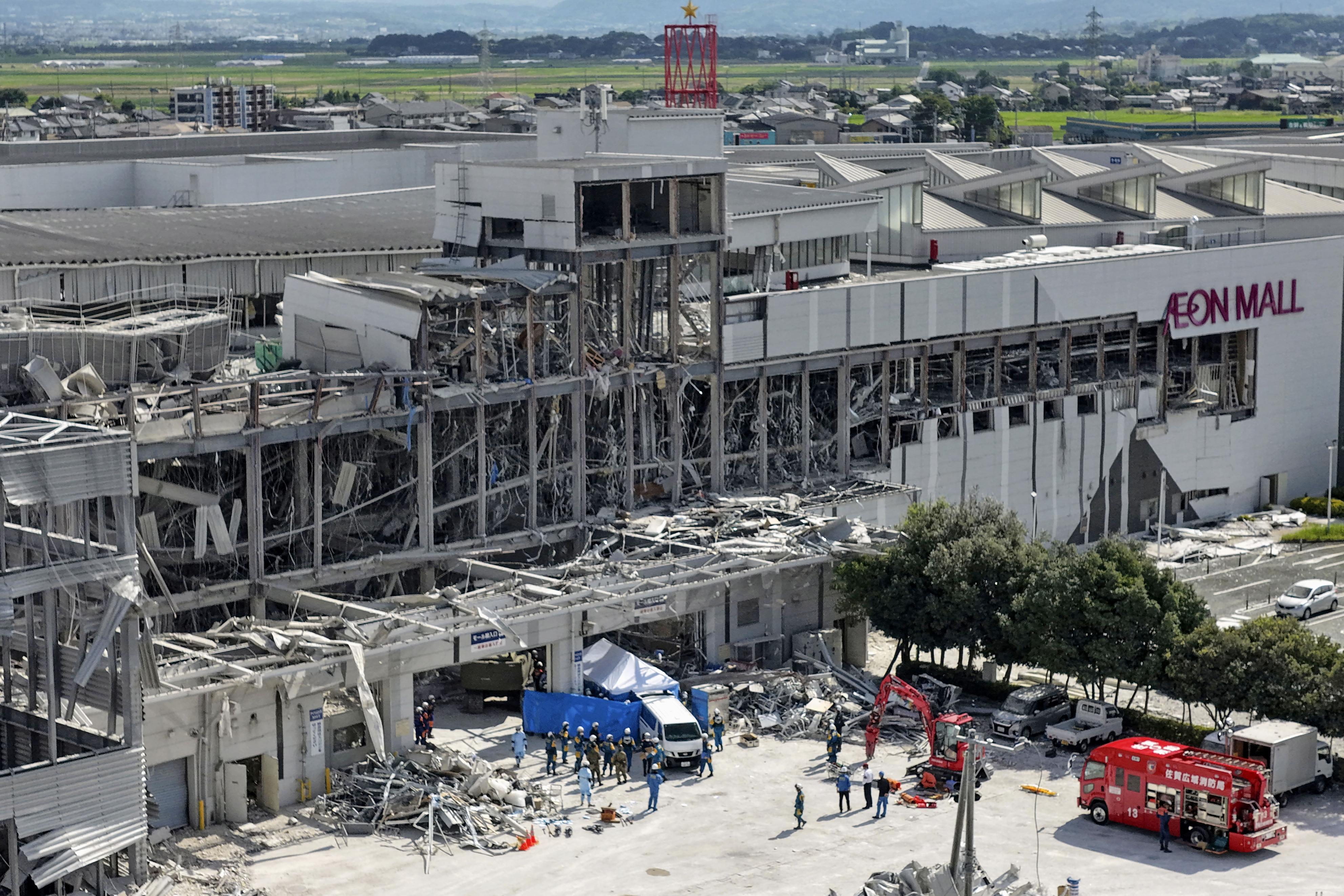
The Aeon Mall in Kashima represented the primary commercial loss vector. The collapse of the second floor trapped shoppers and personnel mid-operation, demonstrating the acute vulnerability of large-span horizontal diaphragms under multi-directional seismic acceleration. Concurrently, an industrial failure at the Nippon Paper Industries plant in Yatsushiro resulted in a toppled factory chimney, creating a localized mass-casualty environment that required specialized heavy-debris mitigation equipment.
Older residential housing styles in the region, characterized by heavy traditional roofing tiles paired with lower lateral load resistance compared to modern reinforced concrete standards, accounted for a significant share of flattened domestic structures. This dichotomy between strict contemporary building codes and legacy housing stock dictates the geography of residential casualties.
Secondary Cascading Hazards and Environmental Stressors
Physical rescue is consistently complicated by secondary environmental factors that alter the cost function of emergency deployment. In Kumamoto, responders managed compounding variables that elevated secondary morbidity risks for both survivors and displaced populations:
- Thermal Load: Ambient temperatures reaching thirty-three degrees Celsius triggered heatstroke alerts from the Ministry of Environment. For evacuating populations residing in approximately four hundred shelters, inadequate initial air conditioning capacity transformed temporary housing into high-risk thermal environments.
- Utility Severance: Approximately twenty-three thousand households experienced electrical outages while roughly seventy-five thousand faced water supply interruptions. This systemic baseline failure paralyzed sanitation facilities and complicated basic medical care in the field.
- Secondary Explosions: The secondary explosion recorded at the commercial center, suspected to stem from compromised gas utility lines, forced temporary evacuations of rescue personnel, introducing hazardous material management protocols into active search zones.
Operational Resource Allocation and Logistics
Managing a disaster zone of this scale requires a transition from reactive extraction to structured logistical support. The deployment of the Japan Self-Defense Forces stabilized the supply chain by distributing potable water, emergency rations, and establishing temporary power sources for environmental controls within shelters.
However, the disparity between police tallies—which include cases under active investigation that may prove unrelated to the seismic event—and confirmed municipal fatalities underscores the difficulty of maintaining empirical precision during active crisis management.
Deploy specialized structural engineering assessment teams immediately to legacy residential zones alongside urban search and rescue units to clear high-risk structural overhangs before ambient thermal loads induce secondary medical emergencies among trapped cohorts.