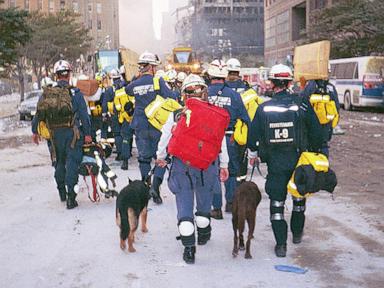
Disaster response canine deployment operates at the absolute limit of biological sensing capability, kinetic agility, and psychological resilience. Twenty-five years after the coordinated terrorist attacks of September 11, 2001, public discourse largely remembers these working dogs through sentimental narratives of courage and loyalty. That framing obscures the underlying structural reality: the canine units deployed to the World Trade Center site, the Pentagon, and the Fresh Kills landfill were not merely symbols of comfort; they were complex, highly specialized biological sensors executing high-consequence search operations under catastrophic environmental constraints.
Evaluating the operational efficacy of the response requires stripping away romanticism to examine three distinct vectors: olfactory engineering limits, handler-canine systemic communication loops, and environmental hazard mitigation protocols. Modern emergency management systems that fail to deconstruct these variables will continually miscalculate deployment velocity and recovery rates during mass-casualty incidents.
The Olfactory Architecture and Environmental Degradation
To understand why urban search and rescue dogs succeeded at Ground Zero, one must first deconstruct the mechanics of scent propagation in high-destruction architectural ruins. A collapse site like the World Trade Center introduces extreme chemical and physical noise. Jet fuel combustion byproducts, pulverized concrete, burning plastics, exposed electrical insulation, and rotting organic matter create a dense, toxic olfactory fog that masks target human scent signatures.
Canines do not simply smell an entire human body; they process volatile organic compounds shed through skin cell exfoliation, microbial breakdown, and breath, which travel via thermal columns and wind currents through subterranean voids. At Ground Zero, traditional scent cones were violently disrupted by massive fires burning for months, unstable multi-story steel and concrete slabs acting as physical baffles, and massive dust clouds that coated the dogs' nasal mucosa.
The Three Primary Olfactory Interference Factors
- Thermal Plumes: Subterranean fires created intense upward heat currents that carried target volatile organic compounds high into the atmosphere prematurely, rendering surface scent tracking erratic.
- Particulate Saturation: Airborne pulverized concrete and silica dust functioned as particulate sponges, physically binding to and degrading ambient scent particles while impairing canine nasal epithelium sensitivity.
- Cross-Contamination Sinks: The sheer density of decomposing organic matter alongside thousands of tons of commercial debris created false-positive triggers that forced handlers to rely on precise alert behavioral conditioning to maintain operational integrity.
The operational success of these teams relied on the biological redundancy of multiple breeds, primarily German Shepherds, Labrador Retrievers, and Golden Retrievers, each bringing distinct search styles. Retrievers generally exhibited higher social drive and methodical quartering patterns, while structural working breeds managed treacherous, unstable rebar fields with superior kinetic agility.
The Information Bottleneck in Handler Canine Telemetry
A search-and-rescue canine is an autonomous bio-sensor paired with a human handler who interprets behavioral micro-expressions to locate targets. This dyad creates a distinct communication loop prone to specific operational bottlenecks. The dog possesses the sensor capability—olfactory detection—but lacks the cognitive capacity to articulate precise geospatial coordinates. The handler possesses structural mapping, navigational strategy, and incident command context, but lacks direct access to the sensory input.
During the September 11 response, this translation layer was tested to exhaustion. Handlers operated on 12-to-16-hour rotations amid physical exhaustion, sleep deprivation, and acute psychological trauma. When a dog altered its behavior—dropping its head, changing tail carriage, or exhibiting shallow sniffing patterns—the handler had to instantaneously differentiate between a true positive scent cone, environmental distraction, or fatigue-induced displacement behavior.
The systemic failure mode in this loop is confirmation bias. In high-stakes environments, handlers desperately wanting to find survivors can inadvertently cue their dogs or misinterpret ambiguous behavioral shifts as final alerts. The Federal Emergency Management Agency urban search and rescue task force protocols counteracted this through strict mandatory validation standards. A dog's alert had to be unambiguous, repeatable, and cross-verified by secondary search methods before heavy machinery could be deployed to an excavation coordinate.
Psychological Attrition and the Biological Cost Function
The metric of success in a disaster zone is not merely survival rate; it is the operational lifespan of the responder asset. The physical and psychological toll exacted on the search dogs of 2001 redefined veterinary medicine and occupational health standards for working animals.
The Dual-Axis Attrition Matrix
- Physical Degradation: Sharp steel shards, abrasive concrete dust, glass fragments, and toxic smoke caused severe paw pad lacerations, ocular trauma, and acute respiratory distress. Decontamination protocols—washing dogs with specialized solutions to remove jet fuel and chemical residue—had to be established on the fly.
- Psychological Burnout: Search-and-rescue dogs are conditioned to expect a reward, typically a toy or a game of tug, upon locating a target. In the initial days of the World Trade Center deployment, the overwhelming preponderance of human remains rather than live rescues disrupted this psychological feedback loop. Dogs accustomed to finding living people experienced profound operational frustration and behavioral burnout when continuously exposed to catastrophic loss without the positive reinforcement of a live find.
Veterinary teams embedded within the site instituted mandatory rest cycles, hydration protocols, and psychological decompression regimens for the animals. This operational pivot recognized that a canine asset operating past the threshold of cognitive and physical exhaustion yields degraded search fidelity, increasing false negatives in sectors containing trapped survivors.
Structural Evolution of Modern Canine Deployment
The legacy of the 2001 deployments fundamentally transformed disaster response frameworks globally. Modern urban search and rescue architecture has institutionalized the lessons learned from the dust and ash of the World Trade Center.
First, chemical and biological personal protective equipment for canines transitioned from improvised solutions—such as modified infant boots and makeshift goggles—to engineered gear designed specifically for hazardous material environments. Second, inter-agency credentialing standards were unified under rigorous national evaluation metrics, ensuring that a canine team from California or Florida could integrate seamlessly into an incident command structure in New York or international theaters.
The contemporary focus has shifted toward integrating canine capability with technological force multipliers. Drone-mounted thermal imaging and miniature gas chromatography sensors now map volatile organic compounds in real-time, creating topographical heat maps of scent concentration. These technological inputs do not replace the biological sensor; instead, they serve as cueing mechanisms to direct canine teams toward high-probability void spaces, reducing physical wear and tear on the animals during the critical golden hours of a response window.
Deploy canine units as targeted, high-priority validation tools rather than broad-area sweep assets during the initial phase of structural collapse, reserving their specialized olfactory capability for mathematically probable void spaces while deploying remote sensing technology to map peripheral debris fields.


