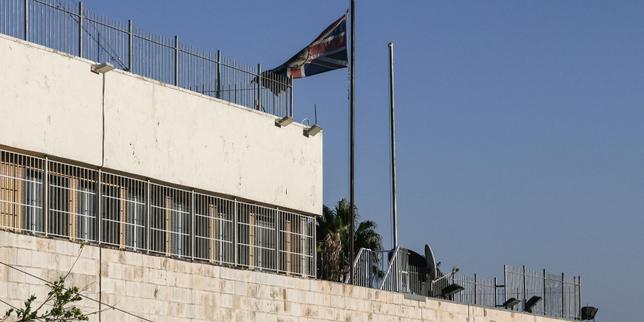
International relations operate on a continuous calculus of calibration and friction, where economic coercion frequently triggers immediate sovereign countermeasures. The coordinated decision by the United Kingdom, France, Canada, and nine other nations to implement trade restrictions on West Bank settlements, coupled with the formal British declaration branding the occupation unlawful, has shifted the diplomatic landscape from passive condemnation to active punitive architecture. The Israeli government response under Foreign Minister Gideon Sa'ar—encompassing the closure of the British Consulate in Jerusalem, the expulsion of UK representatives from multinational security coordination frameworks, and targeted entry bans on specific British lawmakers including former Labour leader Jeremy Corbyn—demonstrates a textbook escalatory matrix. Analyzing this friction requires dissecting the structural mechanics of the economic sanctions and evaluating the strategic utility of the reciprocal measures.
The British policy pivot rests on three distinct operational pillars designed to disrupt the economic viability of unauthorized and contested territorial expansion. First, the import ban targets specific agricultural and commercial outputs originating directly from West Bank settlements, including wine, dates, and related commodities. Second, financial restrictions criminalize or penalize domestic firms that provide construction, real estate, or banking services facilitating settlement growth. Third, the tightening of arms export licensing aims to restrict material contributions to the apparatus of occupation.
The primary structural limitation of this economic strategy lies in the integrated nature of the regional supply chain. Disentangling goods produced inside West Bank settlements from those originating within internationally recognized Israeli borders presents a significant verification challenge. Standard commercial labeling conventions routinely classify items under a broad national origin marker, creating regulatory loopholes that undermine customs enforcement. Furthermore, while the macro-economic damage to Israeli gross domestic product remains statistically negligible due to the low export volume of these specific settlements relative to the broader national economy, the political and legal precedent established by multilateral coordination sets a disruptive baseline for future bilateral commerce.
The Israeli counter-strategy abandons diplomatic niceties in favor of targeted structural decoupling. By revoking the operating status of the British Consulate in Jerusalem—an entity historically maintaining diplomatic channels with the Palestinian Authority—Jerusalem directly degrades London's institutional footprint within the administrative territory. Simultaneously, removing British personnel from the United States-led Gaza coordination headquarters and terminating UK involvement in training Palestinian Authority security forces systematically strips Britain of its operational security influence on the ground.
The enforcement of personal entry bans against twelve British political figures and activists, including Jeremy Corbyn and various members of Parliament, introduces a punitive domestic political dimension. By framing these individuals as active participants in hostile state behavior or actors denying the sovereign existence of the state, the Israeli Foreign Ministry seeks to polarize the domestic British political debate. This maneuver exploits existing fault lines within British governance, forcing political parties to navigate internal ideological fractures regarding foreign policy alignment, antisemitism, and diplomatic protocol.
The broader geopolitical fallout involves divergent responses from international stakeholders, fracturing Western consensus. While European coalition partners defend the sanctions as a necessary defense of the two-state framework, the United States administration has voiced strong opposition. Statements from U.S. officials highlighting potential retaliatory trade measures or policy frictions against participating European states indicate that secondary economic fallout could extend across the Atlantic. This tension exposes the limits of multilateral policy coordination when core allies hold diametrically opposed positions on territorial definitions and sovereignty enforcement.
The trajectory of this diplomatic crisis depends on the enforcement velocity of the proposed trade restrictions and the durability of the anti-sanctions coalition inside Israel. If British regulatory bodies successfully implement tracking mechanisms to intercept settlement-derived goods without triggering a broader de facto boycott of all Israeli commerce, the sanctions will establish a permanent legal framework for economic penalization. Conversely, if the measures stall in domestic legal challenges or fail at customs checkpoints, the outcome will amount to a high-cost diplomatic rupture yielding minimal structural changes on the ground. Strategic actors must monitor regulatory enforcement timelines over the next six to nine months to gauge whether these punitive mechanisms achieve functional deterrence or merely entrench permanent institutional hostility.