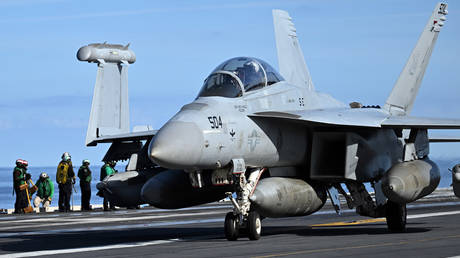
The collapse of the mid-June 60-day ceasefire between the United States and Iran demonstrates the systemic instability of using brief tactical truces to manage structural maritime security dilemmas. When United States Central Command executed its second consecutive night of offensive strikes against Iranian territory on July 8, 2026, it did not merely signal a return to overt kinetic warfare. The deployment of precision munitions against more than 80 targets reveals a calculated shift from defensive containment to structural degradation. The breakdown of the truce, precipitated by Iranian kinetic operations against three commercial vessels in the Strait of Hormuz, illustrates a fundamental miscalculation in the deterrent mechanics employed by western coalition forces. Short-term diplomatic freezes fail when the underlying economic and military incentives for asymmetric interdiction remain unchanged.
Understanding this breakdown requires an examination of the precise strategic friction points, operational choices, and macroeconomic consequences that define the current phase of the 2026 Iran War.
The Three Pillars of Maritime Interdiction Strategy
The resumption of hostilities is rooted in a specific operational framework employed by the Islamic Revolutionary Guard Corps Navy to challenge freedom of navigation without committing to an asymmetric fleet engagement. This strategy rests on three distinct operational pillars.
High-Density Swarm Architecture
The deployment of dozens of fast attack craft and fast inshore attack craft creates a saturated threat environment in the narrow constraints of the Strait of Hormuz. These vessels operate not as standalone surface combatants but as distributed sensor and strike nodes designed to overwhelm the target acquisition capabilities of western air-defense destroyers.
Distributed Underground Storage Network
By housing anti-ship ballistic missiles and one-way attack drones within coastal subterranean installations, the defensive architecture minimizes vulnerability to pre-emptive counter-battery fires. This structural protection ensures a persistent second-strike capability against both commercial shipping and naval assets.
Geographic Chokepoint Asymmetry
The physical geography of the Strait of Hormuz restricts commercial traffic to narrow inbound and outbound shipping lanes that sit entirely within the operational range of shore-based coastal defense radars and mobile missile launchers. This reality lowers the technical threshold required for successful maritime interdiction.
The failure of the mid-June ceasefire occurred because the memorandum of understanding signed weeks prior addressed the symptoms of tension—specifically oil export restrictions and port blockades—without neutralizing these three structural pillars. The underlying architecture remained fully intact during the diplomatic pause, leaving the strategic calculus vulnerable to immediate disruption.
The Strategic Cost Function of Maritime Interdiction
The economic fallout of the renewed kinetic actions is governed by a rigid cost function that links localized military operations directly to global energy markets. The immediate 8 percent spike in international benchmark Brent crude to over $80 per barrel, alongside West Texas Intermediate rising above $75, is a direct reaction to the disruption of established trade routes.
The mechanics of this economic transmission operate through clearly defined variables:
Total Maritime Transit Cost = Base Freight Rate + War Risk Insurance Premium + Kinetic Delay Surcharge
When Iran targeted the Marshall Islands-flagged M/T Al Rekayyat, the Saudi Arabia-flagged M/T Wedyan, and the Liberian-flagged M/T Cyprus Prosperity, the immediate consequence was not the physical destruction of the hulls but the geometric escalation of the war risk insurance premium variable. Underwriters price risk based on the probability of kinetic interception within a specific geographic zone. By demonstrating that the 60-day ceasefire offered zero functional protection to commercial hulls, the probability variable spiked to near-certainty for vessels lacking sovereign military escorts.
The second variable, the kinetic delay surcharge, reflects the structural bottleneck created when shipping lines reroute supertankers away from the Persian Gulf. Diverting crude oil transport around the Cape of Good Hope adds approximately 10 to 14 days to transit times to European markets. This delay reduces the effective global carrying capacity of the tanker fleet, creating an artificial supply contraction that drives energy prices upward irrespective of raw extraction volumes at the wellhead.
Operational Architecture of the Central Command Counter-Strike
The response from United States Central Command on July 7 and July 8 targeted specific functional nodes rather than conducting symbolic political strikes. The campaign design focuses on a methodical degradation of capabilities across two specific phases.
Phase One: Suppression of Enemy Air Defenses and Coastal Radar Degradation
Initial sorties focused heavily on neutralizing coastal radar arrays and early-warning installations along the southern Iranian coast, specifically around Bandar Abbas and Bushehr. By disabling these sensor networks, coalition forces degraded the target-generation capabilities required for long-range anti-ship missile strikes.
Phase Two: Surface Fleet and Logistical Infrastructure Attrition
Following the degradation of the radar networks, strike assets targeted the physical tools of interdiction. Central Command reported the destruction of over 60 fast boats alongside the targeting of underground missile storage facilities and coastal defense sites. The strikes also impacted port infrastructure, including docks and maritime traffic control towers in Chabahar, directly degrading the logistical baseline required to launch and sustain maritime interdiction operations.
The explicit inclusion of targets near Bushehr—the site of Iran’s civilian nuclear power facilities—and threat statements regarding Kharg Island highlight an intentional escalation in the target selection tier. Kharg Island serves as the terminal bottleneck for approximately 90 percent of Iranian crude oil exports. By threatening to neutralize this specific facility, the United States administration is seeking to apply direct economic counter-pressure, establishing a cost that mirrors the damage inflicted on international merchant shipping.
The Escalation Feedback Loop and Deterrence Stability
The current tactical environment is characterized by an unstable escalation feedback loop driven by conflicting political objectives and misaligned definitions of victory. The stated position of the United States administration emphasizes an uncompromising insistence on unrestricted freedom of navigation through international waters. The operational policy voiced by the executive branch relies on an assumption that high-intensity, short-duration kinetic retaliation will compel the opposing command structure to modify its behavior.
This theory of deterrence is challenged by the institutional design of the opposing forces. The Islamic Revolutionary Guard Corps operates on an asymmetric doctrine that views tactical non-compliance as a necessary tool of geopolitical leverage. When the United States strikes infrastructure, the immediate reaction of the targeted forces is frequently to execute retaliatory missile and drone strikes against forward coalition bases in Bahrain and Kuwait, as observed during the post-strike reactions on July 8.
The core vulnerability of the current strategy lies in the timeline mismatch between political declarations and operational realities. Statements from the executive branch indicate an expectation that the conflict will conclude very quickly. This perspective fails to account for the deep-seated strategic incentives that motivate asymmetric adversaries. For a command structure that perceives its survival and regional influence to be directly linked to its capacity to disrupt global maritime traffic, a rapid capitulation under the pressure of air strikes is highly improbable.
The operational reality indicates that as long as the subterranean missile infrastructure and command networks remain functional, the capability to launch opportunistic attacks on commercial tankers persists. Air strikes can reduce the numbers of available fast boats or damage localized radar towers, but they cannot permanently solve the threat posed by mobile, hidden missile batteries without a sustained, resource-intensive campaign that extends far beyond a few nights of bombing.
Strategic Playbook and Tactical Requirements
The resolution of this crisis cannot be achieved through the repetition of short-term truces that leave the structural causes of conflict unaddressed. To stabilize the maritime corridor and protect global energy supply chains, coalition forces must shift toward a permanent operational model that alters the structural incentives governing the waterway.
The following tactical measures must be implemented to establish long-term maritime stability:
- Transition from a reactive strike model to a continuous defensive convoy architecture. Merchant vessels must be integrated into structured, multi-national naval escorts when transiting the critical sectors of the Strait of Hormuz, neutralizing the effectiveness of swarm attacks.
- Establish permanent maritime exclusion zones around commercial shipping lanes, backed by rules of engagement that permit the immediate destruction of any unauthorized military surface craft or low-flying aerial vehicles entering the designated safety perimeter.
- Target the financial and material supply chains that enable the reproduction of asymmetric weaponry. Kinetic strikes on coastal facilities must be paired with aggressive enforcement of maritime blockades to prevent the importation of specialized electronic components required for drone and missile assembly.
Relying on the hope that diplomatic negotiations will yield a durable agreement without a shift in the balance of physical power on the water is a flawed strategy. Future diplomatic frameworks will only succeed if the cost of violating a truce is made immediately visible through the permanent, proactive frustration of non-compliant actions at sea.



