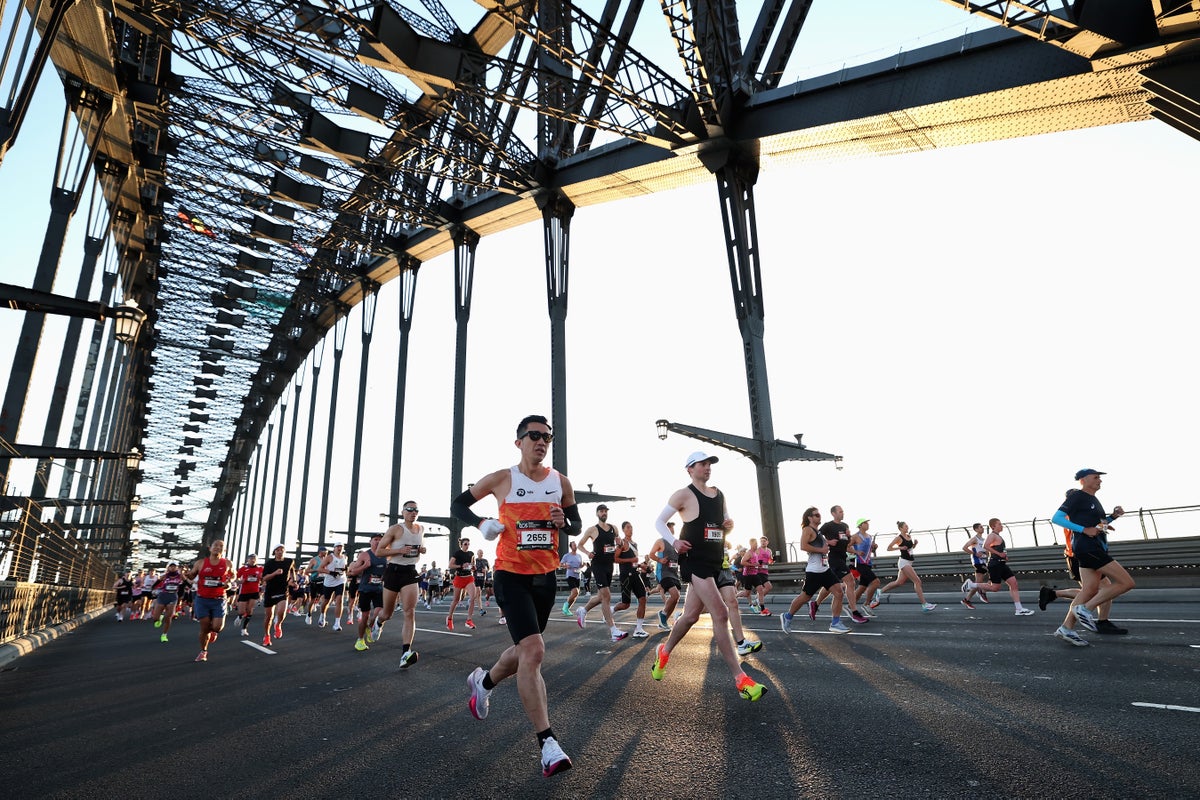
Mass participation sports logistics operate under strict temporal and financial constraints where a single digital asset query error can propagate across tens of thousands of physical units. When event organizers unveiled finisher medals featuring Munich's distinctively patterned Allianz Arena instead of Sydney's local Allianz Stadium, public commentary treated the mishap as an amusing geographic blunder. Behind the social media amusement lies a systemic breakdown in design quality assurance, asset verification chains, and production pipeline validation. Deconstructing this failure reveals how modern event manufacturing vulnerabilities expose gaps in multi-tiered contractor oversight.
The Architecture of Error Propagation
The lifecycle of a major marathon medal moves through four distinct operational phases: conceptual asset creation, vector file generation, overseas manufacturing, and final physical distribution. Each transition point introduces validation risks.
[Asset Sourcing] -> [Vector Mapping] -> [Factory Casting] -> [Distribution]
       |                     |                   |
  Search Query         Line Art Assembly     Physical Minting   Unnoticed Slip
The root cause of infrastructure misidentification on mass-produced memorabilia typically stems from automated asset sourcing. When digital designers pull reference imagery for generic search terms involving corporate-sponsored venues, search engine algorithms prioritize visual prominence and global frequency over localized accuracy.
- The Munich arena possesses a high-contrast, universally recognizable diamond-patterned ETFE foil exterior.
- The local Sydney venue features understated structural lines and a flatter architectural profile.
- Search index optimization inadvertently favors the visually complex asset because it registers higher pixel-definition features in vector translation software.
This creates a structural bias toward globally ubiquitous architectural icons. A designer working under aggressive time compression will select the asset that yields the cleanest vector trace, bypassing deep spatial verification.
The Cost Function of Quality Control Bottlenecks
Industrial manufacturing of tens of thousands of heavy alloy pieces occurs months before race day to accommodate shipping logistics from overseas mints. This temporal gap locks in design flaws before any stakeholder sees a physical prototype in context.
The economic parameters governing medal production enforce minimal tolerance for last-minute modifications. Reminting a batch of 40,000 medals introduces severe cost multipliers:
- Material write-offs of base metal alloys and plating finishes.
- Air-freight logistics penalties to bypass standard maritime transit windows.
- Labor reconfiguration at the manufacturing facility to reset stamping dies.
Because these financial penalties threaten operational margins, event directors face strong incentives to accept minor aesthetic deviations rather than initiate a full production recall. When the marginal cost of rectifying a graphic error exceeds the perceived brand penalty of the mistake itself, organizations choose public transparency and humor over costly remediation.
Institutional Blind Spots in Multi-Tiered Contracting
End-to-end event execution relies heavily on outsourced vendor ecosystems. Marathon committees manage sponsorships, course safety, municipal permits, and media relations, delegating merchandise production to specialized third-party licensees. This creates an agency problem. The manufacturing vendor lacks localized context and treats Sydney infrastructure with the same operational detachment as any other vector coordinate in a template library.
Internal sign-off protocols within organizing committees rarely include architectural or municipal verification steps. Executives review digital proofs for high-level artistic composition—checking that the Opera House, Harbour Bridge, and typography occupy correct spatial relationships—while ignoring structural minutiae. The visual noise of a crowded skyline layout camouflages peripheral design elements, allowing anomalies to pass through multiple layers of human review unflagged.
Systemic Vulnerability Across Endurance Events
This incident is not an isolated anomaly within mass participation sports. Comparable design errors occur across global endurance circuits with predictable frequency. Last-year events involving regional marathons in the United Kingdom similarly suffered from cartographic discrepancies, featuring incorrect municipal river maps and neighboring city layouts on commemorative hardware.
These recurring failures point to an industry-wide absence of standardized metadata tagging for civic landmarks. Without strict version-controlled digital asset management systems, designers will continue to rely on open web searches, repeating the loop of cross-contaminating local events with international architectural landmarks.
To eliminate structural exposure to asset misattribution, event operations directors must implement mandatory spatial audits during the pre-press proofing window. Integrating local stakeholder sign-off—specifically requiring venue management or municipal tourism boards to verify etched iconography—converts an informal graphic review into a rigorous compliance checkpoint. Until event management treats commemorative manufacturing with the same architectural precision applied to course measurement, minor digital inputs will continue to yield major physical discrepancies.