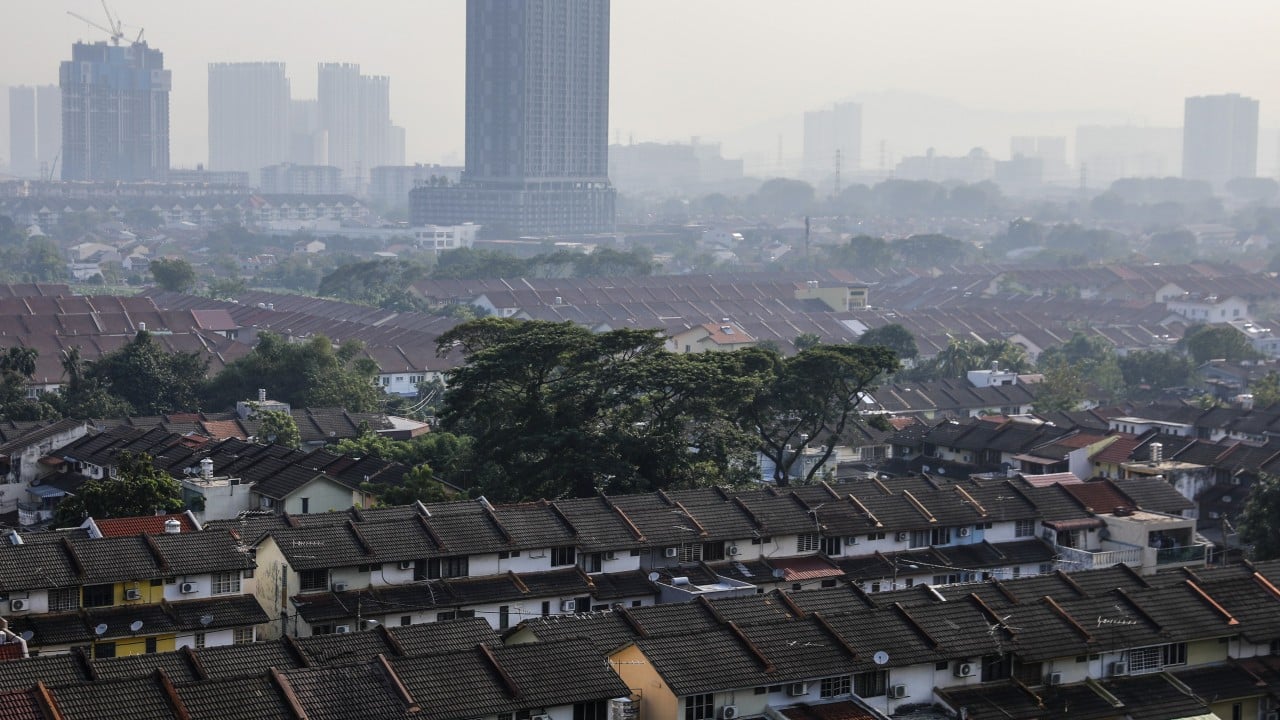
Transboundary air pollution in Southeast Asia functions as a systemic operational failure of environmental governance, public health infrastructure, and economic incentives. When seasonal agricultural burning in Sumatra and Kalimantan overwhelms regional airsheds, the resulting particulate matter migration across the Malacca Strait into Malaysia—specifically impacting Sarawak and Selangor—represents a predictable institutional breakdown rather than a sudden natural disaster.
Understanding this phenomenon requires moving past reactive weather reports to examine the underlying mechanisms driving recurring episodes of toxic air quality. This analysis deconstructs the structural variables behind the recurrence of severe haze events, maps the economic cost functions borne by affected populations, and evaluates the operational bottlenecks limiting mitigation efforts.
The Structural Drivers of Transboundary Smoke
The recurrence of low air quality indices across West Malaysia and western Sarawak is governed by three intersecting variables: meteorological vectors, land-clearing economics, and regulatory enforcement friction.
Meteorological Propagation Dynamics
The physical transport of particulate matter is dictated by the southwest monsoon wind regime, which spans typically from May to September. During this window, low-pressure systems and wind vectors channel smoke plumes originating from peatland and forest fires in Indonesia directly toward Malaysian population centers.
Topographical features and local wind convergence zones trap these fine particulates, primarily PM2.5, within urban and rural airsheds. PM2.5 refers to atmospheric particulate matter with a diameter of fewer than 2.5 micrometers, small enough to bypass human respiratory filters and enter the bloodstream. Because these particles remain suspended for days, meteorological stagnation transforms localized agricultural clearing into a regional atmospheric hazard.
The Economic Incentive Structure of Slash-and-Burn Agriculture
Fire remains the lowest-cost land-clearing mechanism for industrial plantation development and smallholder agriculture across tropical peatlands. Mechanized clearing requires heavy capital expenditure for root-raking, stacking, and debris management. Conversely, burning utilizes zero capital equipment, simultaneously neutralizing acidic soil conditions through ash deposition and returning baseline nutrients to the topsoil.
Peatland ecosystems compound this vulnerability. Tropical peat consists of centuries of decayed organic matter compressed into carbon-rich soil. When a surface fire ignites drained peatlands, the fire burns subsurface, smoldering underground for weeks. These subterranean fires are impervious to standard rainfall and surface firefighting tactics, releasing massive volumes of carbon dioxide and hazardous gases independently of surface wind speeds.
Regulatory Enforcement Friction
Governance across decentralized archipelagos introduces severe latency in rapid response protocols. While bilateral agreements and ASEAN declarations mandate cooperation on transboundary haze pollution, enforcement relies entirely on the sovereign jurisdiction of the source nation. Local district authorities often prioritize short-term agricultural yields and employment metrics over long-term environmental externalities. Monitoring systems detect thermal anomalies via satellite imagery, but the operational lag between detection, cross-border diplomatic notification, and ground-level intervention routinely spans weeks—allowing localized ignition points to expand into regional crises.
Quantifying the Socioeconomic Cost Function
The macro impact of transboundary haze extends far beyond temporary visibility reductions. The total cost function of a severe haze event comprises direct healthcare expenditures, productivity losses, and systemic asset devaluation.
Healthcare Utilization and Systemic Strain
A sustained spike in PM2.5 concentrations triggers predictable surges in respiratory and cardiovascular admissions. Public health systems absorb these shocks through increased demand for bronchodilators, oxygen therapy, and emergency outpatient consultations for asthma, chronic obstructive pulmonary disease, and acute bronchitis.
The economic burden manifests as out-of-pocket expenses for preventative goods, such as N95 respirators and indoor air purifiers, alongside public subsidies for hospital care. Vulnerable demographics, including outdoor laborers, children, and the elderly, experience the highest incidence of morbidity, creating downstream losses in household earning capacity.
Productivity Degradation and Labor Contraction
Outdoor economic output drops precipitously during heavy haze episodes. Construction sites, agricultural harvesting, logistics operations, and tourism sectors face forced operational curtailments or voluntary slowdowns due to occupational safety guidelines.
Cognitive performance also degrades in environments with high indoor and outdoor particulate infiltration. Studies tracking office productivity during heavy pollution events note measurable declines in output velocity, decision-making quality, and accuracy metrics among desk-bound workforces operating in poorly sealed commercial buildings.
Aviation and Logistics Disruptions
Visibility constraints impose immediate operational penalties on regional aviation. Low-altitude flight safety limits require instrument landing systems, flight delays, and occasional airport closures in secondary hubs across Sarawak and Selangor. Airlines incur fuel penalties, schedule realignments, and passenger compensation costs, while cargo logistics experience delivery friction through multimodal transport bottlenecks.
The Failure Modes of Mitigation Strategies
Current interventions deployed by governments and corporate entities consistently underperform due to structural blind spots in execution and accountability.
The Limits of Reactive Cloud Seeding
Cloud seeding is frequently deployed as a high-visibility countermeasure to induce rainfall and clear particulate matter from the lower atmosphere. However, this strategy relies on the presence of suitable convective cloud cover containing adequate moisture. During prolonged dry spells associated with El Nino cycles or severe droughts, atmospheric moisture is deficient. Deploying aircraft without the necessary meteorological prerequisites wastes financial resources and delivers negligible air quality improvements.
Corporate Accountability Gaps
Supply chain transparency in the palm oil and pulp-and-paper sectors remains fragmented. Downstream consumer goods conglomerates often source raw materials through multi-tiered broker networks that obscure the precise geographic origin of the crop.
While corporate zero-burn policies exist on paper, enforcement down to independent smallholders who supply local mills is weak. Certification schemes struggle with auditing compliance across remote concessions, allowing rogue operators to utilize fire with minimal risk of supply chain exclusion.
Public Awareness versus Structural Agency
Public health advisories focus heavily on individual behavioral modifications—such as remaining indoors, wearing masks, and operating air filtration units. While these measures reduce personal exposure, they treat symptoms rather than causes. They also assume baseline socioeconomic agency; populations residing in informal settlements or dependent on daily-wage outdoor labor cannot simply opt out of exposure without facing immediate financial destitution.
Operational Interventions and Strategic Positioning
Addressing recurring transboundary haze requires shifting from diplomatic appeals to enforceable economic and technological frameworks.
First, regional trade agreements must integrate strict environmental compliance conditionalities. Importing nations should establish mandatory traceability standards requiring verifiable satellite proof of non-burning land management for all agricultural commodities entering commercial distribution channels. Failure to meet these criteria must result in immediate market access restriction rather than non-binding reprimands.
Second, capital deployment must target peatland re-wetting and hydrological restoration. Surface and subsurface fires cannot be extinguished solely by water drops; they require raising the water table through canal blocking and dam construction across drained peat swamp forests. International climate finance frameworks should subsidize these capital-intensive engineering projects, framing peatland restoration as an essential global carbon sink preservation effort rather than a localized domestic responsibility.
Third, real-time particulate monitoring networks must be integrated with automated emergency response triggers. Rather than waiting for public complaints or political consensus, municipal health authorities should tie mandatory remote work orders, school closures, and construction halts directly to standardized air quality index thresholds. Removing bureaucratic discretion from public safety protocols minimizes latency between environmental hazard detection and population protection.
The recurrence of haze in Sarawak and Selangor signals that existing regional frameworks treat a structural economic problem as a seasonal weather nuisance. Resolving the crisis demands an explicit realignment of supply chain economics, where the cost of non-compliance through fire far exceeds the operational savings of land clearance.